“Imagine being a pixel on an old Pac-Man game.”
1.
In last year’s essay at Tedium, Ernie Smith investigated the rise and fall of screensavers, those pieces of software that peaked in the 1990s, originally meant to prolong the life of your display by kicking in after a period of inactivity, but eventually becoming “self-contained art projects.”
As it always happens, what we thought was the first screensaver – Peter Socha’s SCRNSAVE – was far from the original idea:
The accepted answer is often the easy answer, and when doing a little research, you can bust past that to the point of truth. [… But] while Socha deserves credit for popularizing the technique with a broad audience, the idea wasn’t totally new. See, during the 1970s and early 1980s, numerous hardware and software developers attempted to build things in the same wheelhouse as Socha’s early screen saver. The difference was, they weren’t for the IBM PC or even for a computer at all. Rather, they were for dumb terminals or video game systems.
The prior art includes “attract mode” in arcade games, and is accompanied by the absolutely terrifying, jump-scare-adjacent photo of CRT burn-in you wouldn’t want to miss.
2.
This is an enthralling 1-hour-long video by Savvy Sage that talks about the immense popularity of After Dark, a collection of screensavers for Macs and PCs, of the “flying toasters” fame:
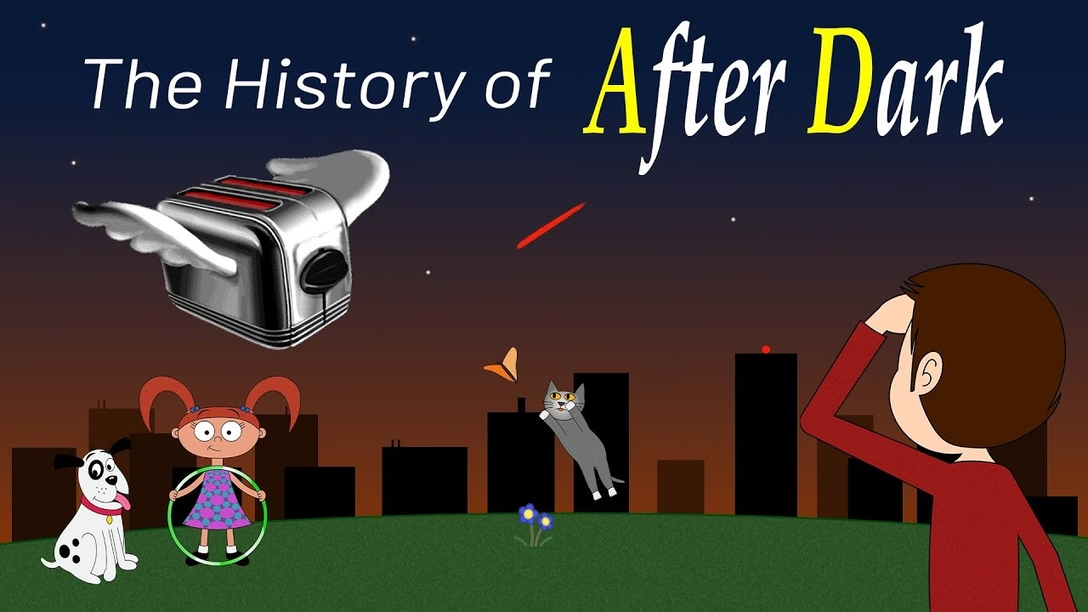
This video absolutely blew my mind. I had no idea the screensavers were so popular that they had their own (official) merch and (unofficial) guidebooks, and that the company that made them employed over 100 people – half of them artists – and had tens of millions of dollars in revenue.
There’s tons of inevitable scope creep – screensaver remixers! screensavers with sound! interactive screensavers! licensed screensavers? – but also attempts to branch out to new ideas.
The video is great in documenting everything so you actually see all that’s talked about, in copious detail. And since this is a blog about craft, obligatory caveat: most of these screensavers are absolutely garish, although one also has to account for state of the art of computer graphics at that time.
3.
After Dark had a fish aquarium and so did competing products from Microsoft and Fifth Generation Systems – but in a moment likely recognizable to many people reading this blog, one person got fed up with how bad they all looked and created his own screensaver that became as well known as the flying toasters.
This 16-minute video by LGR talks about the story of The Marine Aquarium Screensaver:
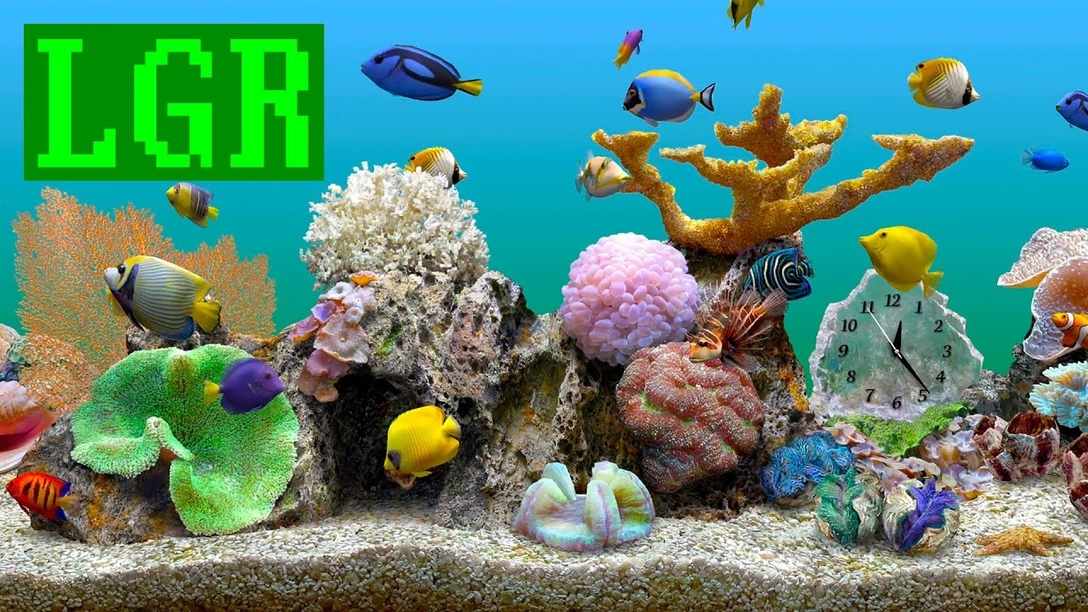
This, too, had a lot more going on than I expected, including the eventual appearance of a hall-of-fame checkbox “Starfish allowed on glass.”
4.
Another popular screensaver was Windows’s 3D Pipes, whose (much shorter) origin story is documented by Raymond Chen on his excellent and long-running The Old New Thing blog.
But it’s the first comment there that steals the show:
These were mesmerizing, but quite often IT folks would enable these on Windows Servers, and they would essentially “bring down the system.” See, they were CPU intensive and would take a tax on the system essentially stealing CPU time away from the business application running. […]
I can recall the first time getting a call on this – and back then things were remote, etc. sometimes using PCAnywhere – and then I saw 3D Pipes running. Just told them to turn it off – and done. From that point forward the first question asked of our customers was “are you running any screen savers?”
3D Pipes also had some interesting lore behind it:
A customer complained that they were losing productivity because employees were spending too much time running the 3D Pipes screen saver and waiting for teapots to appear. They requested an option to increase the likelihood of a teapot, so the employees would be placated more quickly and get back to their work.
If this doesn’t remind you of that scene from The Office with another famous screensaver…
5.
In Smith’s essay, he posts Socha’s recounting of the exact logic of his early screensaver:
How does Scrnsave do all this? The clock inside your PC ticks 18.2 times per second. Scrnsave contains a three-minute counter that starts at 3276—the number of clock ticks for three minutes. On each tick of the clock, Scrnsave subtracts one from this count, and it turns off the screen when it reaches zero. […]
Each time you push or release a key, the keyboard sends an interrupt signal to the PC. Scrnsave intercepts this interrupt; each time you push or release a key, Scrnsave resets its counter to 3276 (three minutes) before passing control to the ROM BIOS routines that read keystrokes. Scrnsave also resets its counter to 3276 every time a program sends characters to the screen. By intercepting these last two interrupts, Scrnsave can tell when you need to have the screen active, so it won’t shut out the lights unless you sit back or walk away for three minutes or more.
It’s a very simple algorithm, but I was amazed by it, because that’s exactly the same algorithm you would use – in reverse – for any sort of debouncing that’s crucial in good front-end engineering; there is something kind of beautiful about these universal algorithms floating around, kind of like math quietly ruling the world around us.
But on that note, one last video. Do you remember that well-known palette-cycling waterfall I posted some time ago?
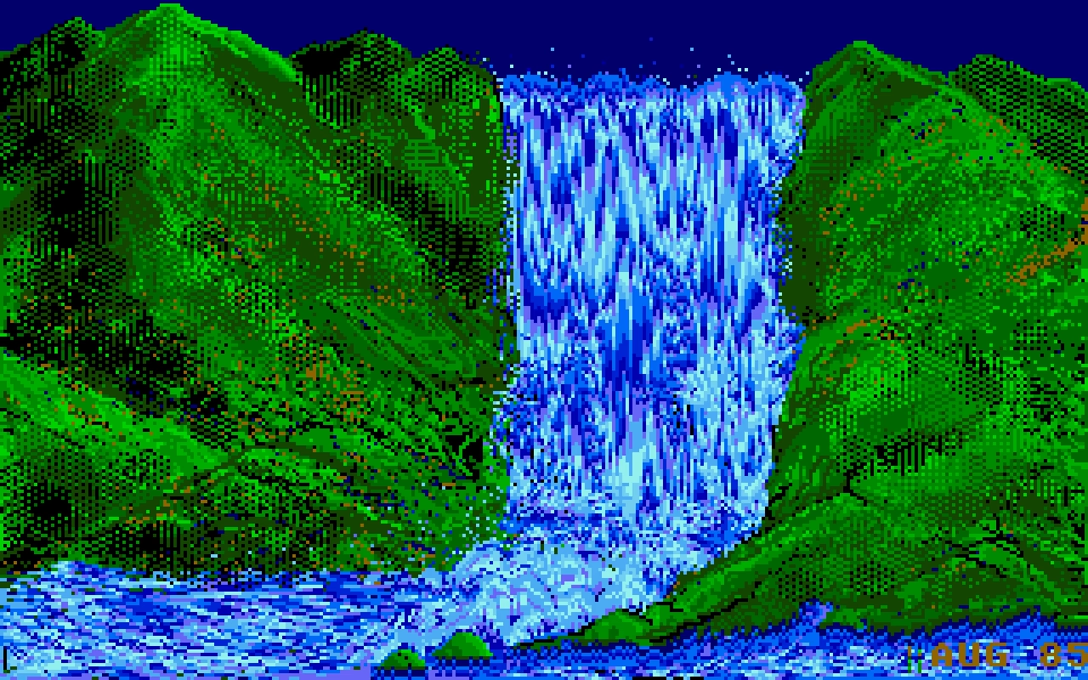
This wasn’t as much a “prevent CRT burn in” screensaver as it was “a piece of standalone, repeating, interactive art” screensaver. It graced many an Atari ST display.
Well, in April, Techmoan unpacked sort of a “prior art” to even that – a picture frame that simulates a waterfall (the relevant video segment starts at 6:04):
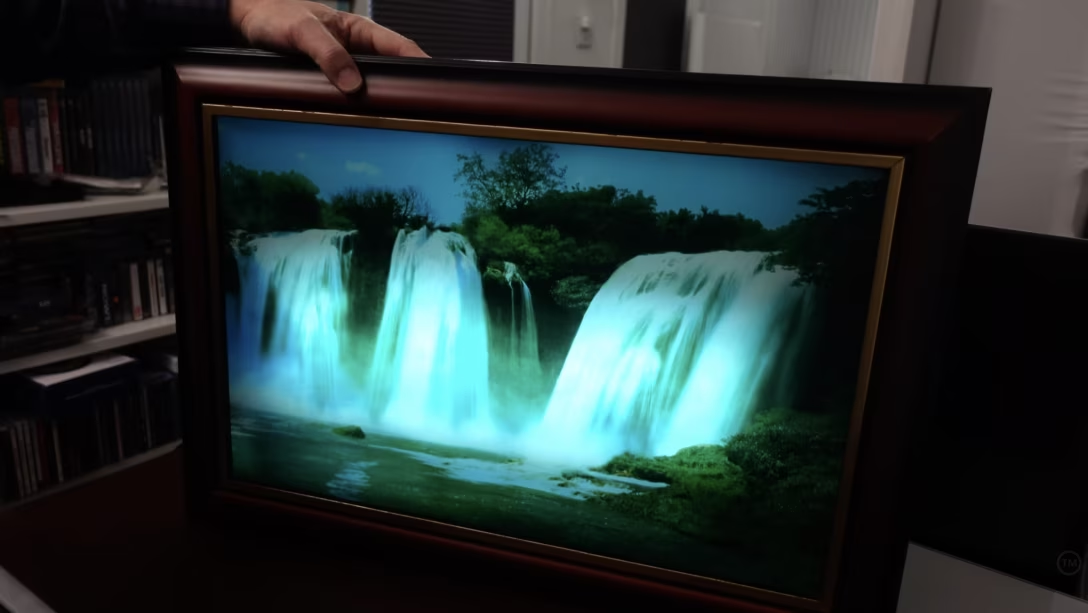
The art is (again) garish, and there is no screen to save here, but also curiously – there are no electronics at all, either. How was it made? I’ll let you click through to find out.
It was fun for me to revisit this strange moment in time and learn more. It’s not just that there were tons of shared ideas, repeated algorithms, independent inventions, and one-upping each other. What stood out to me was also how many people engaged here did other things I used and admired – SCRNSAVE’s Peter Socha created the absolute 🐐 Norton Commander, Jim Sachs of the marine aquarium screensaver fame did graphics for the legendary Defender of the Crown game, a few people at After Dark also made the original zoom peek gesture before that, and the incredible The Incredible Machine after.
It seems like a fascinating time that attracted people equally interested in tech as they were in its creative uses.