“Accents are an opportunity, not a burden.”
The iOS 26 update introduced a bug in the Czech keyboard. Instead of the customary háček (ǍǎĚěǦǧǏǐǑǒǓǔY̌y̌) in the bottom row, another key was duplicated, removing access to the accent character (or, a diacritic) very popular in that language.
Here is the before and after of this situation:
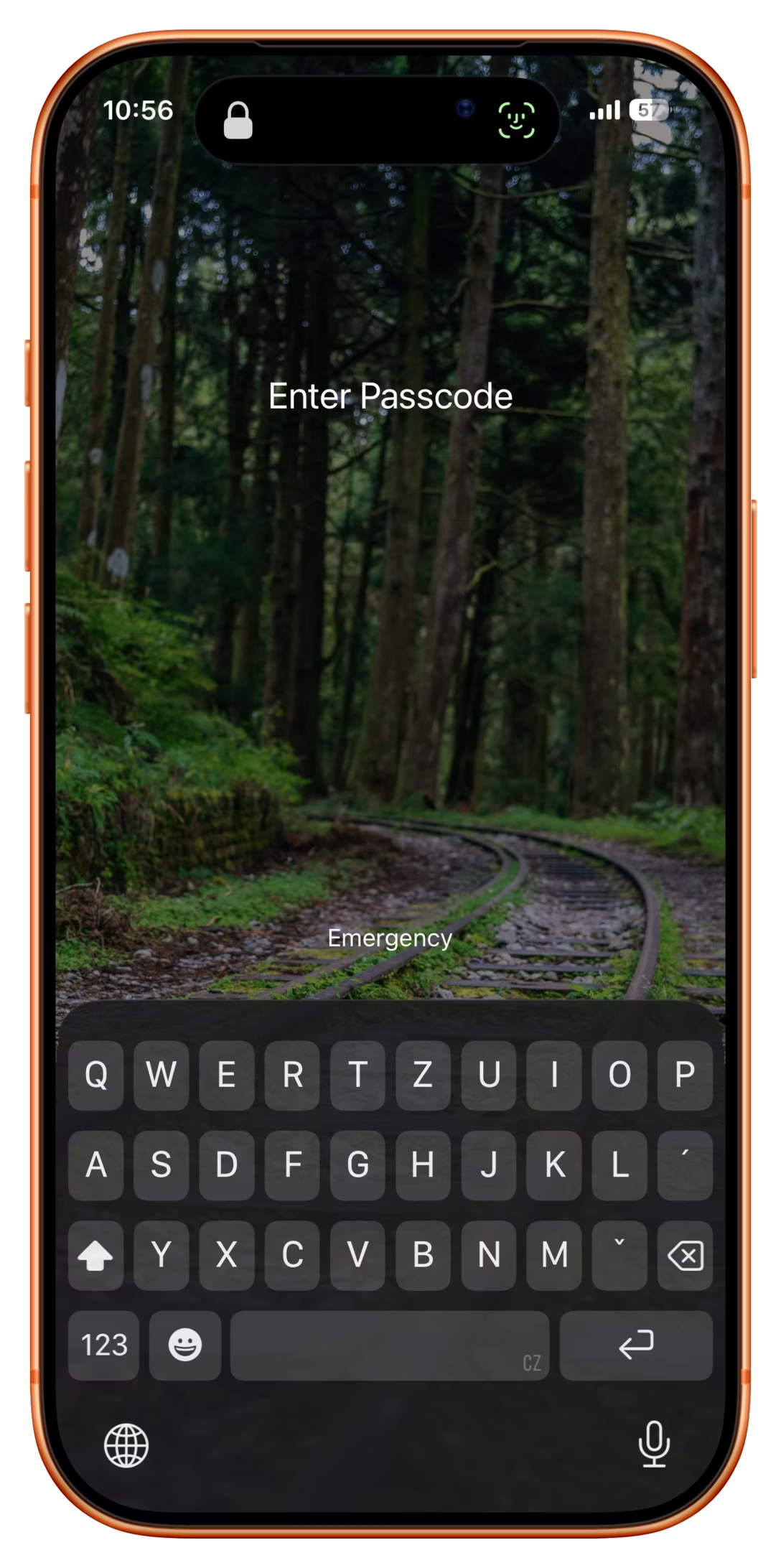
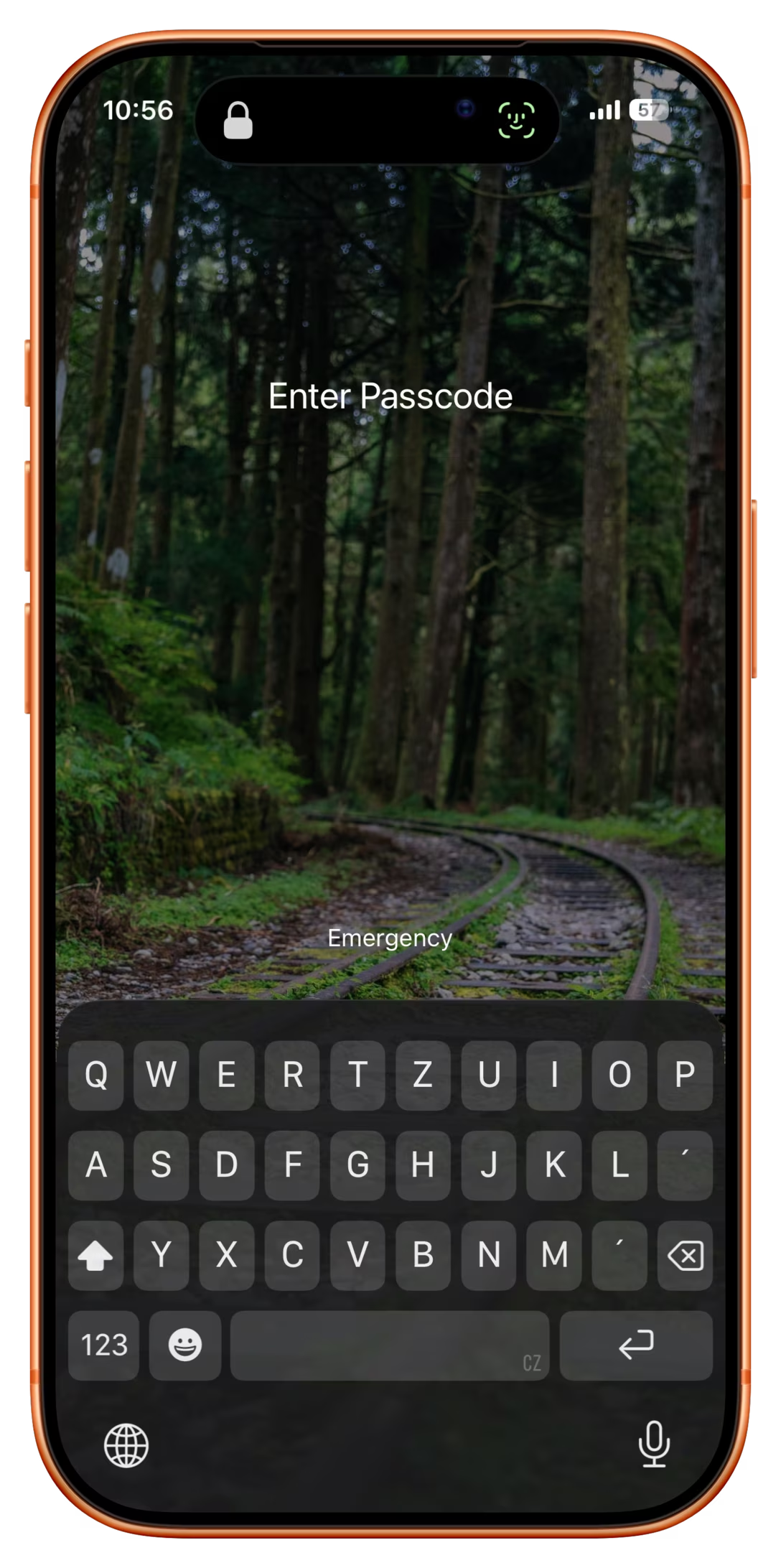
Ordinarily, this can be frustrating but not insurmountable; you can always copy/paste, rely on autocorrect to help out, or even add some topical text replacements for common phrases. The problem is that this bug only appeared on the keyboard used for logging on, and at least a few people used that character in their password. There, none of these workarounds were available – and so those people were now completely locked out of their iPhones.
The Register reported on this on April 12, and a few days later suggested that Apple was working on a fix. I won’t keep you in suspense; I just verified that the fix landed with the recent May 11 update.
This is, in an of itself, not a fascinating story, but with interesting things to talk about at its periphery.
First of all, The Register never showed a single screenshot. This led to a lot of confusion and speculation in the comments. Turns out, screenshots are valuable not just with bug reporting, but also with bug reporting.
Second, check out this Czech keyboard. Even within the limitations of the ancient QWERTY, there’s a lot of cool stuff happening here. Two new accented keys just appear on the top layer when you switch to Czech. Both have magical properties, too. They’re the modern “dead keys” that either stand alone, or get combined with the previous letter if that makes sense.
This is the stuff typewriters, and even desktop keyboards, could only dream of. But, as always, more software means more bugs, including some with unforeseen consequences; a typewriter could never break this way.
Thirdly, there is this interesting tension between us being led to believe “more interesting passwords are safer,” but then sometimes being penalized for actually making them interesting. A decade ago someone used emoji in their password without realizing they won’t be able to input it, and I’m sure there were other examples.
But the most interesting, to me, part? It’s the diacritic itself. Under one of the posts, a commenter wrote:
Stick with the 7-bit ASCII subset. You will never go wrong.
7-bit ASCII basically means “26 Western letters and nothing else.”
I hate this. I know it’s objectively true – in the late 1980s I felt a sense of relief my name didn’t have any of Polish language’s nine diacritics, which would complicate my life. Even just yesterday in Germany, I spotted this:
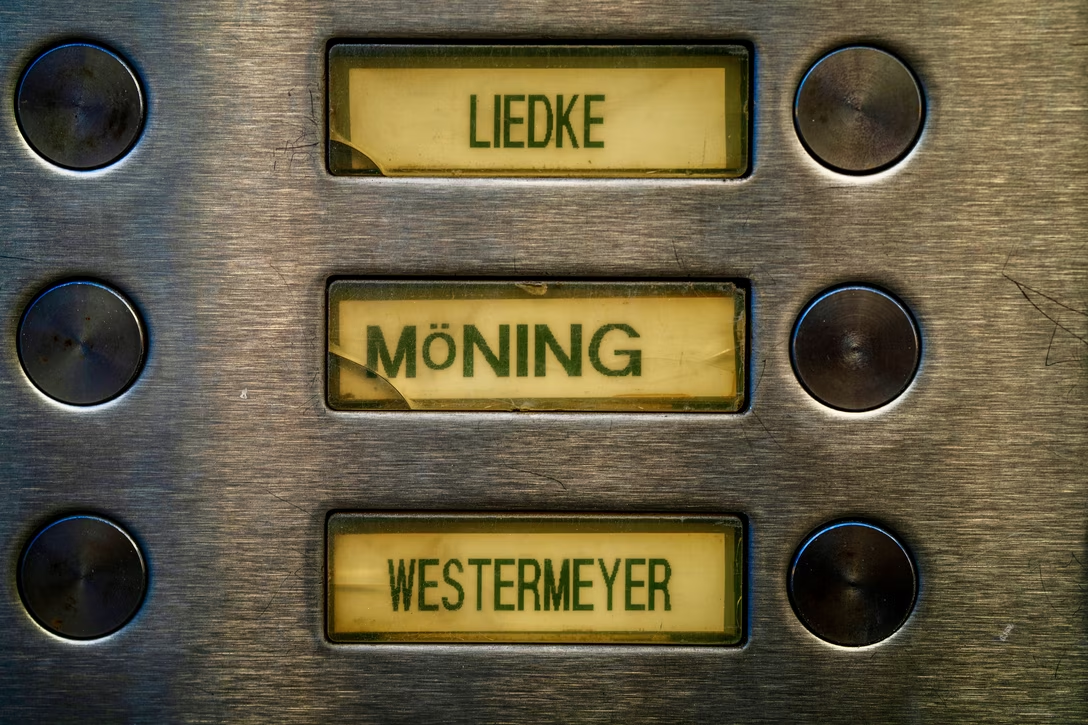
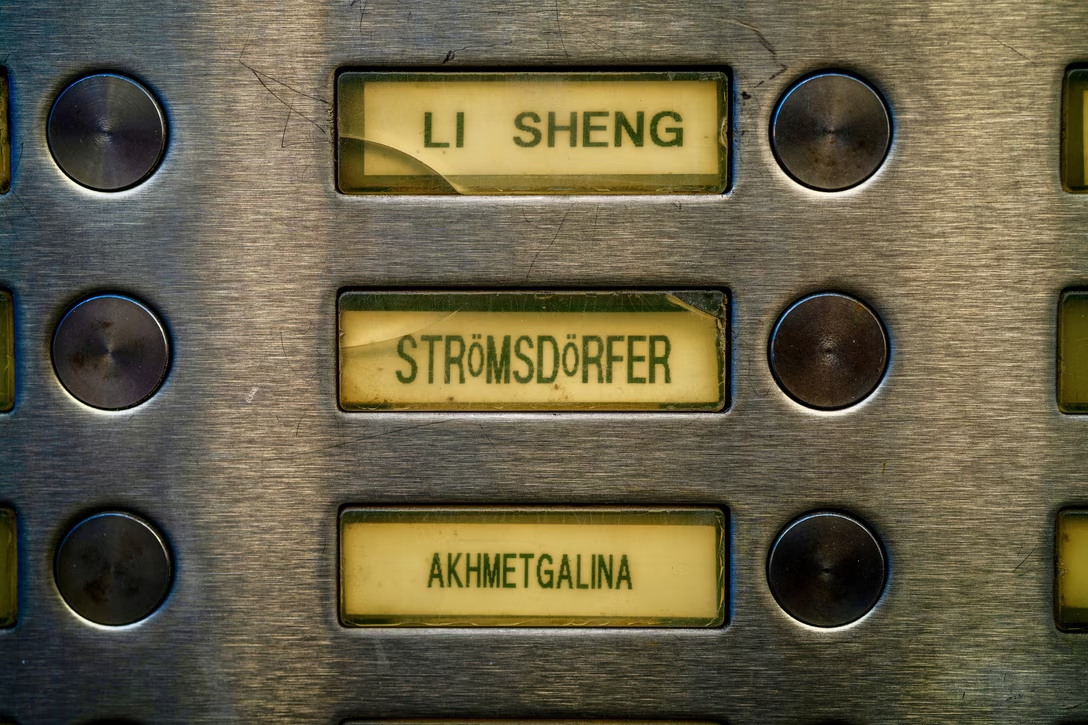
Software still struggles beyond ASCII. But this is why we need to keep pushing. Diacritical characters are to be found everywhere in the world. They’re detailed, and varied, and filled with histories. Umlaut is not diaeresis. Kreska is not the acute. A háček is not a breve. They’re rarely optional decoration, and often not even decoration at all; learning about Turkish dotless i might completely upend your understanding of what’s an accent and what is not.
If you don’t have a favourite diacritic, you are missing out. Even the names – grave! ogonek! horn! – are beautiful. (Háček is also known as caron and a wedge depending on context, and in other regions referred to with beautiful words kvačica and strešica.)
If you’re interested, here is David J. Ross’s 22-minute talk about getting to love diacritics from the perspective of a type designer. It’s filled with craft and playfulness:
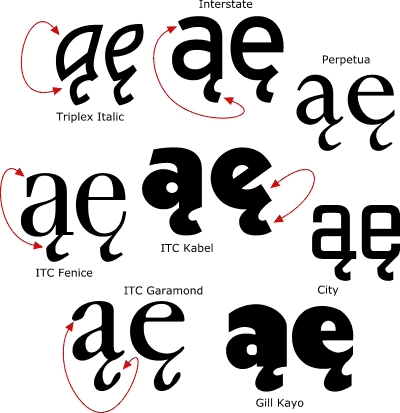
My favourite accent is, obviously, ogonek. Just looking at Adam Twardoch’s guide on how it should be drawn fills my heart with joy: