Flickr’s optimistic committing
Somewhere next to optimistic loading and optimistic saving exists another technique to make apps feel faster: optimistic committing.
Flickr is a great example. After navigating to photo upload, you enter a sort of a foyer where you can drag in the photos, reorder them, name and tag them, and otherwise prepare them before pressing the big Upload button.
But Flickr also optimistically assumes you will press that button, and slowly starts uploading the heavy photos in the background the moment you drag them in.
Like all optimistic schemes, being friendlier toward the user complicates things for Flickr’s designers and engineers. After all, there is still a regular upload modal after you do commit to the upload…
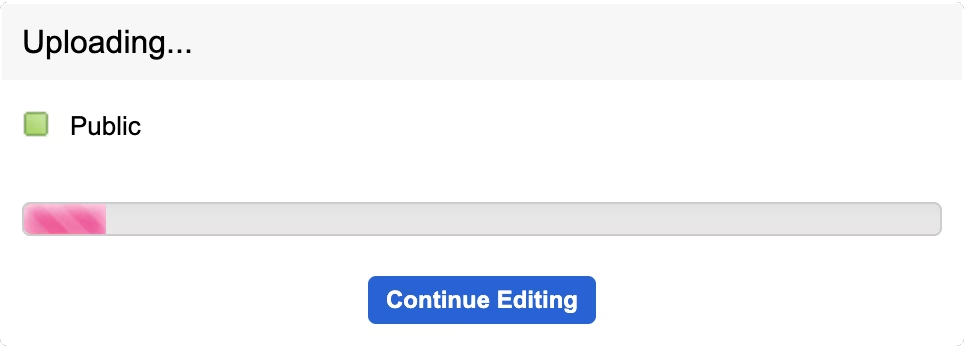
…so the two states – quiet staging area upload, and the official visible upload – have to be reconciled and kept in sync.
Also, optimistic but eventually cancelled uploads have to be cleaned up from the servers.
Lastly, there’s signposting. Contrary to lighter optimistic loading schemes, which typically simplify reality by pretending no data transfer is actually happening, the optimistic committing here is actually visible through small indicators:
I think this transparency is welcome. In the past, Meta (who else!) got into hot water for abusing optimistic committing:
Did you ever record a video on Facebook to post directly to your friend’s wall, only to discard the take and film a new version? You may have thought those embarrassing draft versions were deleted, but Facebook kept a copy. The company is blaming it on a “bug” and swears that it’s going to delete those discarded videos now. They pinkie promise this time.
In this context, it’s good that Flickr conveys data is being sent to the servers; I believe this helps with building trust.
On top of transparency, I think it’s also good that this process shows the progress of uploading with a lot of precision – not just between files, but also within each file. Internet connection speeds vary so much, not just geographically, but also even situationally, that this is really helpful in practice. There are many moments where auto saving to the cloud needn’t bother the user unless the connection goes offline for a longer while, but this feels like a situation where clarity is better than magic.