Not a radio pharma ad
I like sharing, thinking about, and revisiting basic rules and principles because they really do ladder up to help you with more complex things down the road.
I wrote before how a simple rule to give some breathing room to your length-limited edit fields can be upleveled to a more general “let me color outside the lines when I’m editing” principle. This is another example of a similar situation.
I am in Buttondown, which is a mailing list software. I created a quick test draft just to check something out in the editor, I didn’t do anything else, and then I proceeded to delete it. Then, I was greeted with this:
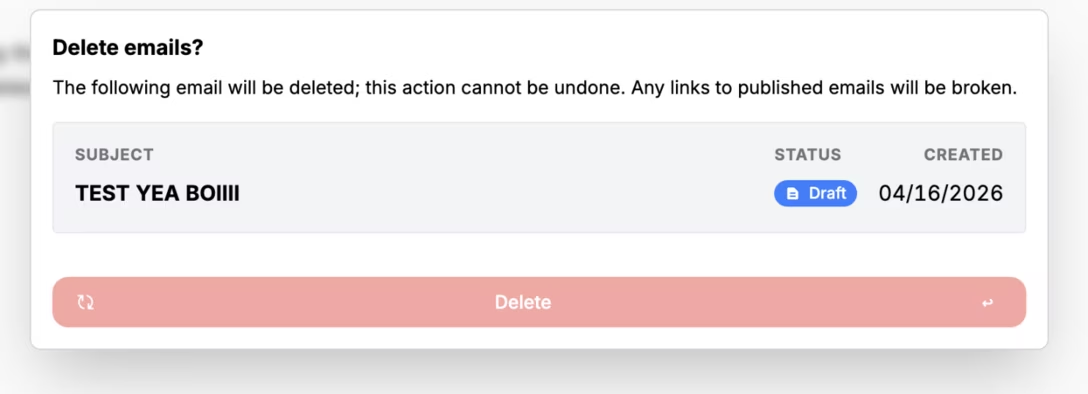
This is nothing more than a larger version of the “You have 1 email(s)” problem. There might be a situation when I’m deleting something that has been published and linked to. In that case, it’d be good to know about how any links to that thing will cease working.
But this is not that kind of a situation, and the software has all the info to know that. In this moment, it could show me a simpler, much less alarming message more appropriate to my situation. This is not the end of a radio pharma ad where you have to rattle out all the legal disclaimers just in case something could happen.
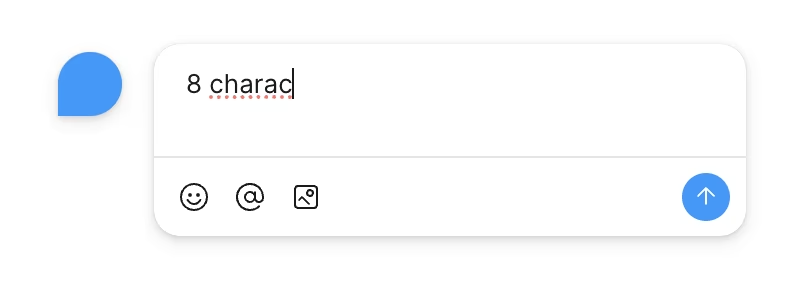
One tiny counterexample from my neck of the woods: in Figma, when you start writing a comment and then exit without posting it, you get a little warning. But you don’t get that warning when you type something that’s <= 8 characters. In this case, the assumption is that retyping a few characters elsewhere (assuming you haven’t just changed your mind altogether) is much easier and faster than cognitively processing and dismissing the warning.
The challenge with Buttondown’s dialog is that this is more than just extra cognitive processing and “cheapness.“ Here, the stakes are higher, as we’re talking about something adjacent to data loss; the dialog really does feel a bit scary and makes me think I can do some real damage in a situation no real damage is possible.