“Nothing short of a magic trick.”
A fascinating 25-minute video from Mark Brown at Game Maker’s Toolkit about how the team building Grand Theft Auto 3 conquered the technical limitations of PlayStation 2:
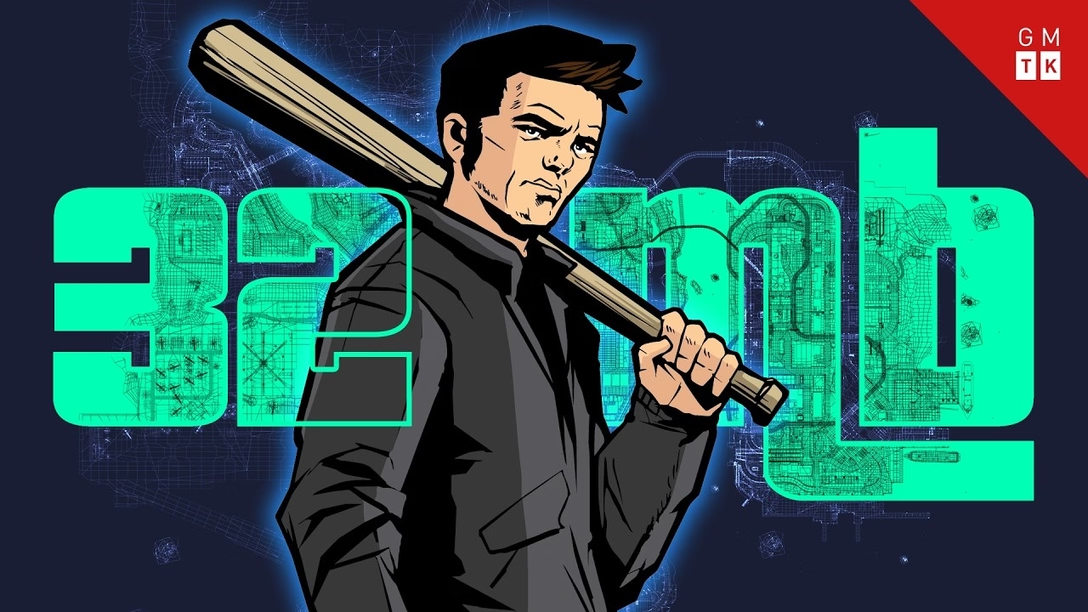
How do you squeeze a city that occupies over 50 megabytes into the 32MB memory of the console? You simply do what The Truman Show did, and construct the city around the player as they’re moving around:
This has, as you can expect, a lot of technical and even game-design consequences, and the video goes into a lot of detail on these – including Brown rebuilding the Grand Theft Auto 3 source to visualize things better.
This technique is also used in interface design, for example if you have a really long list of things that would take too much memory or GPU power to render. What the video calls “streaming” is, in the context of UI, often called “virtualization”: instead of having a full long list (or an entire world), you abstract it away – or, virtualize – into something nimbler.
Some of the challenges and techniques used by Grand Theft Auto 3 apply pretty directly here, as well:
- you can use UI skeletons as “low poly” models,
- in some contexts, you can guess the user is more likely to move in one direction (for example, going through fonts in a font picker), and more eagerly preload where they’re going to look next, rather than symmetrically in both directions.
On the other hand, “speedy players” and “pop in” can’t ever be solved because any UI list is random access, and slowing users down is not typically appropriate; better to make loading as pleasant as possible than introduce any roadblocks, even if figurative ones.