“Our programs are fun to use.”
Beagle Bros was a 1980s software company making apps for Apple II that is still remembered fondly for their personality.
The company had a hobbyist slant, selling various small tools and collections with fun names like Beagle Bag (in the “Indoor Sports” collection) and DOS Boss and Utility City – similar perhaps to Norton Utilities on the PC side, but with a lot more fun and charisma. This is one of their loading screens, also showing both their recognizable logo and their endearing quirkiness:
The fun and well-photographed interview in Softalk in 1983 starts like this:
How do you understand a man who has three clocks on his wall, showing the time in three different cities-San Diego, Fresno, and Seattle-all, of course, showing the same time (″If anything changes in those cities, we’ll know about it”)?
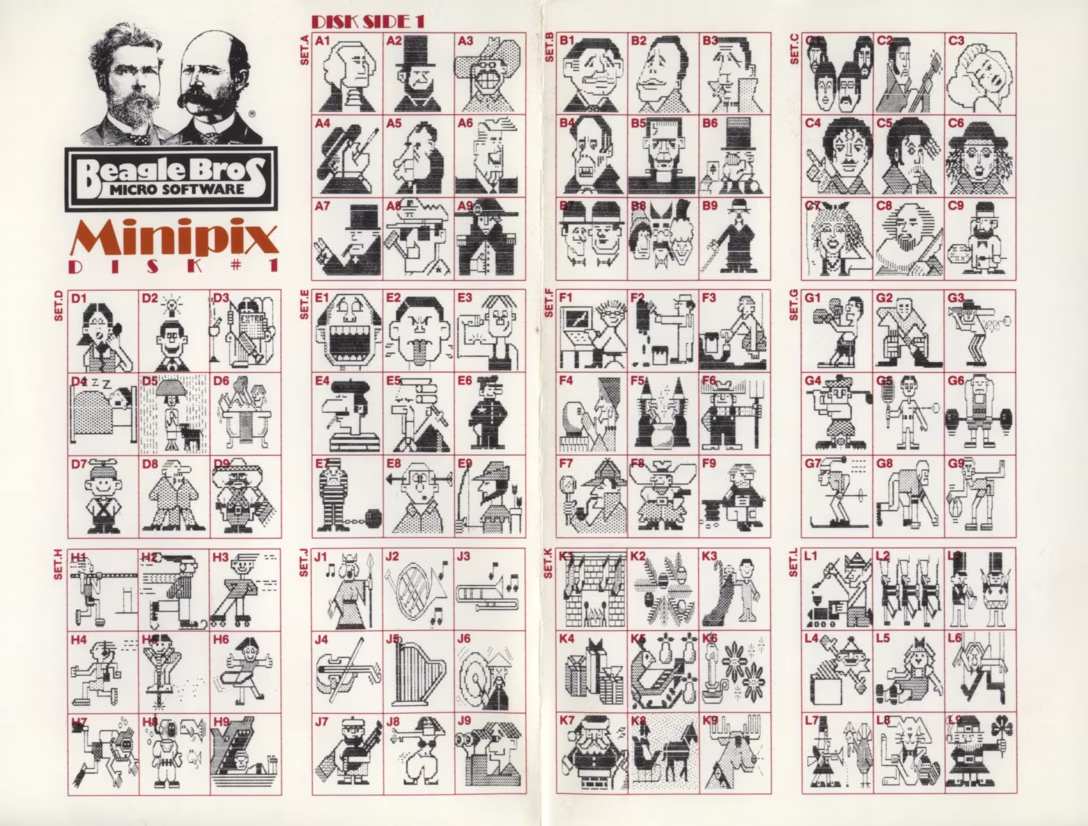
…and has images like these:
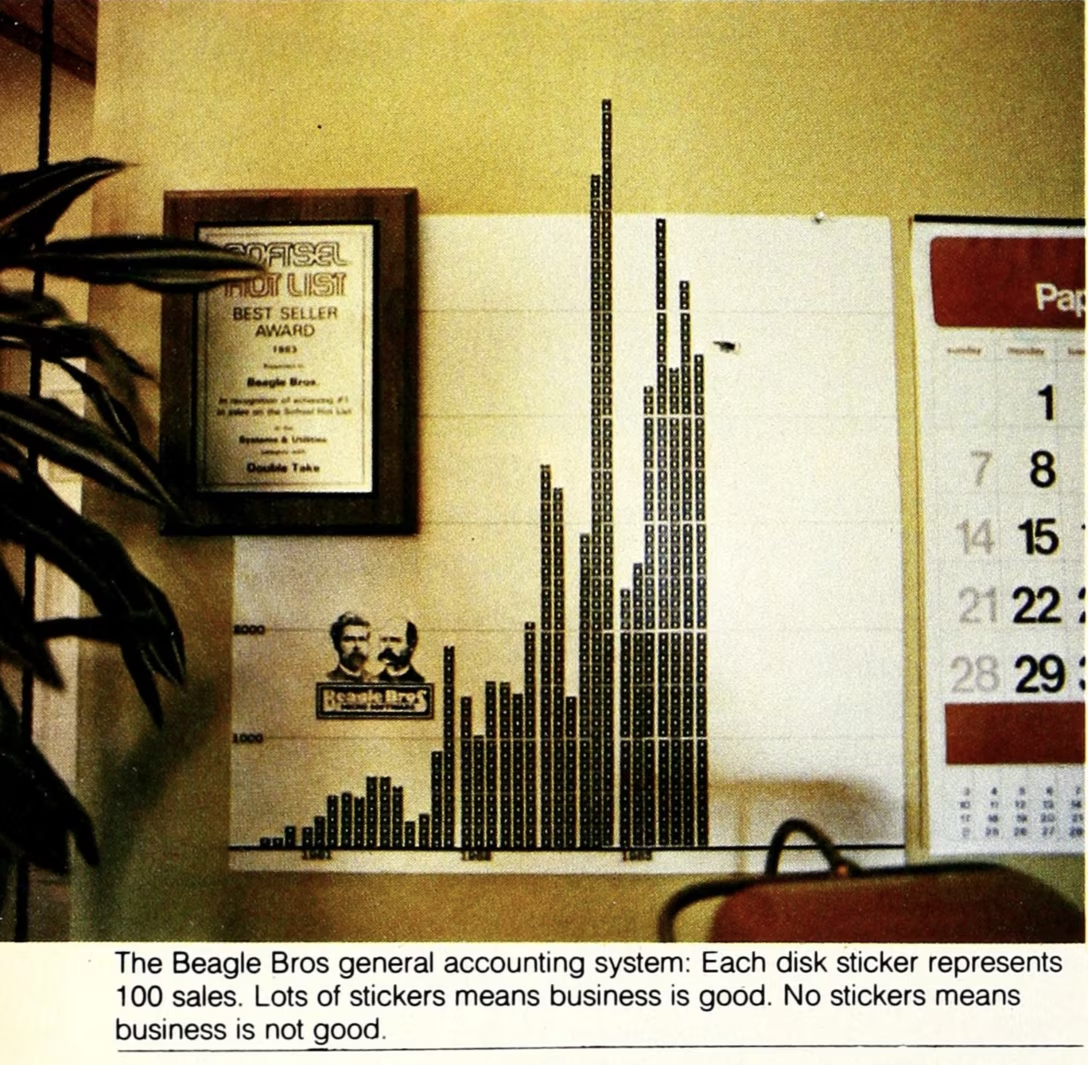
Beagle Bros catalogs and manuals were filled with old-timey woodcut illustrations repurposed to tell jokes:
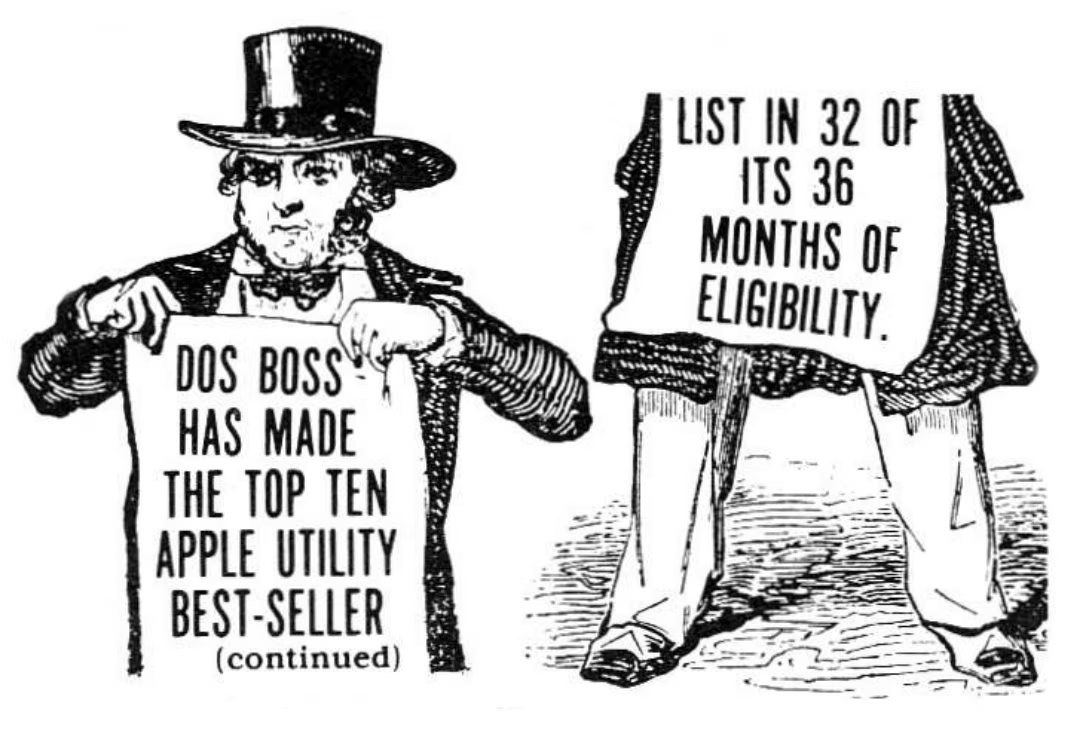
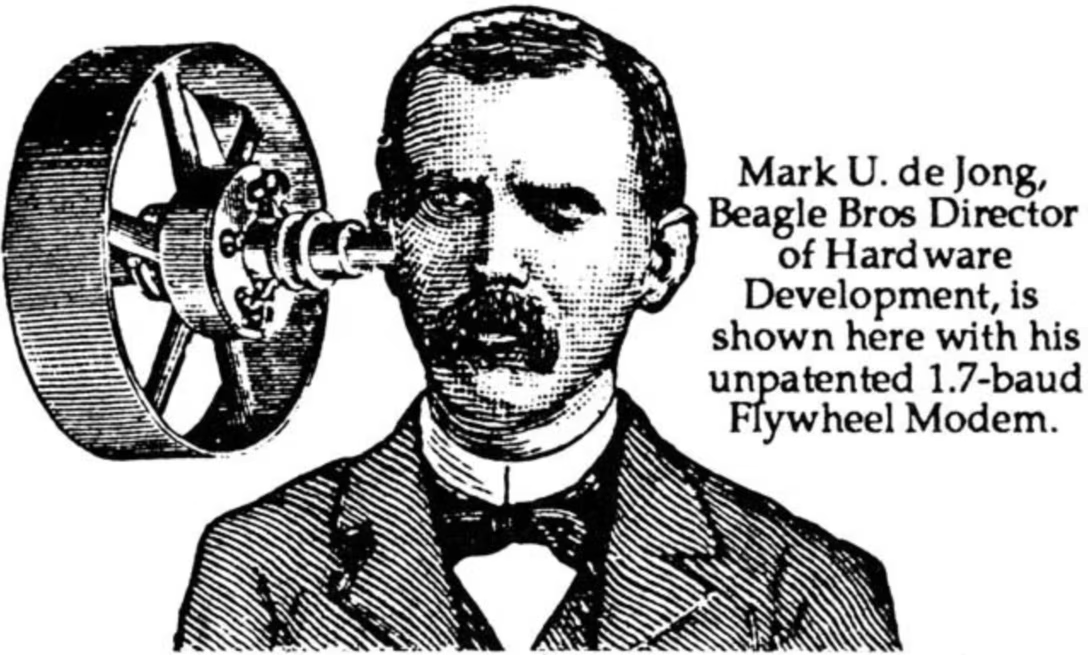
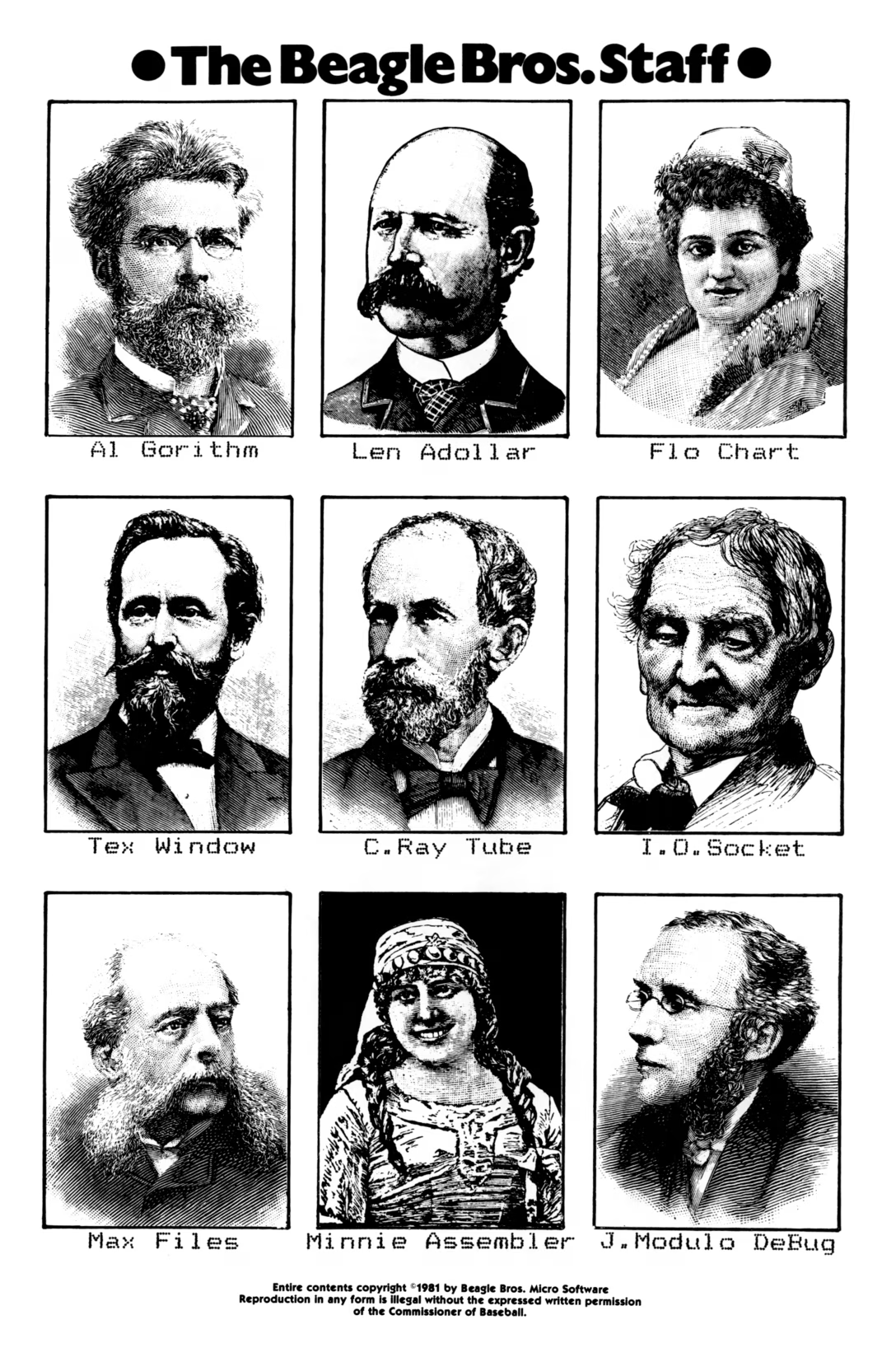
(I find the anachronistic combination of hedcuts and dot matrix printer typography particularly fascinating.)
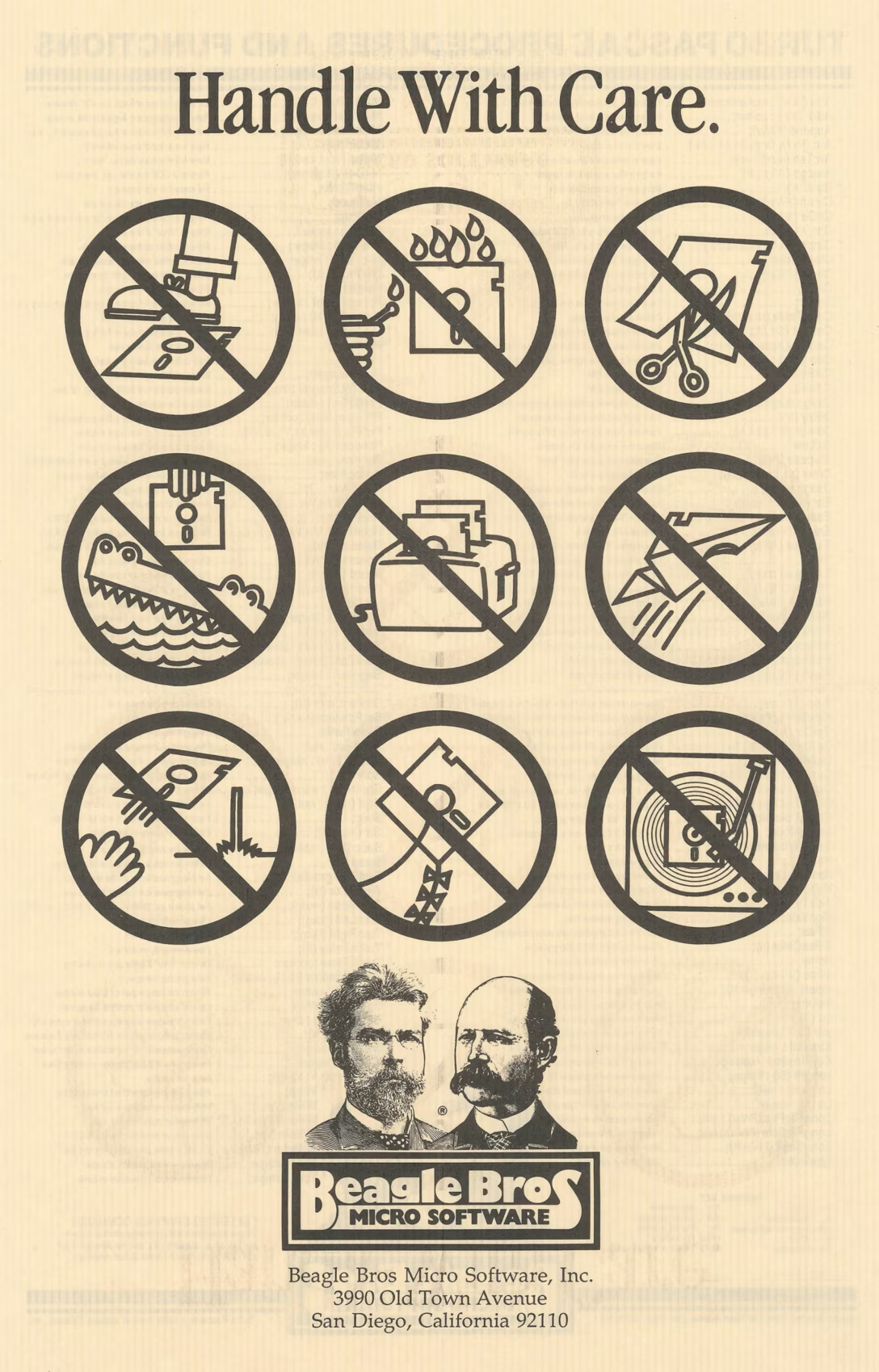
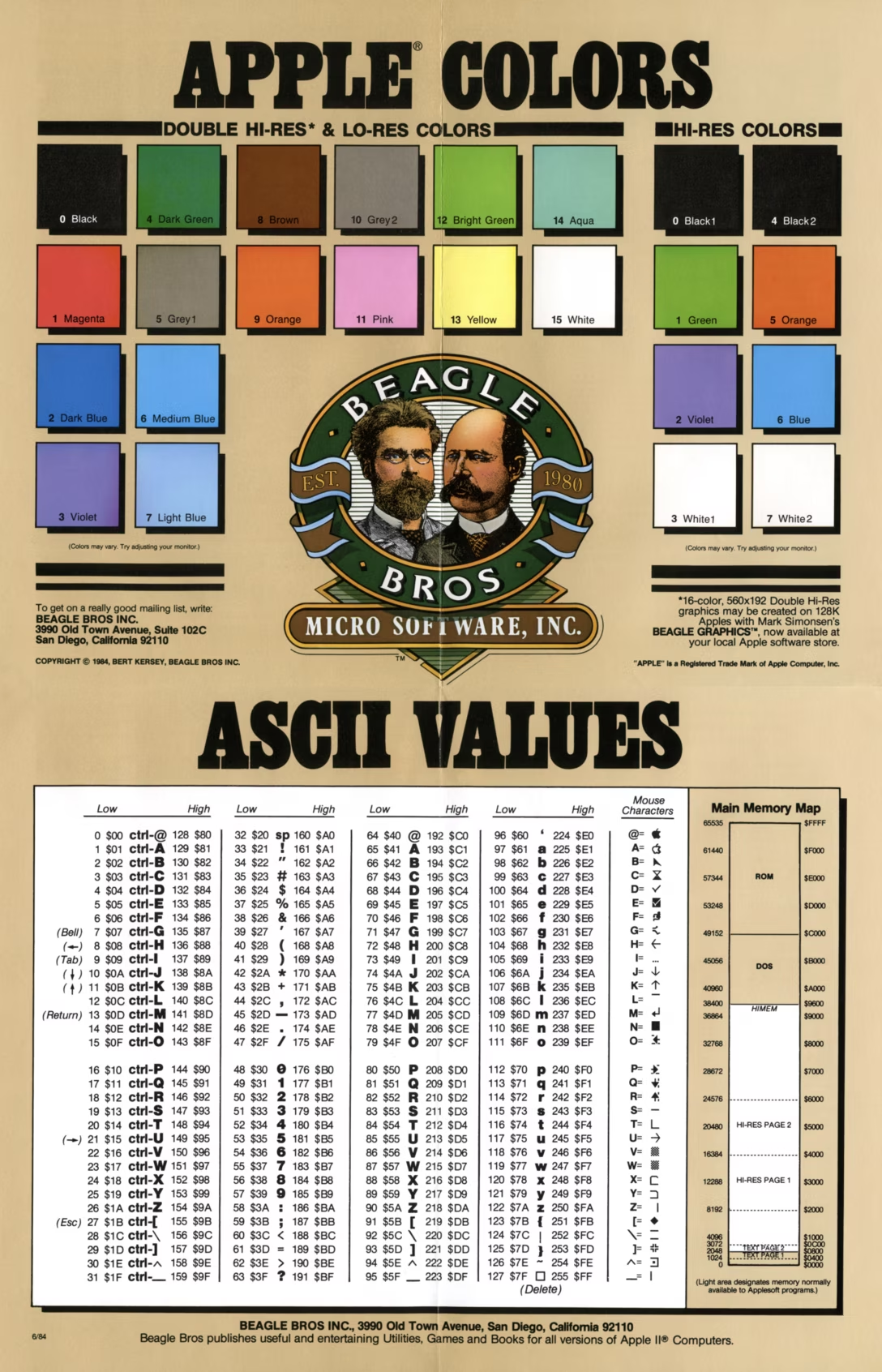
Some of their software was more serious; Beagle Bros released many useful tools and even text editing and presentation apps. They also made practical posters:
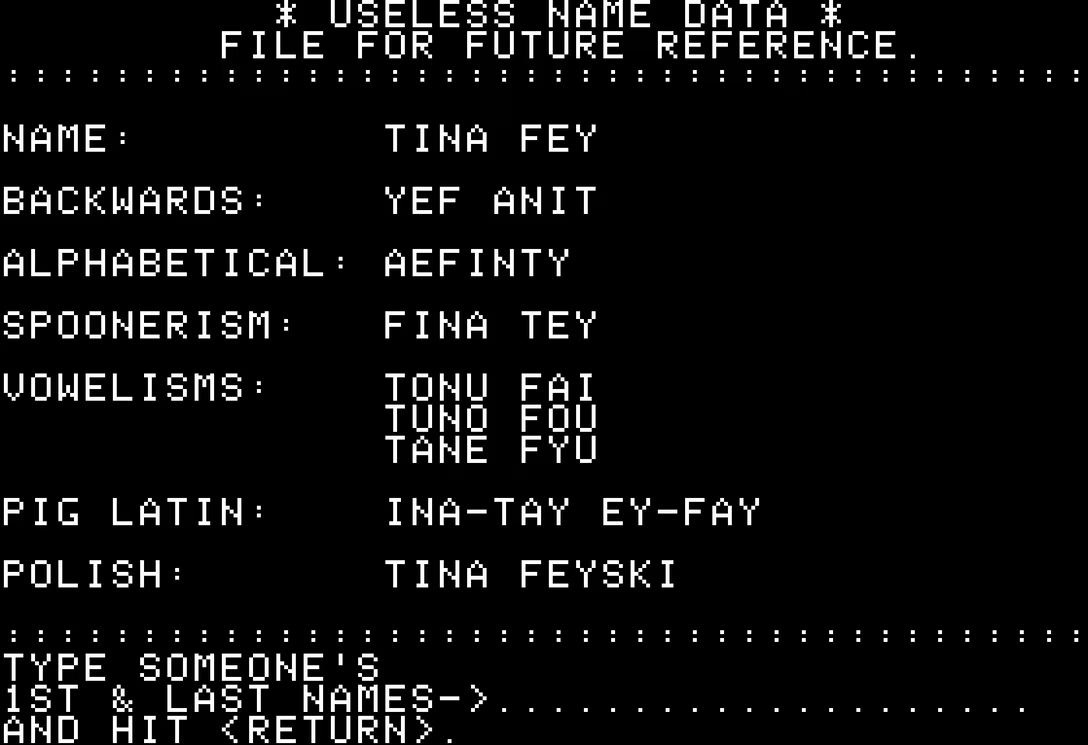
But other stuff…? It was just goofing off:
How does this relate to craft and quality?
There is this interesting question about how much product and marketing and vibes and lorecorrelate. Did we forgive Sierra On-Line the numerous flaws of their games because we liked the company? Do we love Panic because we like what they do, or because of how they do it? Did Google put doodles on its homepage to distract people from more nefarious things, or because it just felt like a fun way to celebrate things? Is there such a thing as pure selflessness? What is the nature of free will?
Those are, perhaps, topics for future posts.
But Beagle Bros must have been doing something right if there is still a living, elaborate catalog of their works online, 40+ years later. Jeff Atwood also argued in 2015 that it was more than just fun – or that “fun” itself can give back in great ways:
Here were a bunch of goofballs writing terrible AppleSoft BASIC code like me, but doing it for a living – and clearly having fun in the process. Apparently, the best way to create fun programs for users is to make sure you had fun writing them in the first place.
But more than that, they taught me how much more fun it was to learn by playing with an interactive, dynamic program instead of passively reading about concepts in a book. […]
One of the programs on these Beagle Bros floppies, and I can’t for the life of me remember which one, or in what context this happened, printed the following on the screen: “One day, all books will be interactive and animated.”
I thought, wow. That’s it. That’s what these floppies were trying to be! Interactive, animated textbooks that taught you about programming and the Apple II! Incredible.
Steven Frank, the co-founder of Panic, wrote this in 1999, with similar themes:
You never knew exactly what you were going to get. I remember one program listing printed on the side of a bird that, when run, produced a series of wild chirping noises from the Apple’s speaker. And this was from a program that was only five to ten lines long. As a neophyte BASIC programmer myself, I was stunned and amazed. How could you make something this cool with this small amount of code? […]
Beagle Bros’ tools were fantastic. They literally let you do the (allegedly) impossible, like change the names of operating system commands. And they always packed the disks full with extra stuff. Demos of their other products, and strange graphics hacks that existed for no reason other than the fact that they were cool, and because there was spare room on the disk. Beagle Bros. had a lot to do with why I ever wanted to learn programming in the first place. […]
I’ll never forget the book. […] The book was a huge compilation of all around interesting stuff. Weird Apple II tricks that were pointless, but endlessly fascinating. Like the fact that there were extra offscreen pixels of lo-res graphics memory that you could write to, that never got displayed. Or how to put “impossible” inverted or flashing characters into your disk directory listing. Or how to modify system error messages. Not very useful, but really fun to know and really, really cool to mess with. My dad was convinced I was going to somehow break the computer with all this hacking, but a simple reboot always fixed everything.
(I swear I did think of Panic above as a spiritual successor to Beagle Bros without knowing that their work literally inspired one of the Panic’s founders!)
Frank’s essay provoked more emails, and this excerpt caught my attention:
The subtlety: They had utilities which would produced formatted Basic listings and they would give example output of these utlities in their ads and catalogs. It was quite a while before I realized that most of those examples were not program excerpts, but complete programs which of course contained the Beagle Bros signature weirdness. And then there were the seemingly innocent hex dumps. My favorite was from the cover of one of their catalogs, which had a classic picture of this fellow sitting in a chair. On the floor next to him is a handbag with a piece of tractor paper sticking out. On the paper is a hex dump: 48 45 4C 50 21 20 and so on, which are ASCII codes that spell out the message: “HELP! GET ME OUT! I’M TRAPPED IN HERE!----SOPHIE”
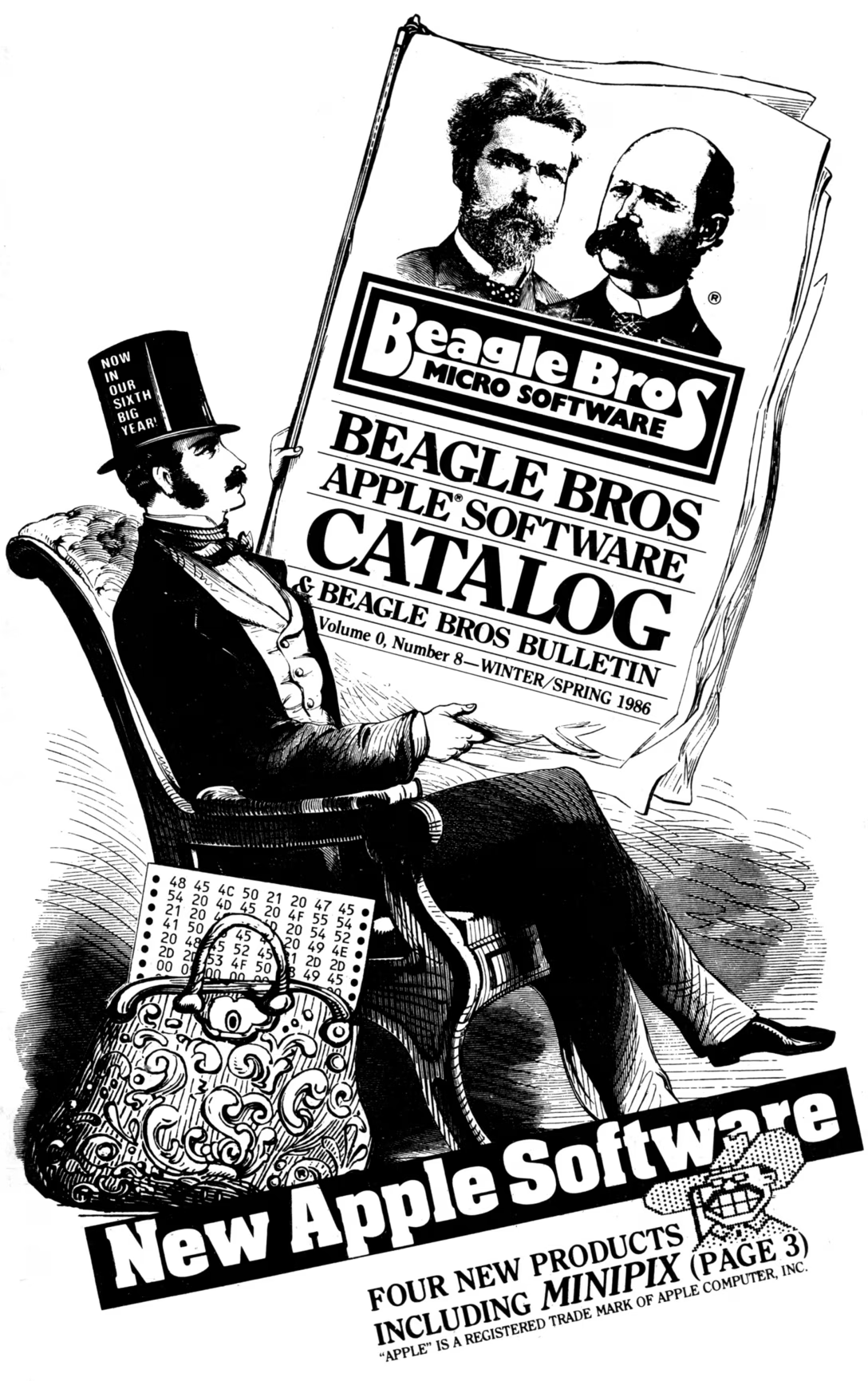
Toward the end of the prolific 1980s, Beagle Beos tried to strike it big by making an integrated office suite:
After the work the company had done on AppleWorks 3.0, Simonsen felt ready to jump into the Macintosh market with a “Mac AppleWorks” of their own – they called it Beagle Works. Unfortunately, other companies – giants in the Mac market such as Microsoft, Claris, and Symantec – had the same idea. Their resources were far greater than Beagle Bros had imagined, and the race was costly.
The gamble killed the company. It’s likely that the changing software market would anyway.
But the years before seem to still inspire some people. Check out the Beagle Bros Repository – the homepage is a bit confusing (I think it prominently shows last-updated or last-added things for some reason?), but just use the nav at the top. Maybe it will inspire you, too.