“Rather than fighting my tendency to type these two characters in my omnibar, I neutralized it.”
An interesting short story from Ernie Smith at Tedium, who ventured out to do the opposite of what we usually cover on this blog – disrespect his motor memory:
Recently, I made a realization: I have been unwillingly addicted to Facebook for a long time, and it’s not even because I like Facebook. Rather, it’s because I find it an extremely easy URL to type into a modern web browser’s omnibar. This sounds crazy, but the first two letters, f and a, are on the home row, and I don’t really rely on bookmarks, but my browser’s history function to type in URLs.
This creates a sort of recency bias. If I type in the same URL a lot, it’s the one that pops up the most. And so, if I’m at a browser with no clear idea of what my intent for the next page I load up, I inevitably type in “fa,” which would suck me in. […]
So, what I ended up doing was creating a URL that does nothing but forward to Google News. […] The result is that whenever I type in my new Facebook URL, I go to a news aggregator, which is inevitably what I was using Facebook for anyway. A week later, and my Facebook usage has gone down considerably.
There is something really interesting about creating your own URL. Smith doesn’t disclose his, but you can imagine it’s something like facebook.aresluna.org that just redirects to a news aggregator. If creating a new URL is too difficult, there are always other options:
Wanna go to fatberg.com every time you load your computer? Or maybe faxtoy.net?
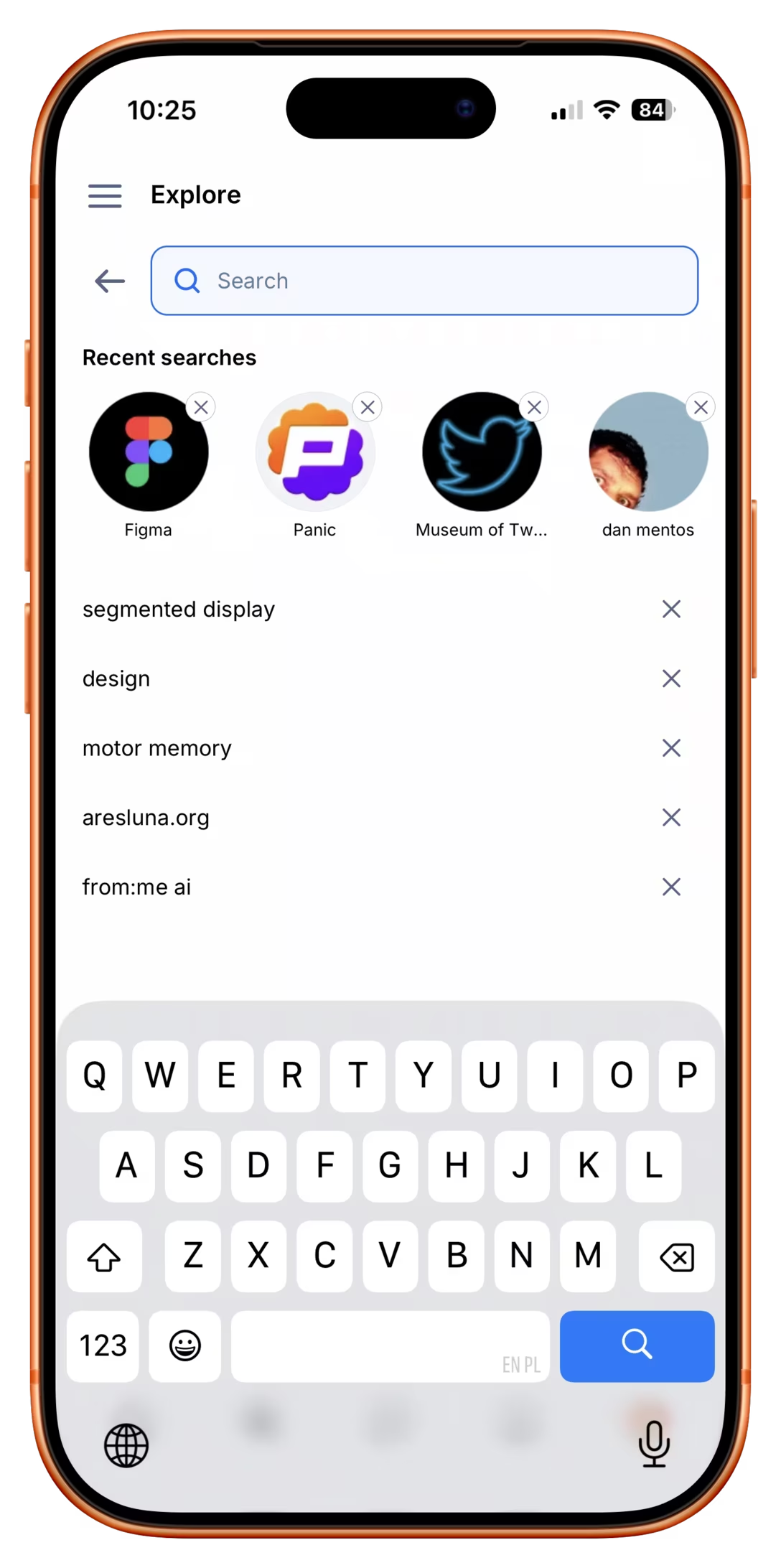
This is a good example of some of the challenges with “recent” interfaces I am such a big fan of. If you’re designing recents and you think they can turn against the user or otherwise get in their way, it’s good to offer not just a “clear recents” feature that gets rid of them all, like here in Apple’s Music…

…but also individual clears, like here in Bluesky:
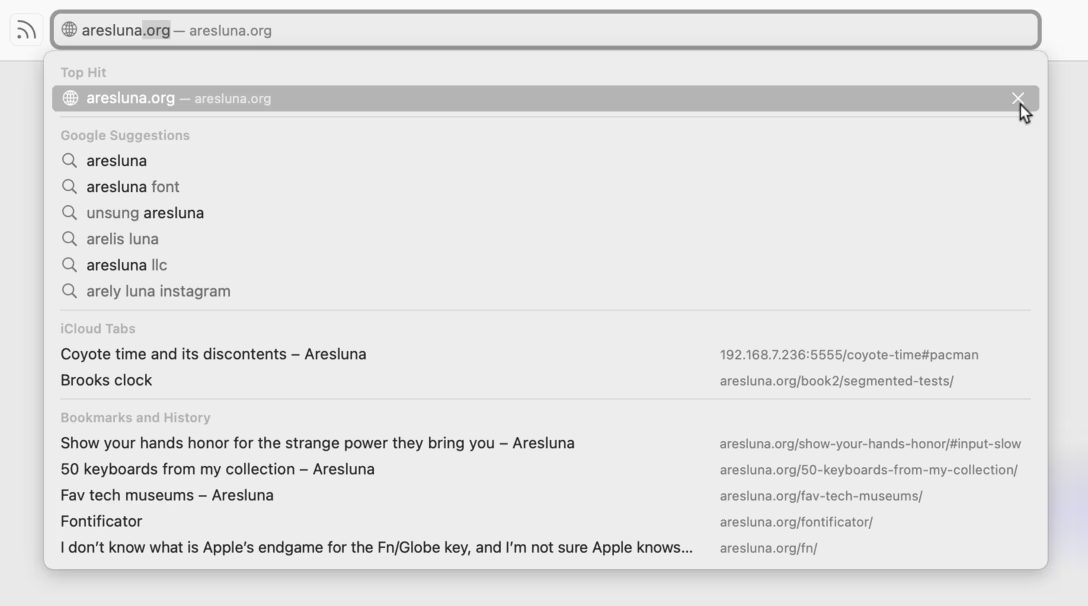
I don’t know if this is true for all the browsers, but in Chrome and Safari, you can also clear individual suggestions this way:
Smith writes a bit more about the addictive nature of computers, but I’ll let you read on your own.