“The evilest will-breaking browser game to exist.”
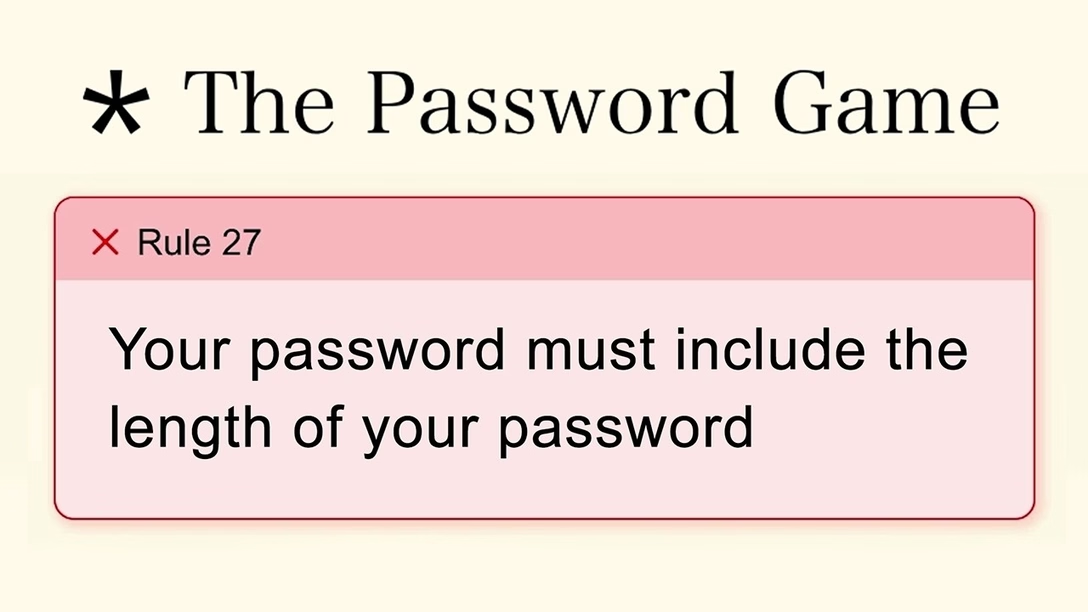
In 2023, Neal Agarwal created The Password Game, a viral browser-based game. Wikipedia has a nice summary:
Although the initial requirements include setting a minimum of characters or including numbers, uppercase letters, or special characters, the rules gradually become more unusual and complex. These can involve managing having Roman numerals in the string to multiply, adding the name of a country that players have to guess from random Google Street View imagery (as a reference to GeoGuessr), inserting the day’s Wordle answer, typing the best move in a generated chess position using algebraic notation, inserting the URL of a YouTube video of a randomly generated length, and adjusting boldface, italics, font types, and text sizes.
The explanation goes on for another paragraph, but I don’t want to spoil too many surprises. However, if you’re not a puzzle kind of person, you can just watch a 40-minute video of Bog trying to beat it:
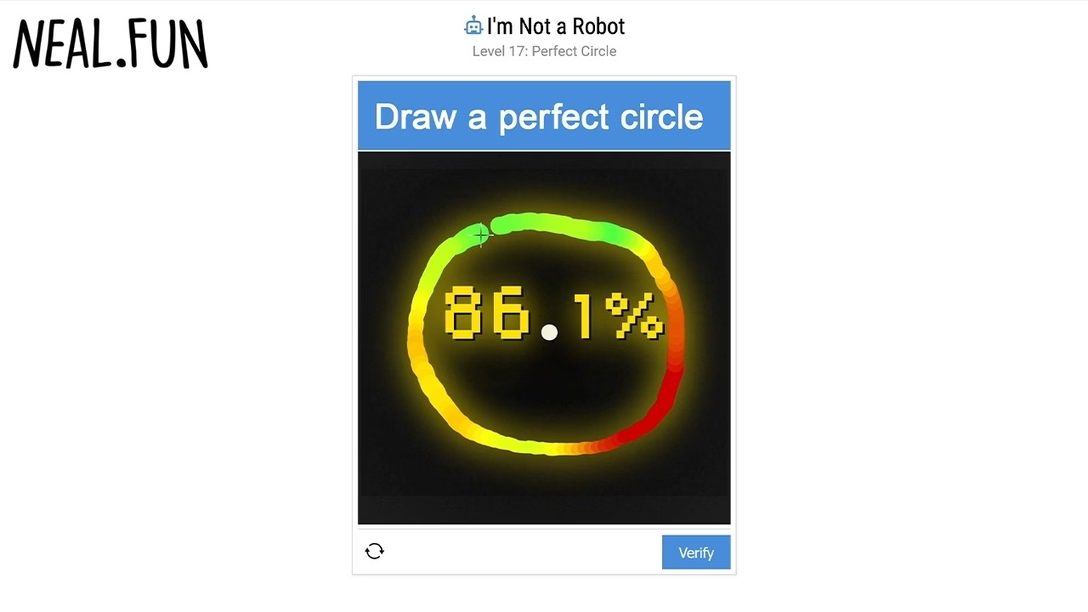
Last year, Agarwal followed The Password Game with I’m Not A Robot game, making fun of similarly onerous CAPTCHA requirements. Here’s Bog completing it once again – and you can also find other YouTube creators doing the same for both games:
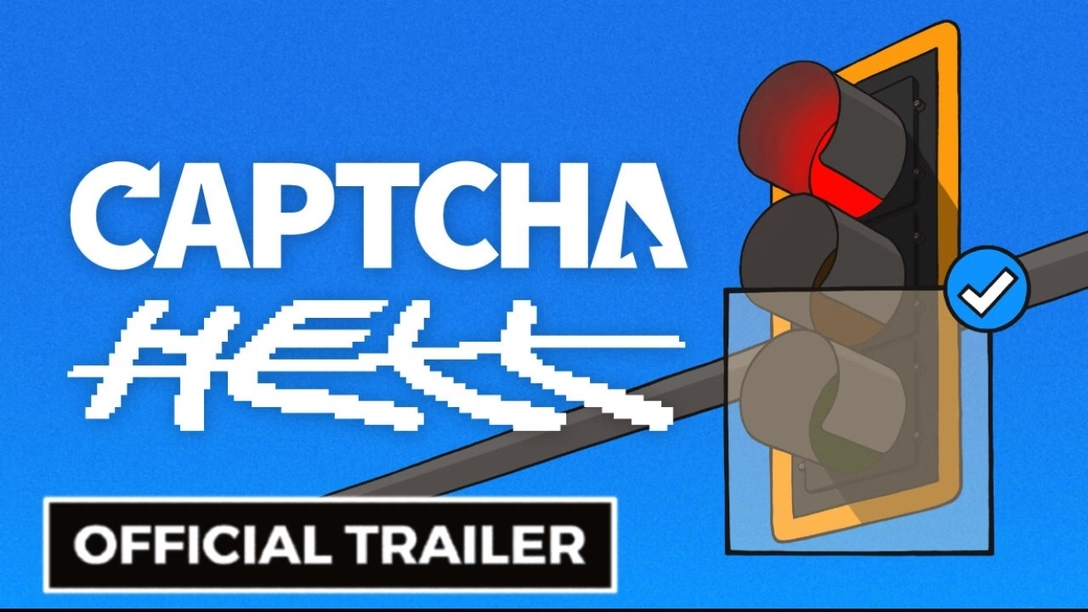
In the same category, a game designer Linternet User just launched a teaser for their game CAPTCHA Hell, which has a different take and looks fun:
I need to add that underlying all of this “fun” is not just tons of frustration with passwords and CAPTCHAs, but also a genuine accessibility problem, as described by Robin Christopherson in 2019 in an article titled AI is making CAPTCHA increasingly cruel for disabled users, or by A11y Collective a few years later. I don’t know what is the absolute latest in the battle with AI bots; anecdotally, I have been seeing almost zero text CAPTCHAs and less visual CAPTCHAs, at the expense of more and more CloudFlare turnstiles (and Google’s equivalent), which make you only click the button, and do a lot of work under the hood to determine if that button press felt human-y or robot-y:
These challenges include proof-of-work (computational puzzles), proof-of-space, probing for web APIs, and various other challenges for detecting browser-quirks and human behavior. As a result, we can fine-tune the difficulty of the challenge to the specific request and avoid showing a visual or interactive puzzle to a user.
There is no more explanation. I think the nature of the beast is that the actual details of how to tell one group from another cannot be shared, which is a shame – I’m very curious.