“The little details he’d missed became obvious.”
From the Animation Obsessive newsletter, a fun and nicely illustrated recounting of the way Jordan Mechner animated his seminal games Karateka and Prince of Persia. It’s rotoscoping, as everyone knows by now, but on a hard difficulty mode:
Mechner’s setup for Karateka was wild. Over his Moviola screen, he taped thin paper, upon which he traced key frames from the Super 8 footage beneath. Then he took his pencil sketches to a VersaWriter — an early drawing tablet — and traced them on that. Frames of movement became pixels on his computer monitor. From there, he cleaned them up with an art program he’d coded.
If this was a fun read, here’s a good complementary 20-minute video from Ars Technica about a specific challenge in Price of Persia:
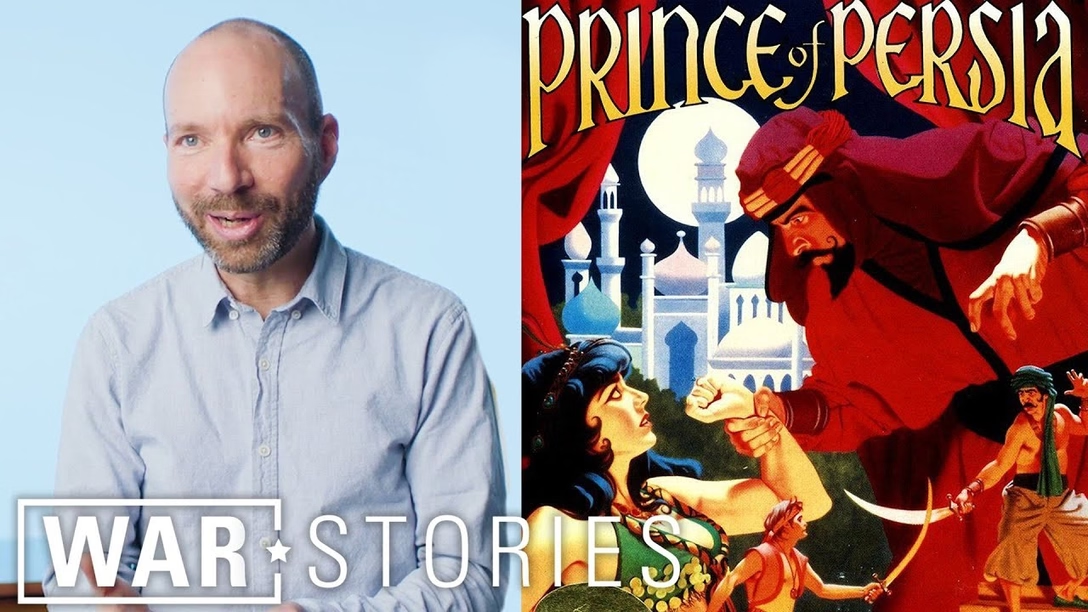
Everybody who saw the game oohed and ahhed. It was like a great proof of concept, but it wasn’t that much fun to play, and I kind of had the sinking feeling as I realized that I’ve done almost everything I meant to do, but it just doesn’t have that excitement that I was hoping for.
Also there was a ticking clock, which is that the Apple II platform was dying.
[…] So this was the problem: two years into development, I’d used up all the memory to get as far as I’d gotten, but the game was missing that suspense and excitement and sense of conflict that had made Karateka so simple and so much fun. What was I gonna do?
It’s a great example of a creative technical solution, which also informed the game’s storyline – a perfect collaboration between design and engineering.