“This was a user-friendly computer.”
The Pixar animated short Lifted was released in front of Ratatouille in 2006:
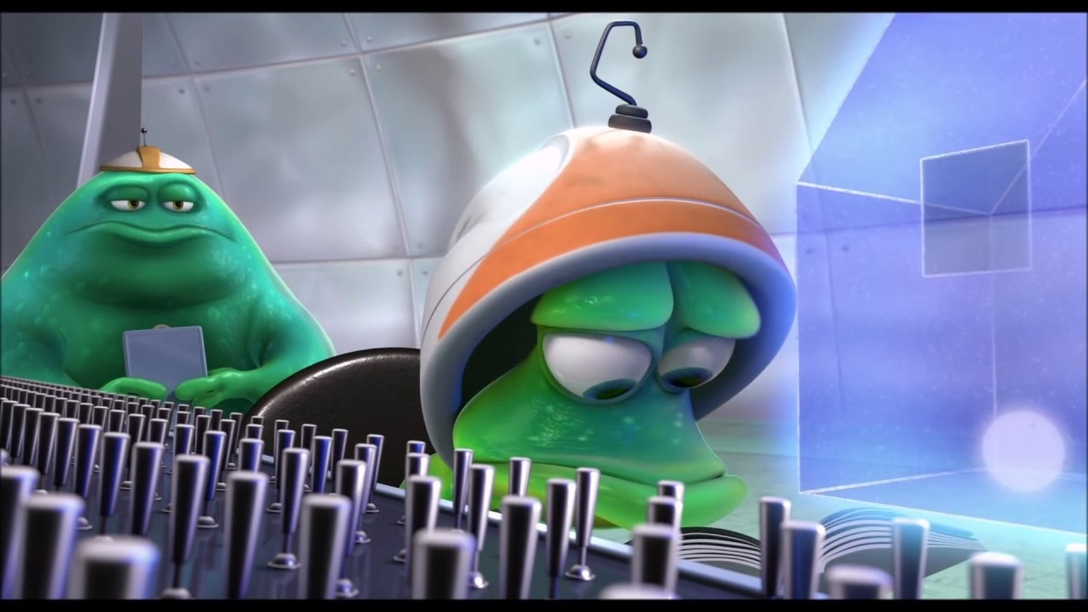
I’ve always been amused by this imaginary interface, which is so clearly not how any sort of computer would work.
Or so I thought. These are photos I took in Melbourne in 2024 of CSIRAC, Australia’s first digital computer from about 1949:
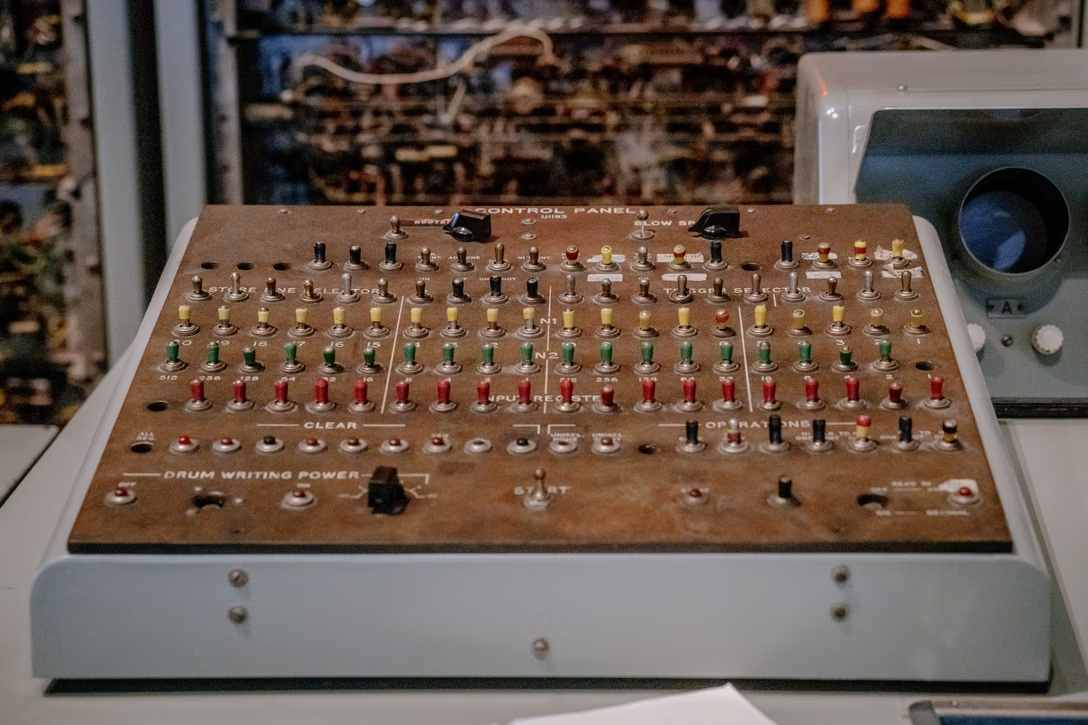
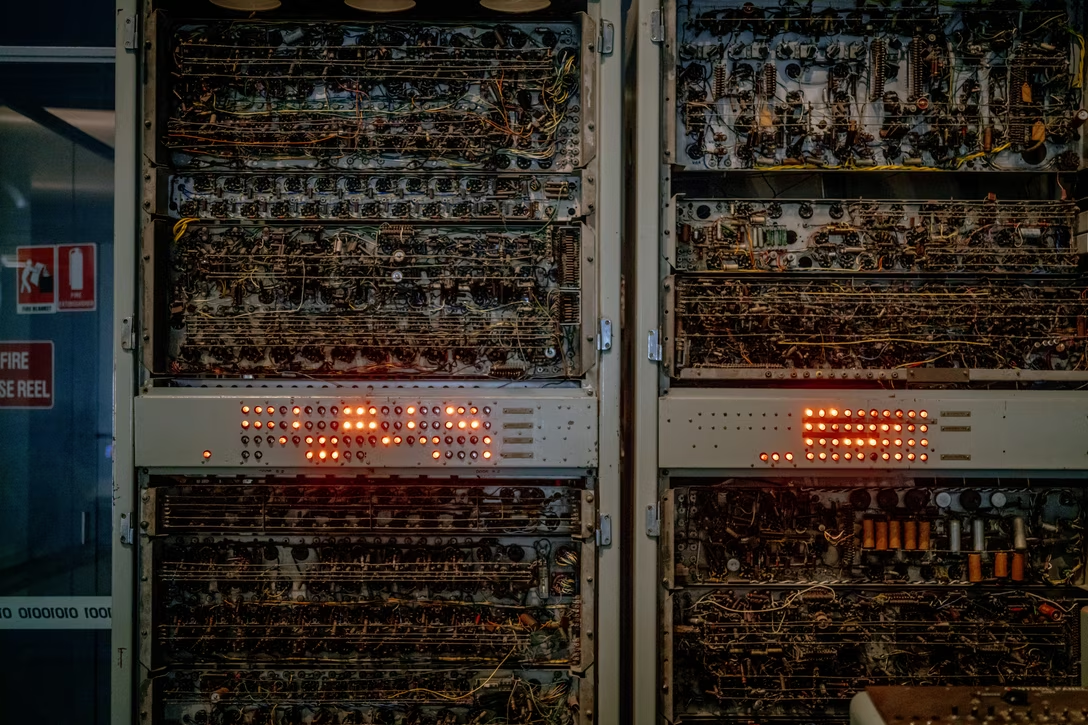
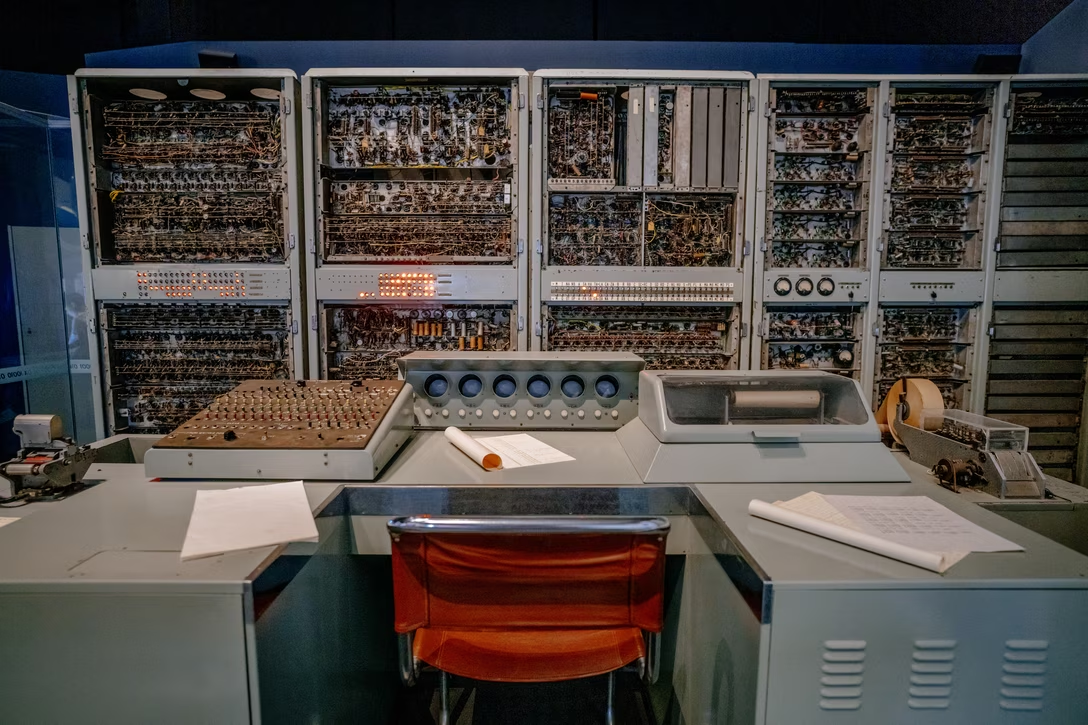
This is a “console” of the computer, used to tactically probe or input specific memory addresses (in binary), and to control functions like stopping and starting the program. Any proper programming and eventually inputting data would happen using gentler I/O devices like typewriter keyboards, paper tape, and magnetic storage.
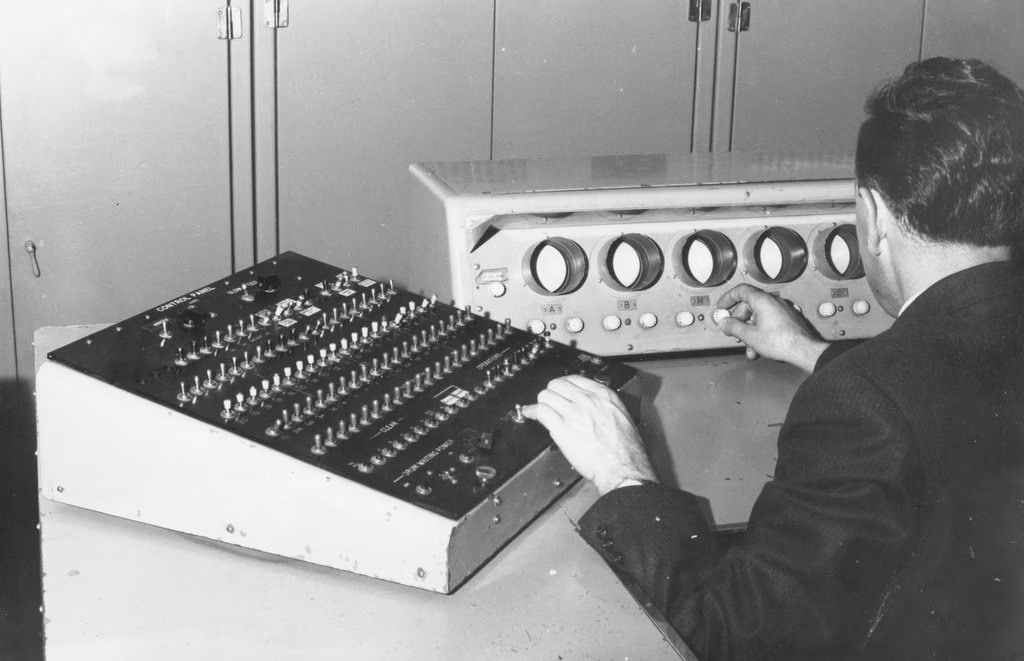
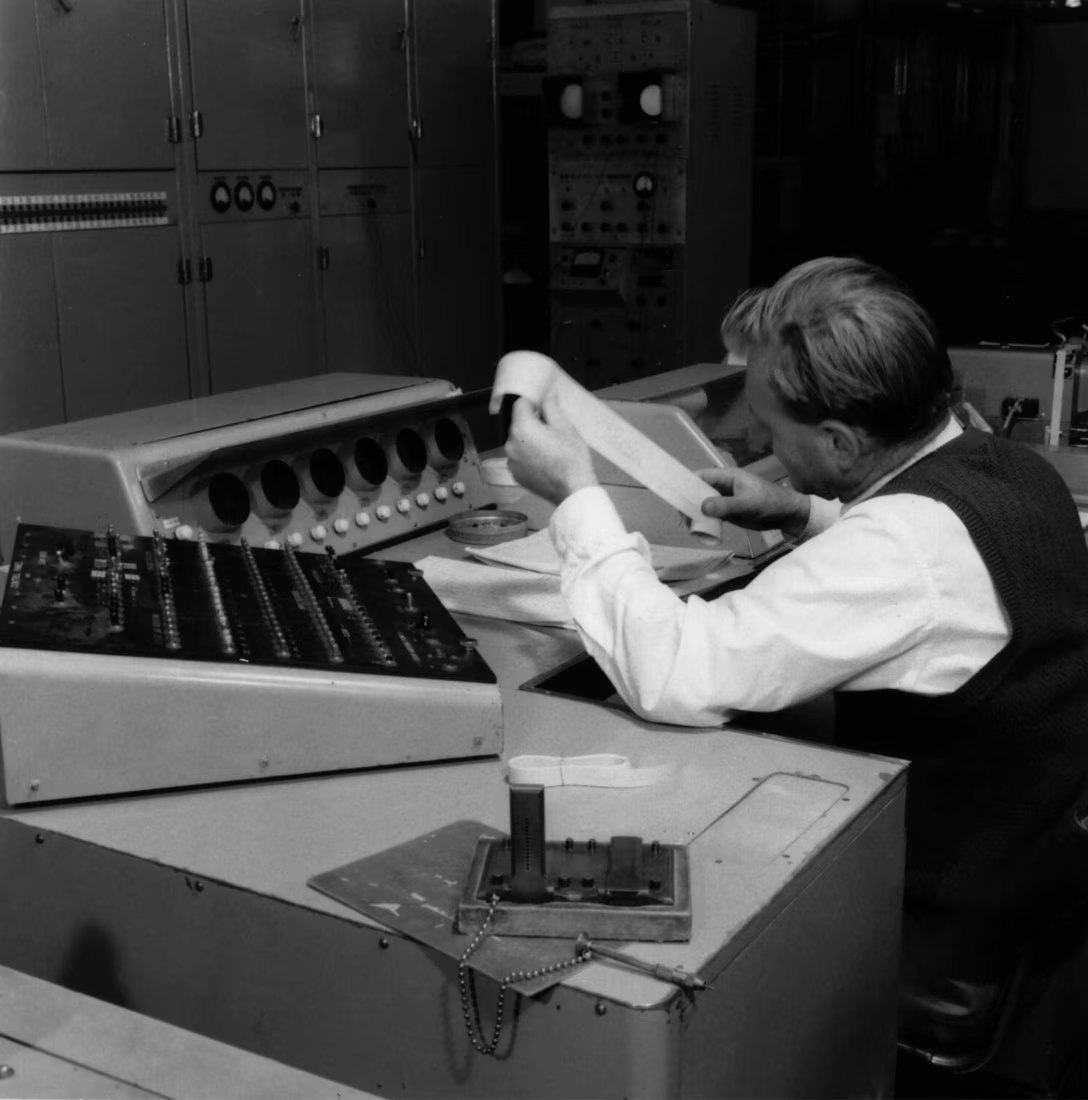
Physical consoles like this one were last seen in the 1970s on hobbyist home computers such as the Altair 8800, and the Console app on your Mac diligently spitting out logs is its spiritual and virtual successor. But even if a CSIRAC console feels hostile today, 75 years ago it was quite the opposite:
And [CSIRAC] helped there too. It could display all its working registers and the last 16 instructions executed. It could be given an address at which to stop (a “breakpoint”), and be stepped by one instruction at a time. It even had lights to show the computer’s internal states. This was a user-friendly computer.
CSIRAC stood for Commonwealth Scientific and Industrial Research Automatic Computer, a typical naming scheme of the era. We also got ENIAC (Electronic Numerical Integrator and Computer) in 1945, BINAC (Binary Automatic Computer) in 1949, EDVAC (Electronic Discrete Variable Automatic Computer) in 1946, ILLIAC (Illinois Automatic Computer) in 1952, and then SEAC, SWAC, ORDVAC, TREAC, AVIDAC, FLAC, WEIZAC, BIZMAC, RAMAC, and UNIVAC.
The story goes that the name of 1952’s MANIAC (Mathematical Analyzer Numerical Integrator and Automatic Computer) was chosen to highlight and put a stop to the goofy naming practice. Did it work? I am not sure. Not only two more MANIACs were produced, but we also got 1953’s JOHNNIAC (nicknamed “pneumoniac” since it needed a lot of air conditioning), and SILLIAC (Sydney ILLIAC) in 1956. The last computer I can find using that naming scheme was TIFRAC, operating in India between 1960 and 1965.
CSIRAC had real work to do, but today it is known chiefly for being the first computer to play music in real time. The quality is… I’ll let you judge, with links below pointing to short MP3s preserved by Paul Doornbusch and subsequently Internet Archive:
- Auld Lang Syne
- Chopin’s March
- In Cellar Cool
- (I particularly enjoyed an alt recording of In Cellar Cool where CSIRAC itself appears in a background as a constant humming presence.)
Do you miss your PC speaker yet?
Engineers working on other room-sized computers of that era did similar things; whether this was solely one of the first attempts to humanize the big scary machines, or a distraction from the computers’s typically military uses is left as an exercise for the listener.
Today, one of the 1960s machines still plays music, headlining a fascinating annual tradition – every December, the PDP-1 restoration crew at the Computer History Museum in California invites visitors to sing carols with the computer older than most of them.
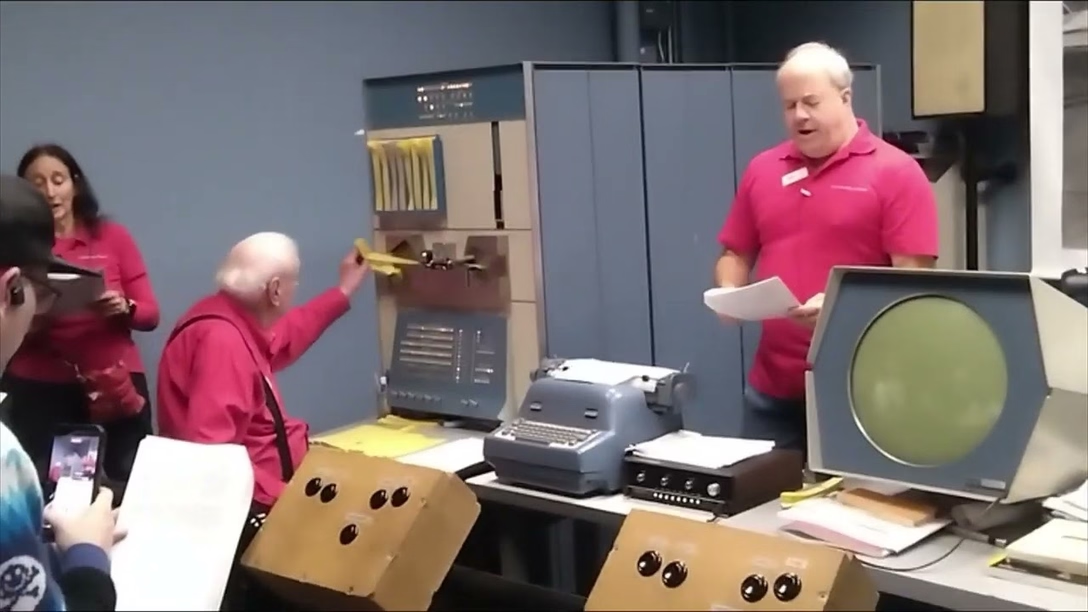
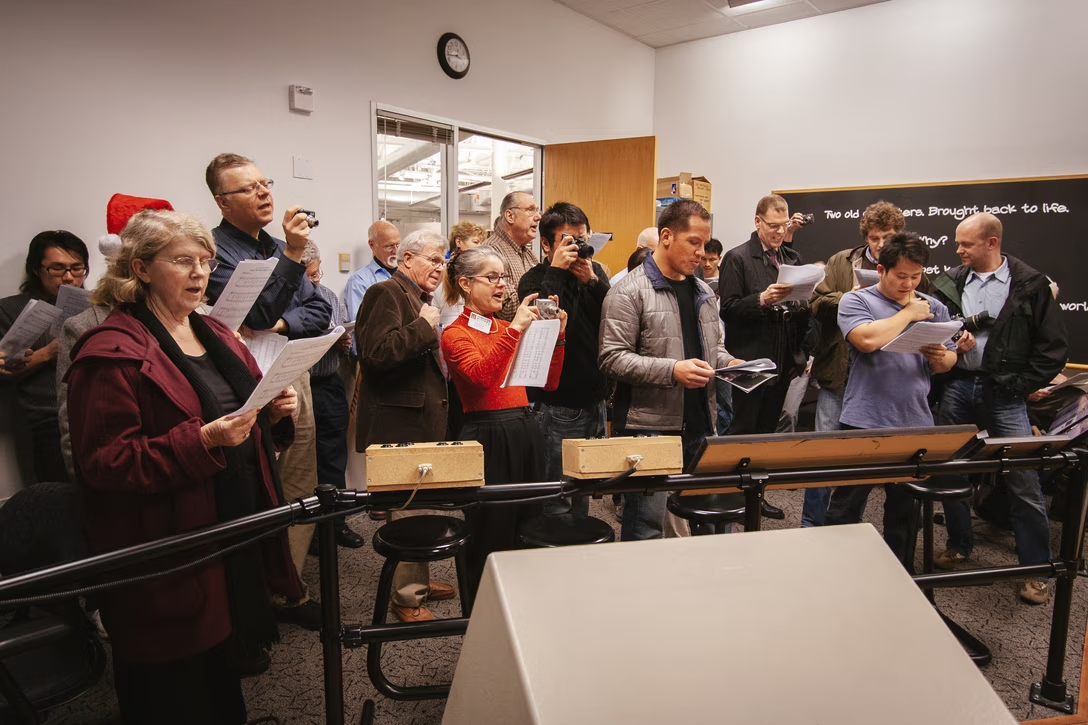
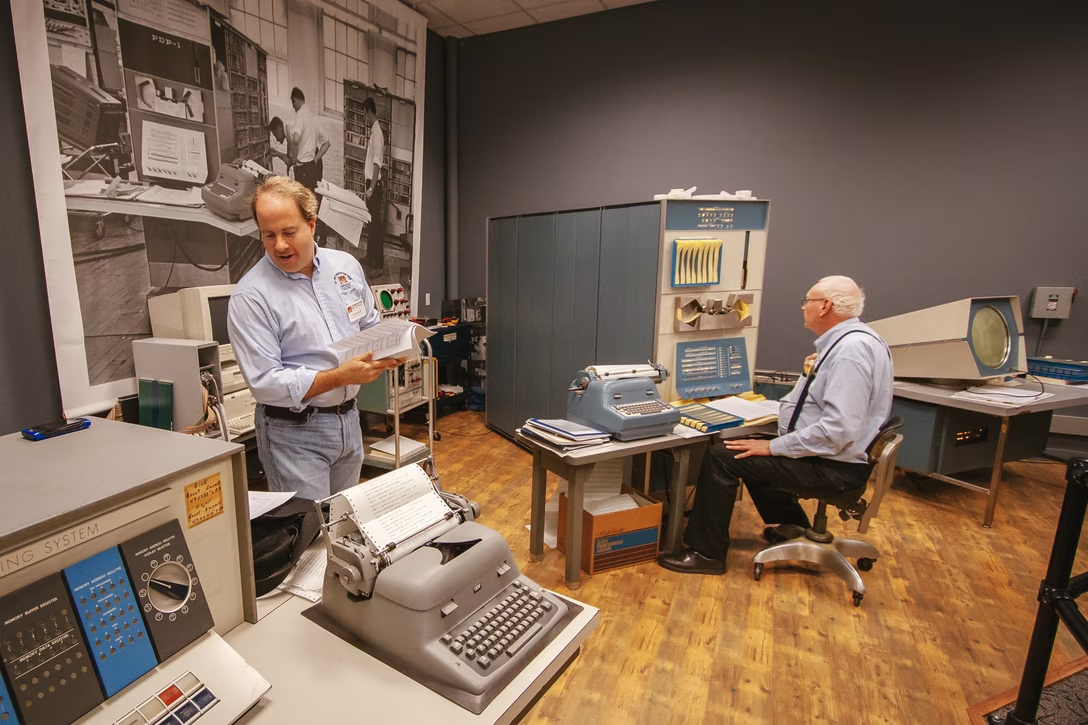
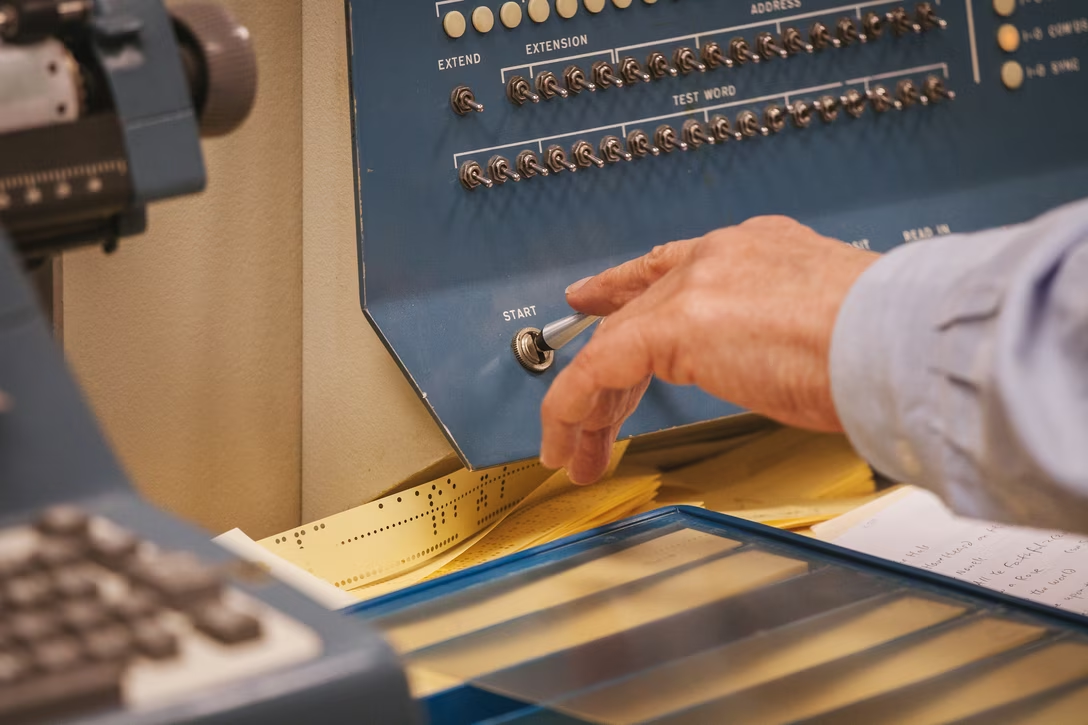
The last photo takes us back to where we started. Neither CSIRAC nor PDP-1 might be user-friendly by today’s standards but damn, wouldn’t you want some of your computer’s interface to feel this way?