Unsung @ 250 Goals and principles
(This is one of the meta posts about this very blog. If that’s not interesting to you, skip to the next one!)
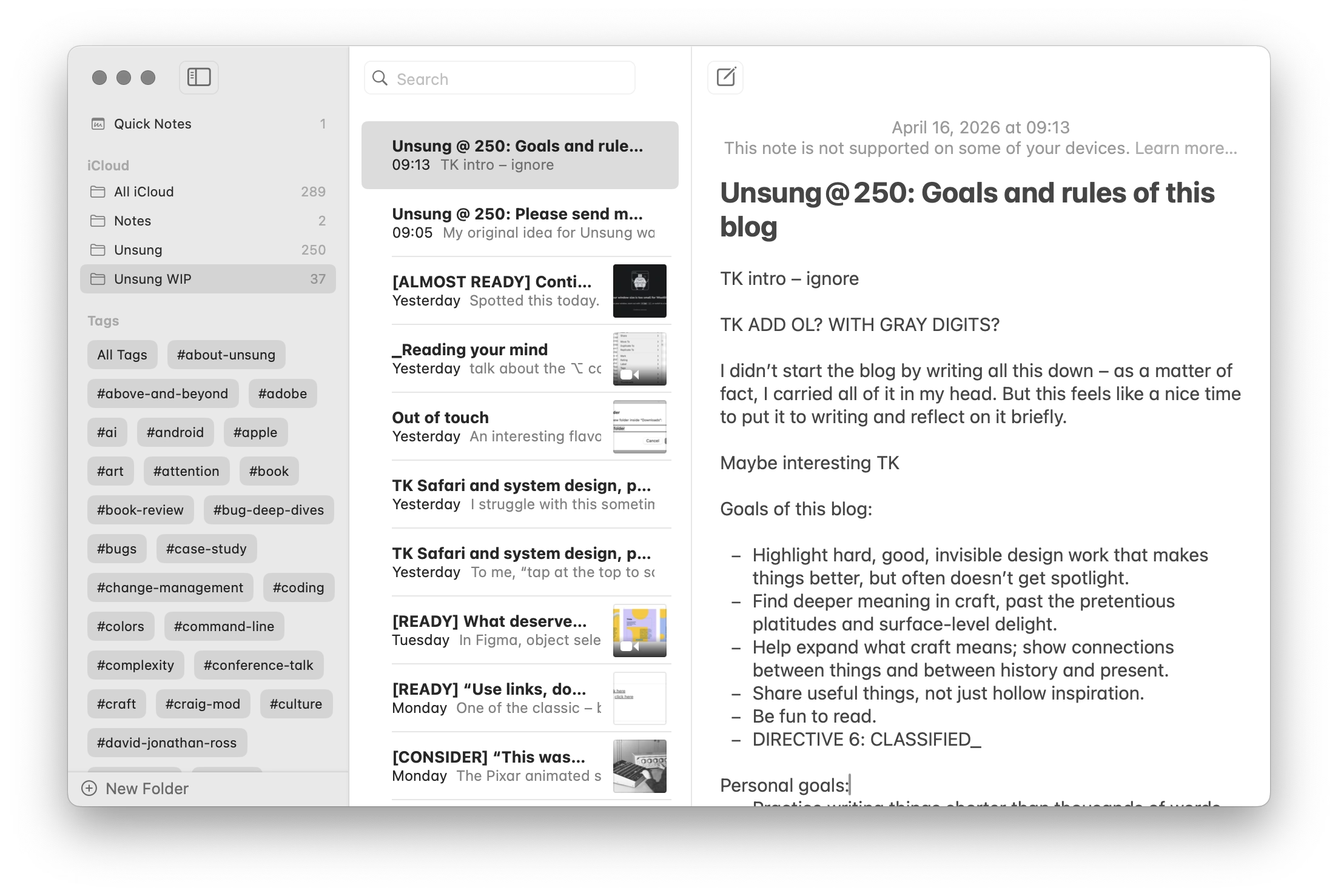
At Unsung’s 250-postiversary, if I reflect on where this blog has been, and where it might be going, this is what comes to my mind. I didn’t start the project by writing all this down, but I held a lot of this in my head. This feels like a nice moment to capture all this more deliberately, and perhaps some of you might find it interesting.
Goals of Unsung:
- Highlight hard, good, invisible design work that makes things better, but doesn’t often get spotlight.
- Find deeper meaning in craft, past the pretentious platitudes and surface-level delight. (Details matter not just in some abstract “craftsmanship” sense.)
- Help expand what craft means: highlight relations between things, show connections between history and present, talk about things that are hard to describe and impossible to measure.
- Revel in being pragmatic. Share useful things, not just hollow inspiration.
- Be fun to read.
- DIRECTIVE 6: CLASSIFIED_
Higher-level principles for this blog:
- Don’t ever share boring stuff, even if the concepts are good, or out of completeness. If you’re not enjoying reading or watching something, assume the audience won’t either. (You can occasionally salvage something boring by providing a non-boring commentary, but try to use this sparingly.)
- When you share something, always try to add your perspective or connections. At the very least, excerpt the most useful thing. This blog is QT, not RT.
- Find a good balance between positive and negative examples.
- In general, offer variety. The weekly digest should have both depth and breadth. (For the last two points, I made a little dashboard to give me some insight, although the sentiment analysis there right now is pretty worthless.)
- Be opinionated, but also humble and curious. You don’t know everything.
- Be candid, but not cruel. Punch up, not down.
- Avoid ridiculing, “walls of shame,” and so on. Even if the work you share is horrible, turn it into a lesson or two.
- This is not about people, but about work – except in some occasions it might be about people, so be candid when that happens.
- More links is better than fewer. Good linking rewards curiosity and is a form of curation (example 1, 2, 3). However, the post should stand on its own even if one doesn’t follow any of the links.
- Make an effort to showcase work by women, people of color, underrepresented minorities, and so on.
- Visuals are engaging and helpful. Think about them, but do not add gratuitous, irrelevant photos just to meet the quota (example 1, 2, 3).
- The best way to teach something general is to show something specific.
Lower-level principles:
- Credit people by full name.
- For longer videos, offer their duration to make it easy for people to make decisions about when they want to watch them.
- Avoid linking to X and Substack. (It really breaks my heart how much of the design community still supports particularly the former, given all the damage we know X inflicts on society.)
- Don’t use this blog as an example (e.g. by screenshots of itself), as this is generally confusing.
Personal goals:
- Practice writing things that do count in less than thousands of words.
- Do things differently – this blog is authored in Apple Notes, for example, which is kinda weird to a person like me who always writes straight in HTML.
- Have fun and learn working on this (completely custom) blog platform on the side.
- Give back some of what I learned in my career over the years.
- Practice stating my opinions and standing by them.
- Learn new things (about what I’m writing and about publishing on the web); the only way to teach something is to understand it yourself first.