“Watchmaker’s delicate precision and ornate mechanical intent”
A surprising entry in the thread started by Photoshop and continuing through screwdriver handles is this 11-minute video from Errant Signal about a platformer game called Derelict Star:
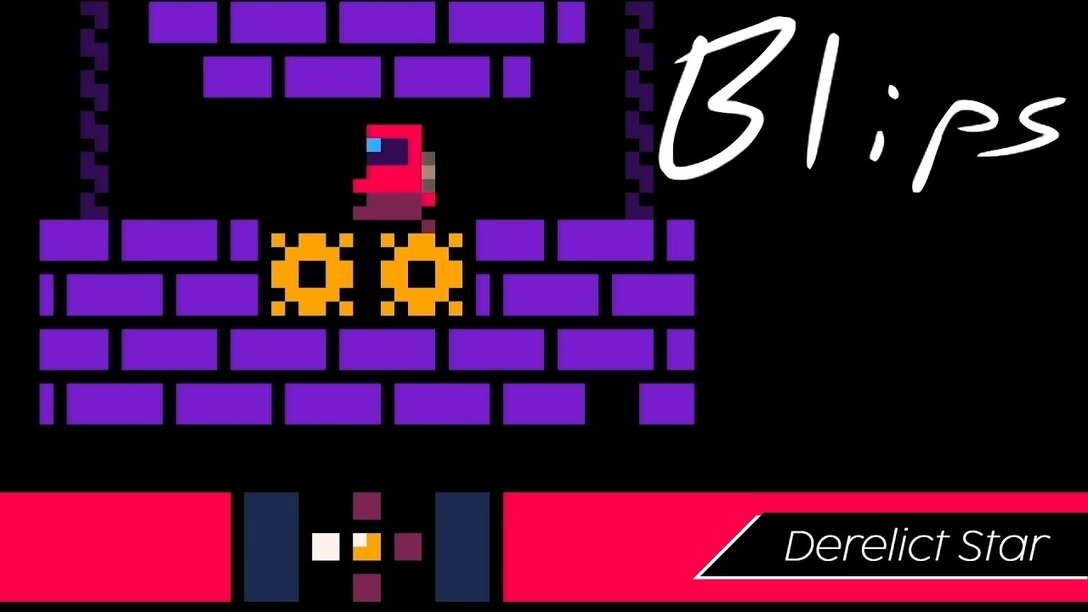
I was inspired by the video, and really enjoyed its exploration of a demanding game that’s composed of just a few mechanics that are done really, really well:
The number of inputs are small, but the expression those inputs allow is deceptively expansive. […] Derelict Star’s various areas are all built to explore the way movement systems function and even interact with one another.
I think of user interfaces similarly, and of their need to build a certain consistent vocabulary of names, gestures, interface elements, concepts, and so on. Perhaps in an enterprise app you right click and discover something useful in a menu, and this will teach you about the usefulness of right click menus in general. Maybe pressing ⌥ to get to alternate symbols on your keyboard would inspire you (either consciously or not!) to try holding ⌥ in said menus, only to discover this brings up useful alternative options. Maybe seeing a keyboard shortcut next to one of these options will suggest to do that next time, and so on, and so on.
I really loved this bit in the video that could apply to a lot more software than just videogames:
It took me maybe an hour to do this, but right on the other side is a checkpoint. The game is hard, but it isn’t cruel. It’s designed to challenge you, but it has faith in your ability to complete it.
The narrator uses the term “ludocentrism” to refer to games that ruthlessly prioritize the mechanics and gameplay over narrative, aesthetics, and so on. (“Ludic” meaning “relating to play.”)
Of course, the calculus of what videogames care about will be different than goals of creative software or enterprise software; no one cares about the hero’s journey of the largest number in your Excel spreadsheet. But I think some version of ludocentrism applies to “boring”software as well. My beliefs here are probably something like this:
- you can’t reduce everything to just functionality or just efficiency,
- especially in creative moments of software use,
- and people use software creatively much more often than we suspect, including software not thought as “for creatives.”