Book review: The Cuckoo’s Egg
It’s Halloween Week on Unsung, where we’re sharing scary, spooky, and creepy stories.
★★★★☆
My server was hacked a few months ago. It wasn’t an obvious “bad password” kind of a situation, but I believe a hole in PHP propped open by some code I wrote 25 years ago. (It’s entirely possible some ancient scripts I wrote for GUIdebook were to blame!) The hacker replaced some of my pages with garish ads for Indonesian casinos, and did some other slight damage. For a few days and nights, I played a cat-and-mouse game with the attacker, learning things, trying the newest patch, only to wake up to see some new pages on my server taken over – up until the moment I managed to close it all off.
There were times during those few days when I knew I was patching my server at the same moment as the hacker was breaking it. It was a very strange, unnerving feeling, with some part of me wanting to reach out, have a conversation, generally learn more about them, or maybe also – I’m not going to lie – kick their ass.
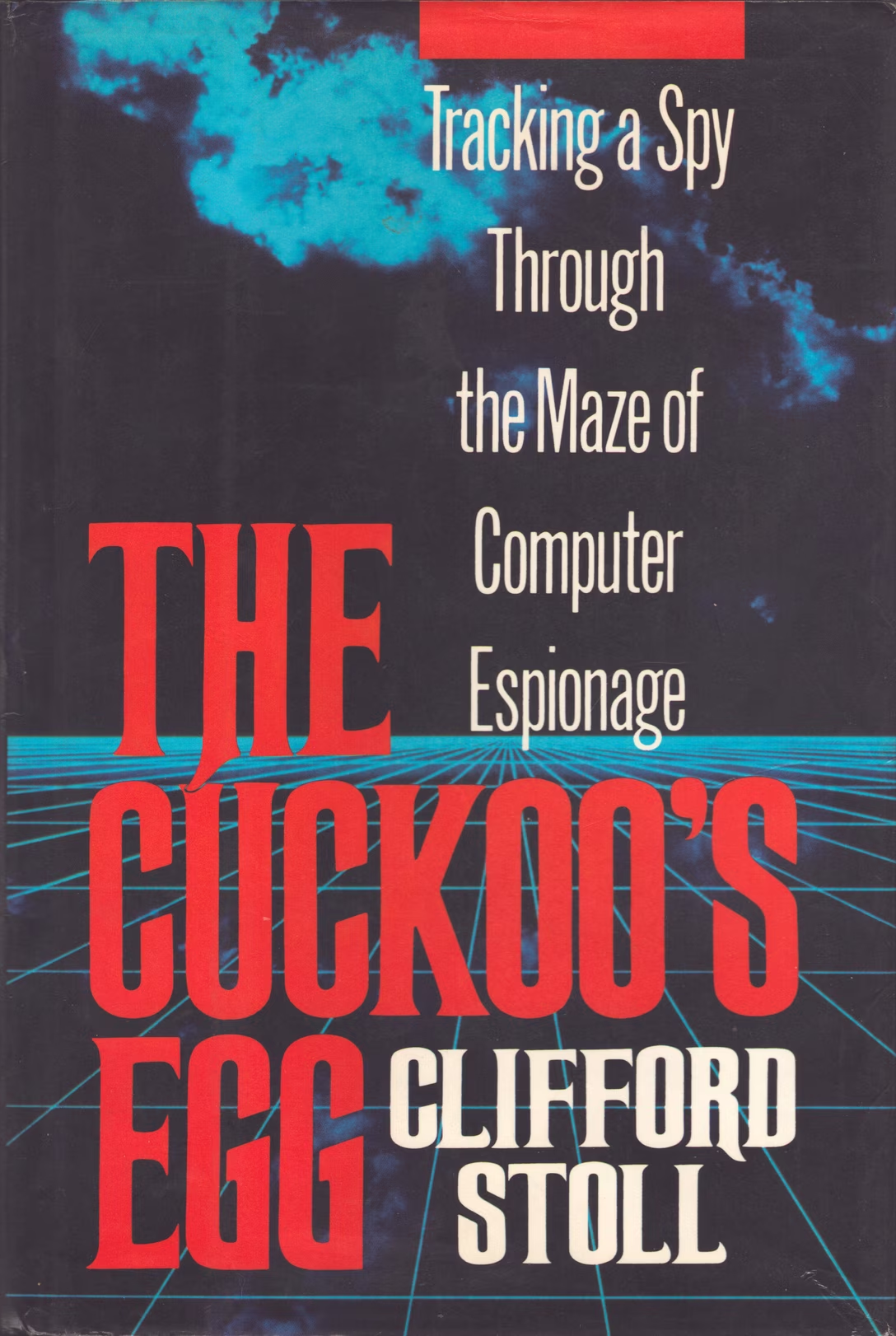
The Cuckoo’s Egg by Clifford Stoll is a book about a similar situation, except the story is from the mid-1980s, the server is at the Lawrence Berkeley National Laboratory, and the break-in takes longer than just a few days.
And it all begins rather innocuously:
And so it happened that on my second day at work, Dave wandered into my office, mumbling about a hiccup in the Unix accounting system. Someone must have used a few seconds of computing time without paying for it. The computer’s books didn’t quite balance; last month’s bills of $2,387 showed a 75-cent shortfall.
Now, an error of a few thousand dollars is obvious and isn’t hard to find. But errors in the pennies column arise from deeply buried problems. […]
I found the book – written by an astronomer! – much better than it had the right to be. The story gripping and continues throwing new wrinkles at the already interesting situation. I could sense some liberties taken with real-life events and chronology in service of smoother storytelling, but it all still feels pretty real, and nothing grated me too much.
Released chronologically right in between WarGames and Sneakers, it is appropriately retro and old-fashioned – but there are still techniques that feel relevant, aspects of security that I don’t think changed that much since, and fascinating details I learned from.
The only thing that bothered me was that the book should have ended a chapter or two before it did – there is a sort of second ending tacked on – but, to be fair, a lot of books have the same problem. If you feel like you’d fancy a breezy computer security espionage story from the 1980s, I’d recommend this one!