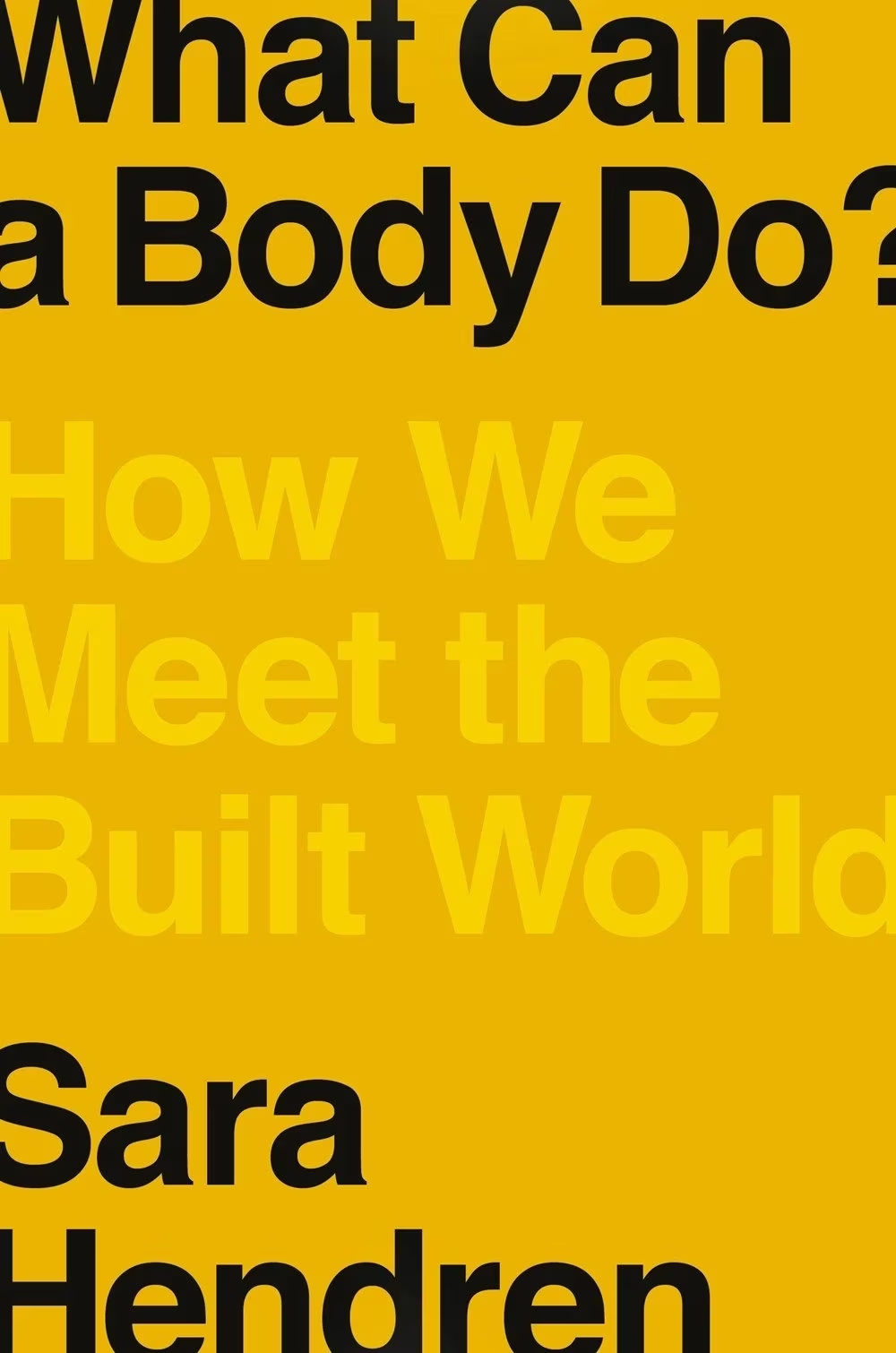
Book review: What Can A Body Do?
★★★★☆
A new confession: I struggle with a lot of accessibility writing.
I am not necessarily saying this to blame people writing in this space, whose work I respect even if it’s not resonating with me. I think it’s more of a recognition of how difficult it is to talk about accessibility and disability. Advocacy is never easy. It’s hard not to be impatient with the pace of progress, hard to contain your incredulity that others don’t get that what is so obvious to you, hard not to constantly expect more from people, hard to imagine others – and the society as a whole – not caring. On top of that, accessibility is a more difficult subject than many I cover regularly on this blog. There are hard-to-explain technical issues wrapped in deep legal considerations, and some aspects of disability are taboo or taboo-adjacent. To me, all this often makes even best-intentioned accessibility writing less approachable.
I am also, personally, to blame. I sometimes struggle with design writing, too. Some of the taboos and hangups live inside me. I might be obstinate when corrected. I have also personally seen a few times the opposite of the curb-cut effect: not fully thought through accessibility accomodations making software worse for some groups of people. All of this is making me a tricky customer.
I’ve been wanting to find accessibility writing that would work for me, with just the right amount of push and pull: detailed but not overwhelming, inspiring but not cheesy, gentle but not basic, pleasant without being cheap.
This book by Sara Hendren is as close as I’ve ever been to all this. It’s exceedingly well-written, to a point that it’s really hard not to quote it excessively. Witness the very opening:
Every day every body is at odds with the built environment. Bodies come up against stairs and sinks and subway platforms, sometimes with ease and grace and sometimes blundering and awkward, over hurdles, even in a sudden clash. Each flesh envelope is miraculous and mundane in tis way, lugging all its gear and getting where it needs to go. Maybe you handle a sharp knife with enjoyment of its grip; maybe you wince as you sit down in or get up from your office chair.
Or, just a few pages in:
But consider: this dual job that design has to do is a mammoth task! How do you make a charismatic thing – not just a thing that works, but a thing that has elegant presence or pleasure in its handling, some kind of draw, a thing that pulls you in or makes you think while also being handy, modest, even garden-variety in its value? This combination is what makes design so interesting to so many people. It’s not just the quest for a better mousetrap, and it’s not just a free-form experiment, and it’s not just a slick new color scheme. […]
When Hendren early on decides to focus on the right words and the best definitions – a theme permeating the entire book, important in an area of sensitivity around language – it has none of the awkwardness of a wedding toast’s “the dictionary defines X as…” but is instead a lucid exploration of the power and beauty of language, piercing right through some of the taboos I mentioned:
Among disabled people there’s a bigger catch-all term, a slang for this particular mismatch: it’s called life on “crip time.” Crip is short for cripple, a name that disabled people have repurposed in an act of political reincarnation, dropping the degradation attached to a word that was used to describe them in the past, cripple, and investing it with in-group pride. “Crip time” is flexible shorthand in disability culture, used to indicate a range of uneasy relationships to thje pace of contemporary industrialized life, with its relentless and clock-driven organization of hours and days. As a disabled person, to say you’re “on crip time” on a Tuesday might signal te extra time that it takes you to get to the train platform or in and out of a public bathroom. It can also stand for bigger systemic fits and starts – the spiky, unpredictable time it might take a person to proceed through a fairly rigid K-12 education that’s built on all kinds of normative chronologies.
This whole book is this – it’s accessibility and disability as details, as creativity, as confidence, as joy, as warmth, and as craft. The writing has so much range and color, covering some of the aspects I expected, but also talking about autism, dementia, phobias, and general intellectual disability (who knew? your brain is your body, too). Hendren dips into history as needed – the origins of the usually simplistically portrayed curb-cuts is fascinating – but the book is anchored in the present.
There isn’t a lot of software in the book, and the other reason I’m giving it only four stars is that I wanted… more photos. I’m a single-issue voter this way, always dreaming of visual evidence of devices, people, and places. But don’t let this stop you. This book will help you understand accessibility and disability – and if you already do, it might help find good ways to talk about it. You should read it.
Thank you to Ethan Marcotte for suggesting the book and a conversation about it, and to everyone who answered my question about good accessibility writing – check out the answers on Mastodon or Bluesky if you are interested in more recommendations!