“I’m ready to throw up at any moment.”
I linked to his work before, and here’s The Art Of Storytelling with another interesting video – about what made Jobs such a good presenter:

I’m not going to spoil the findings, which are presented well with good corroborating examples. But the most interesting thing to me was one short video snippet of Jobs being visibly nervous before a very early, 1978 presentation:

It made me think about other examples of Jobs being off his presenting game.
The most well-known one is likely the 2005 announcement of the “iTunes phone,” or Motorola ROKR E1, just over a year before the iPhone. It’s a really painful watch, seeing Jobs squint at the sort of interface he usually makes fun of, regretting the whole deal, very aware of the smartphone they themselves are working on, but unable to speak about it yet (the relevant part starts at 17:24):

But I have another, trickier suggestion: the “Antennagate” presentation of 2010, where Apple had to do damage control over the issue of the iPhone 4 losing cell signal when gripped a certain way:

Now, this isn’t a bad presentation. I actually think it is a great one. The arguments are valid, the data solid, and the whole thing comes together well. In the recently leaked and generally rarely witnessed slide-less Q&A portion, Jobs displays understanding of the issue and answers questions well; perhaps I’m grading on a curve here, but even his one moment of anger/frustration seems so much better handled than the famously impatient and immature Jobs would have done earlier in his career.
Both videos are worth studying and teach how to do damage control well, and how to tell stories of things you would otherwise choose never to talk about.
But also, early on, it was really fascinating to see Jobs reading off of so many generic, cheap-looking slides with literal sentence fragments, breaking the “show, don’t tell” rule, and – I think – generally using the slides as a crutch walking him through the narrative. It really took me aback because I don’t ever remember Jobs doing that as prominently.
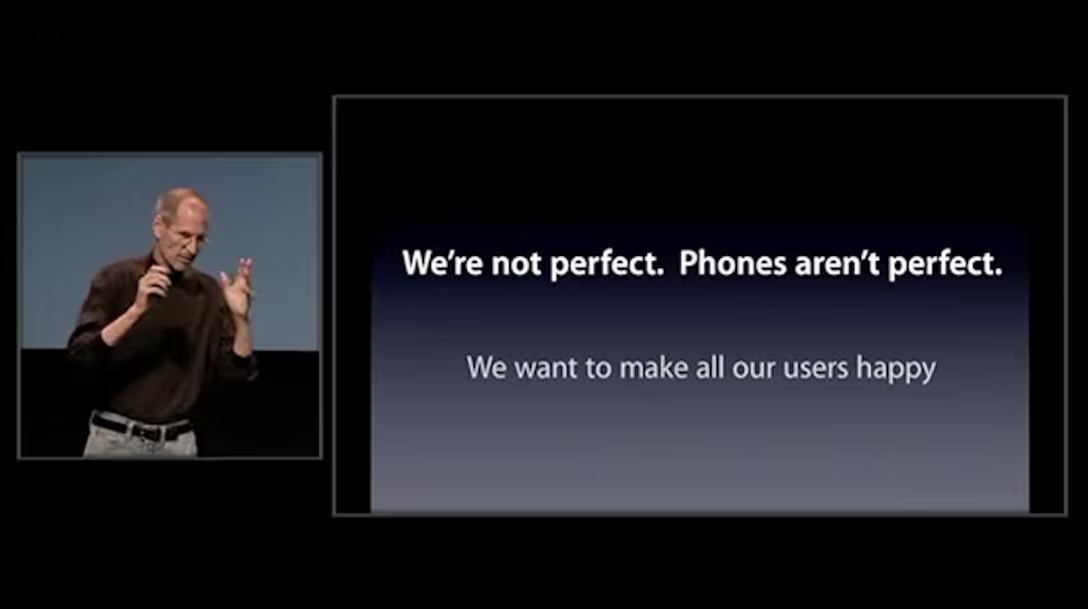
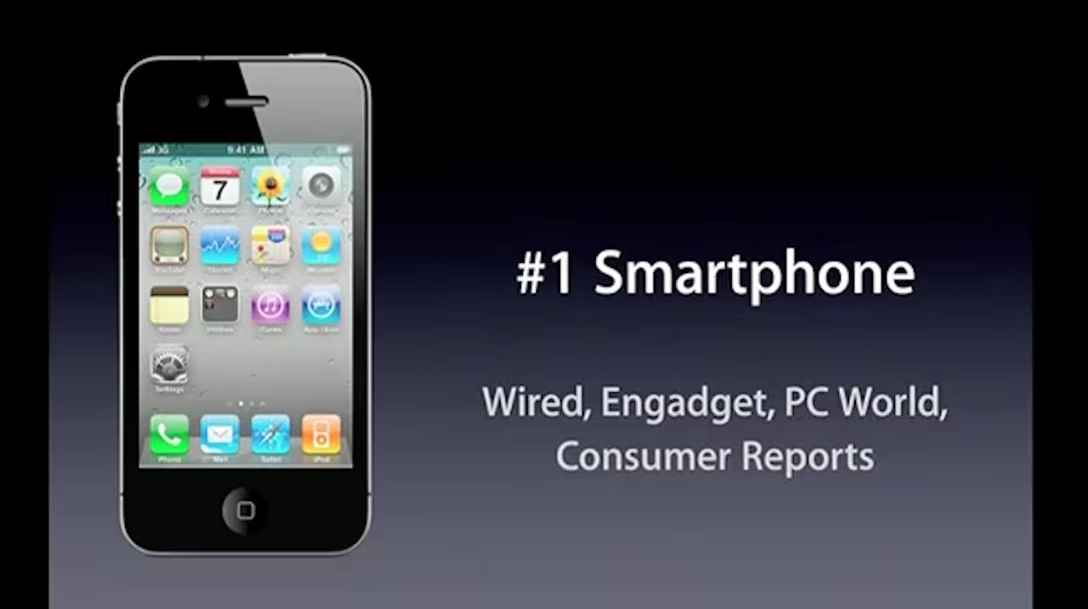
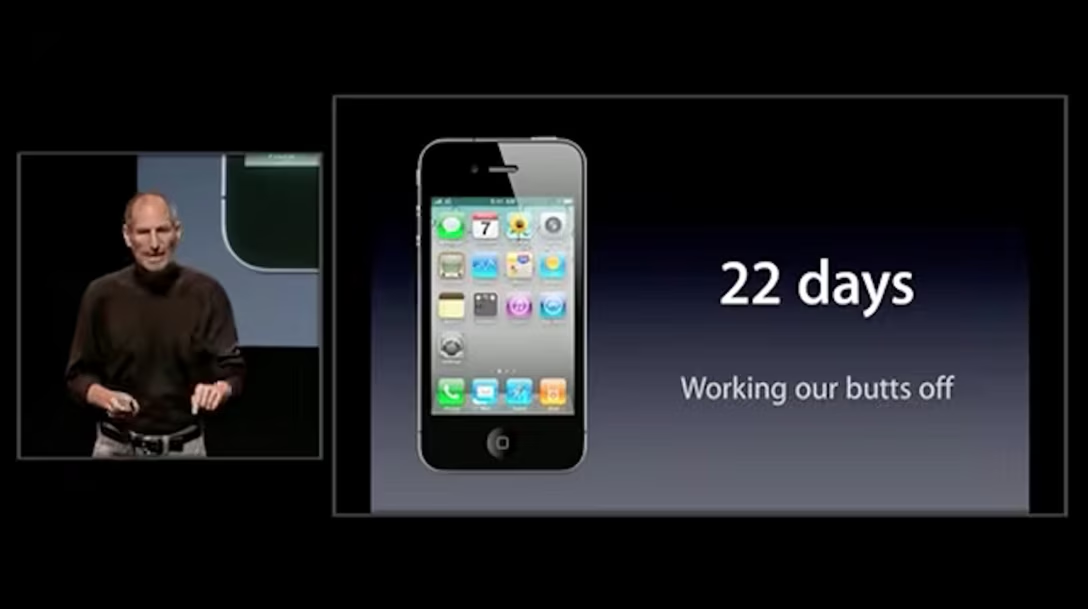
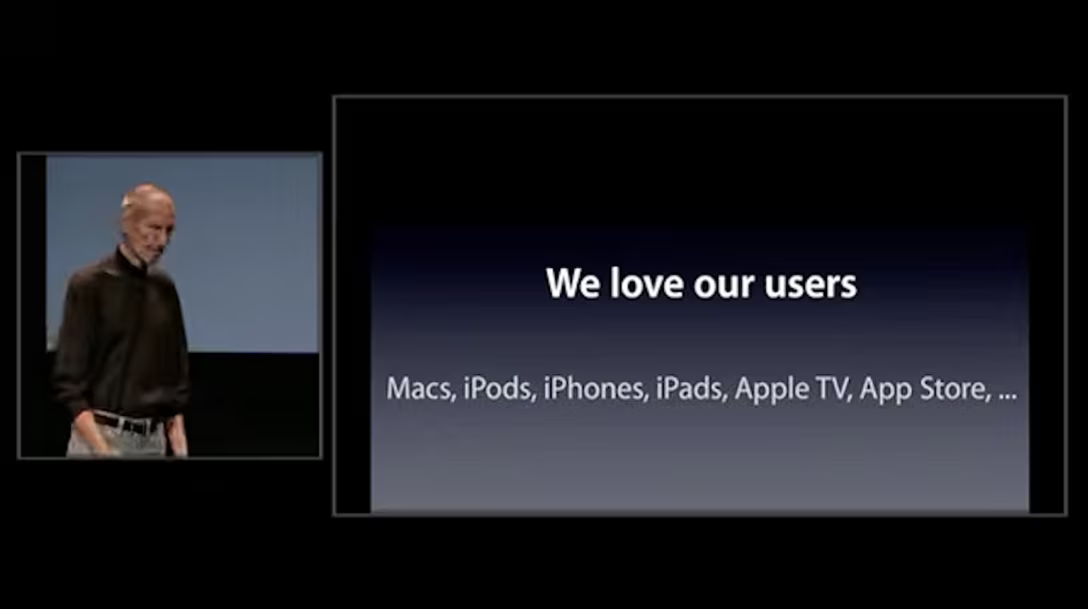
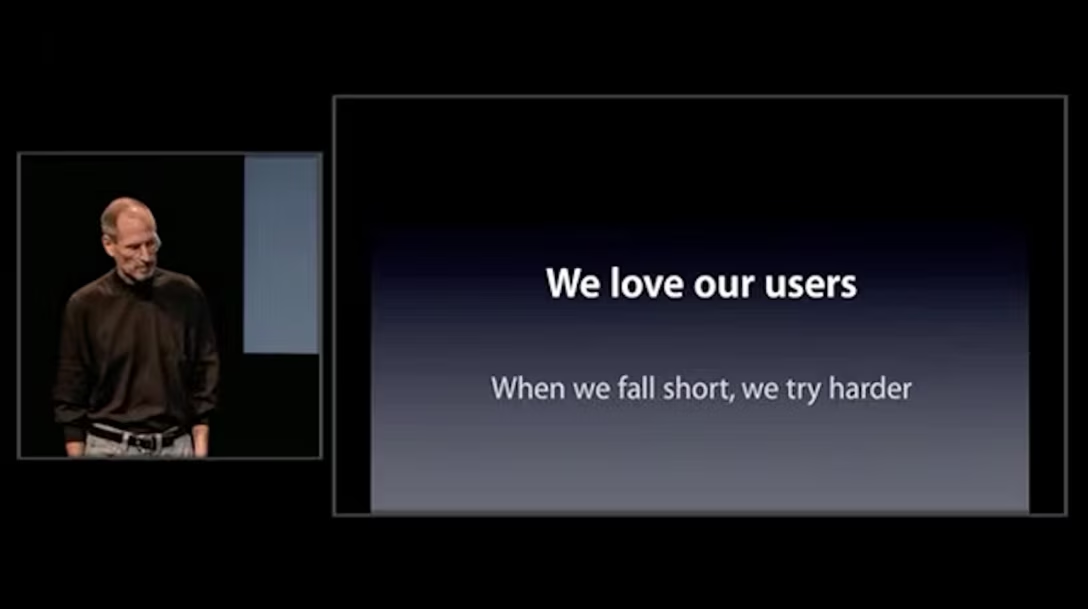
It makes sense. Jobs had to rush back to work from vacation, and the time to put this all together was very limited. I don’t mean necessarily to pick on anyone here, but rather find in all this a confirmation of a universal truth. Sure, Jobs was smart and had a lot of charisma on stage. But in the end, at some point, slides are just like any other kind of craft. You design the slides, you revise them, you practice, you let the practice influence the content, you get feedback, you kill your darlings, you revise again, and repeat all that so many times you get sick of it all.
It’s clear to me that the team here ran out of time for this, and there’s something comforting in the fact that even Jobs couldn’t wing it, and still had to put in the work.