“It’s unclear how Sopwith escaped to the general public.”
Sopwith is a 1984 videogame made by David L. Clark for the original, seminal IBM PC model 5150. It sports the distinctive 4-color CGA palette and an equally distinctive PC speaker soundtrack.
It’s also one of the oldest videogames still in active development, and I was surprised how enthralled I was learning about it.
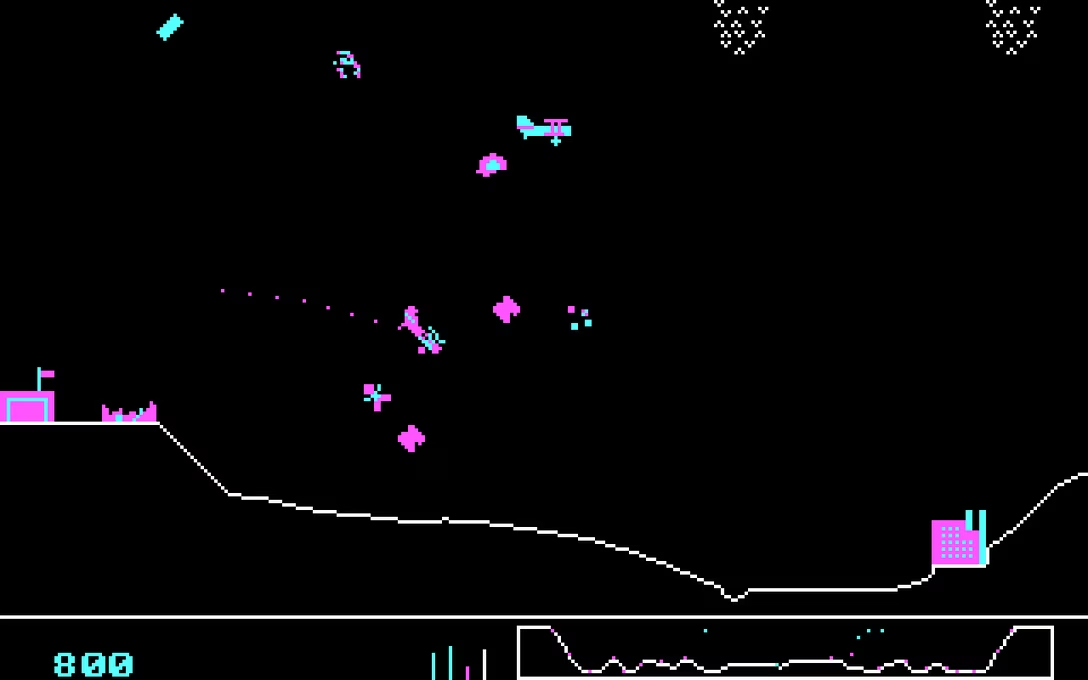
(First of all, you can play Sopwith in a browser. Choose “single player” and then “novice” first for the game to tell you about its unusual keyboard control scheme.)
The current maintainer of the effort is Simon Howard. He wrote about Sopwith’s interesting history; I appreciate this kind of approachable and caring preservation of obscure titles. The history is worth a read.
From that, I learned a fascinating factoid. The game was intended as a demo for networking hardware, and the original author didn’t realize the game was “in circulation” for many years:
Intended as a trade-show demo, it’s unclear how Sopwith escaped to the general public. David L. Clark didn’t even discover until around 2000 that it had “gotten out”. Little did he know, Sopwith had been circulating for years in collections of early games for the IBM PC. Only a couple of years after the first version was released, ads were appearing in magazines like PC Magazine advertising Sopwith for sale as part of collections of games for the IBM PC
The modern edition started by Howard is called SDL Sopwith (SDL being a cross-platform graphics library):
SDL Sopwith is directly derived from the source code to the original DOS versions, and still includes changelog comments that date all the way back to 1984.
What I particularly liked about the contemporary Sopwith is its guiding document/philosophy page, also worth checking out in full. Here are some choice principles:
- Sopwith has a long history that deserves to be honored and preserved. By default, the game should always play like the original DOS version. That means the gameplay in particular should be the same, without any significant differences. Someone who has just discovered the project should find it to be a delightfully accurate recreation of the game they may have played when they were younger. […]
- Some new features can be enabled by default, as long as they are subtle, unintrusive, carefully considered and can be turned off. An example is the medals feature.
- The game will never try to be “something it’s not”. This means that it will always have four color CGA graphics, PC speaker sound effects and a low resolution display. It will never add (for example) hi-res sprites or 3D models, digital sound effects or MP3 music. The goal is to be “a great old game” rather than “a mediocre modern game”.
- New features should be fun and recognize the comical aspects of the game. Features should be carefully considered before being incorporated, not just added arbitrarily and thoughtlessly.
There is something in all this that I feel a lot of software could learn from – not just vintage games. I appreciated Howard being thoughtful about growing Sopwith without forgetting its roots, but also with understanding that some things have changed since 1984. You could imagine remixing “The goal is to be a great old game rather than a mediocre modern game” to something like:
Better be a great focused app than a mediocre sprawling app.
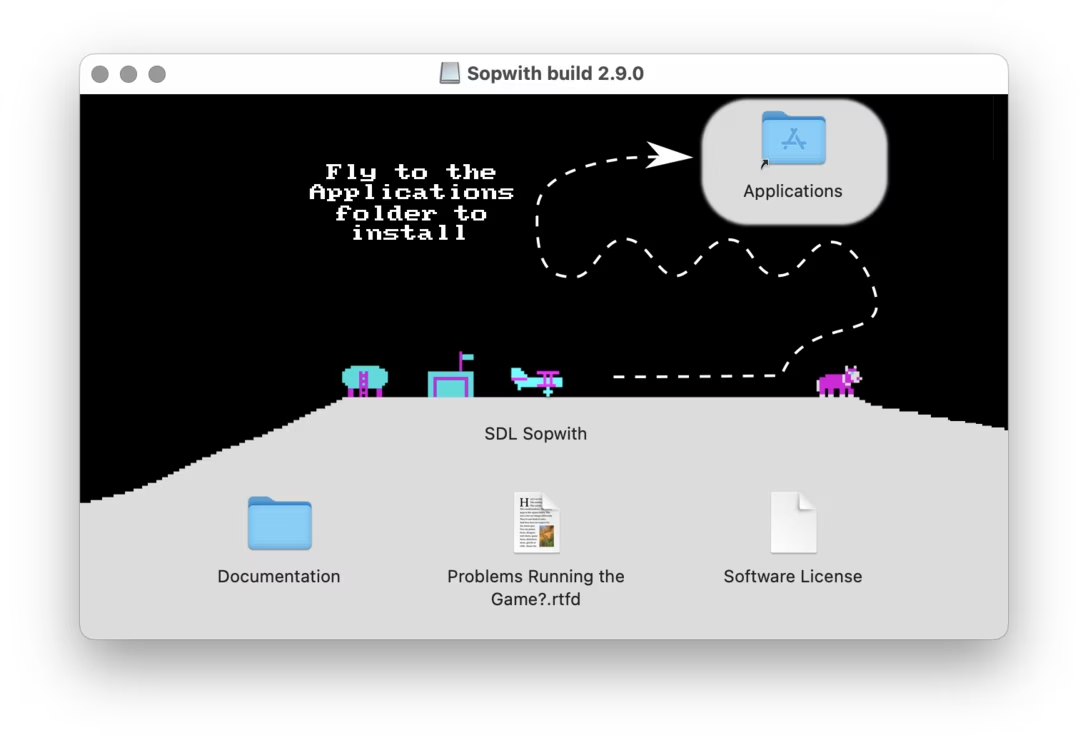
Lastly, how did I learn about Sopwith? Howard shared this charming installation visual with me: