Mailbag: Modular industrial dashboards
My post about modular industrial dashboards from a month ago gathered a lot of reactions, so I thought I would summarize some fun things sent my way. If this didn’t seem interesting to you, feel free to skip this post!
First of all, some clarifications for the things I speculated on, or didn’t explain well:
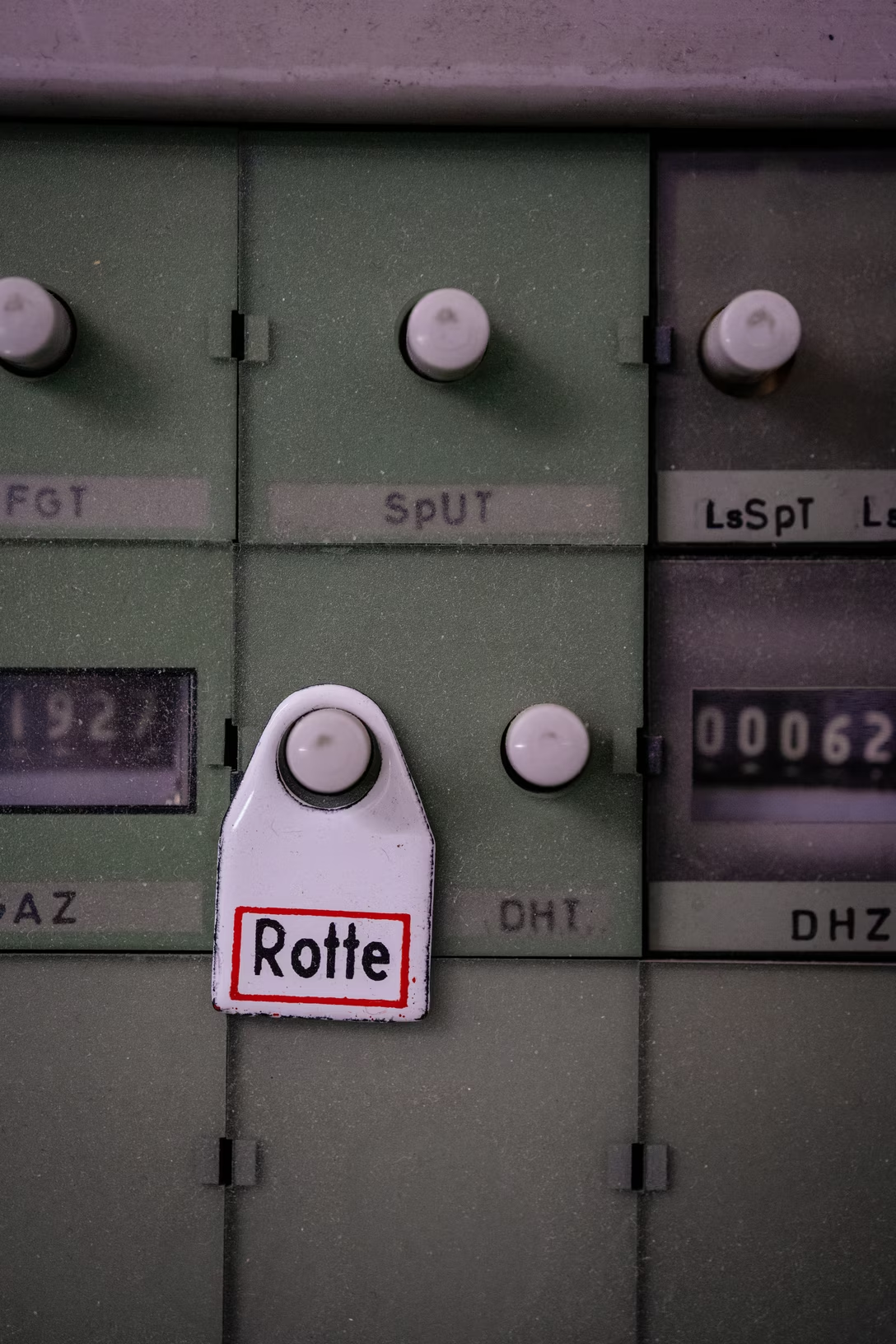
The word “Rotte” (English: gang, pack) often designates a small number of people or crafts that operate together. In the railroad context, […] the “Rotte” flags inform the operators that there are people at work in that section and that traffic may need to be rerouted or slowed down.
This switch I wondered about with Polish words for “Day” and “Night”…
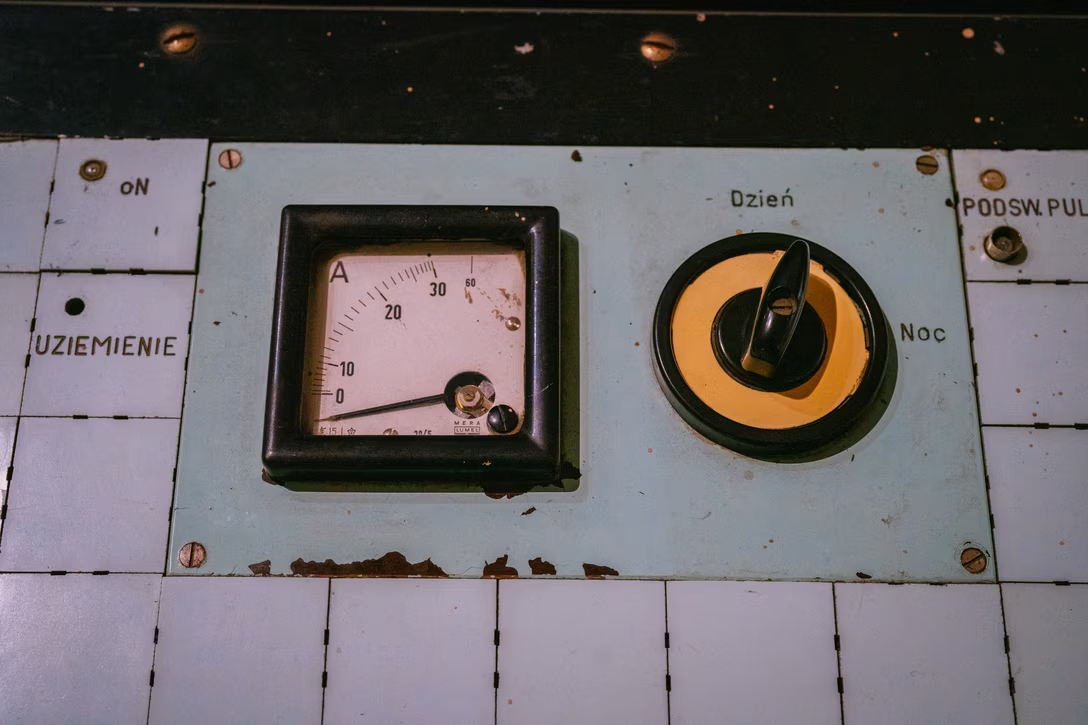
…is indeed a dark mode toggle! It controls how much light goes through these conduits:
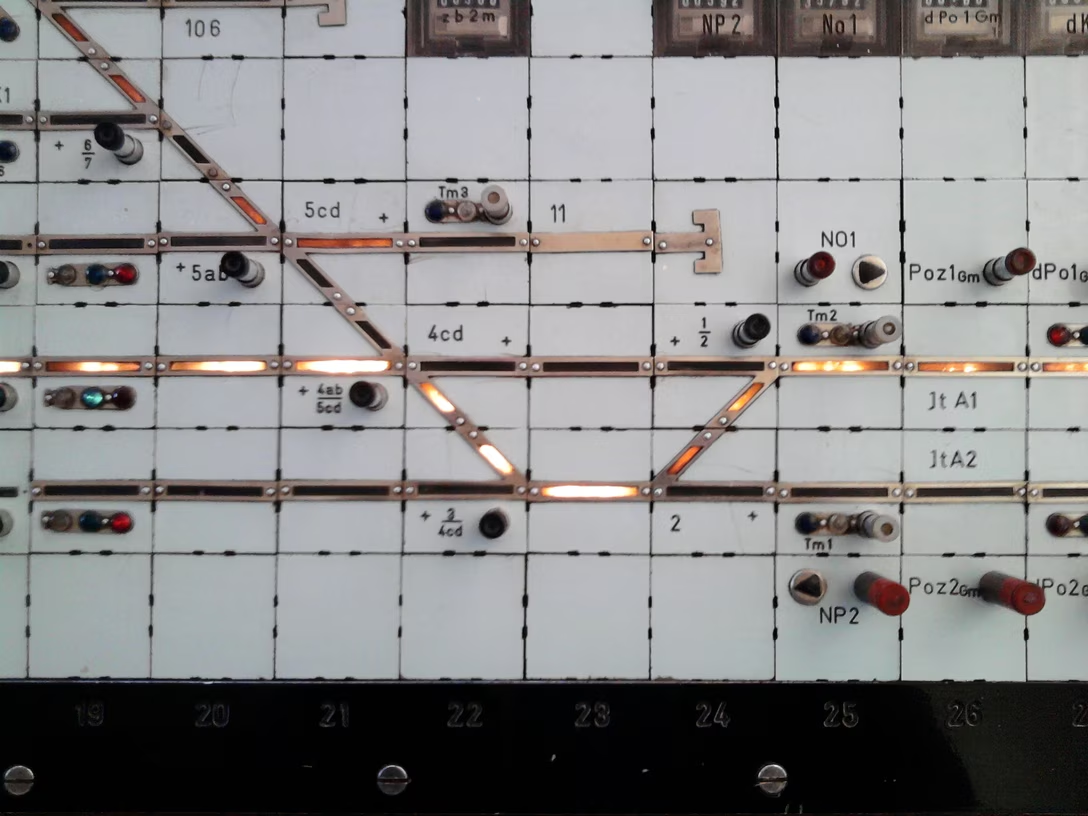
At night, you want them dimmer so they don’t blind you – but during the day you need to make them brighter so you can actually see them.
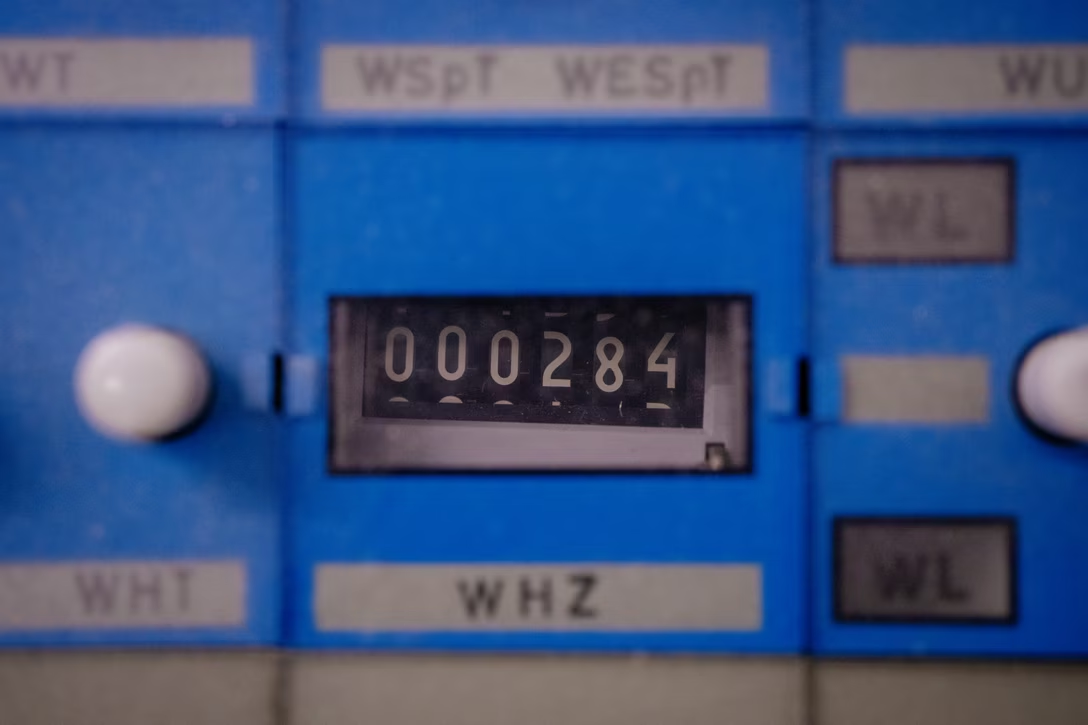
And the counters are for recording abnormal things or exceptions, for example you directing a train to somewhere it’s not supposed to be, or allowing a train to (carefully) go past a red light. Since the counters only go up, they provide accountability:
Secondly, I’ve learned about some interesting mechanical considerations to help people avoid making mistakes.
In some systems, the default interaction of pushing is for restoring, and pulling (which has more friction) is for deviating:
The position of a point is changed by pulling or pushing its button on the dashboard. The rule is that by pushing the button into the dashboard, you set the point into its default position, and by pulling, you set the alternate position. (Every device you can control from the dashboard has a default state, and the dispatcher is supposed to restore that state as soon as the device doesn’t need to be in the alternate state. Also, the default state for switches and derailers is represented symbolically with a plus sign, the alternate one with a minus sign.)
In order systems, you have to hold two buttons at the same time to redirect a train:
Those signalling panels (SpDr is the series, I think) work on the principle “from where to where”: you hold down the button for the signal that is showing red, then press the button for the track you want to direct the train to. The system then checks if that doesn’t cross an already-configured path of another train (if so, it refuses to do anything), then sets the relevant track switches as required and finally changes the light on the signal.
The marker is on one of the destination buttons to remind the signaller not to send any trains there, because that might endanger the people working there.
Here are a few other panels shared with me:
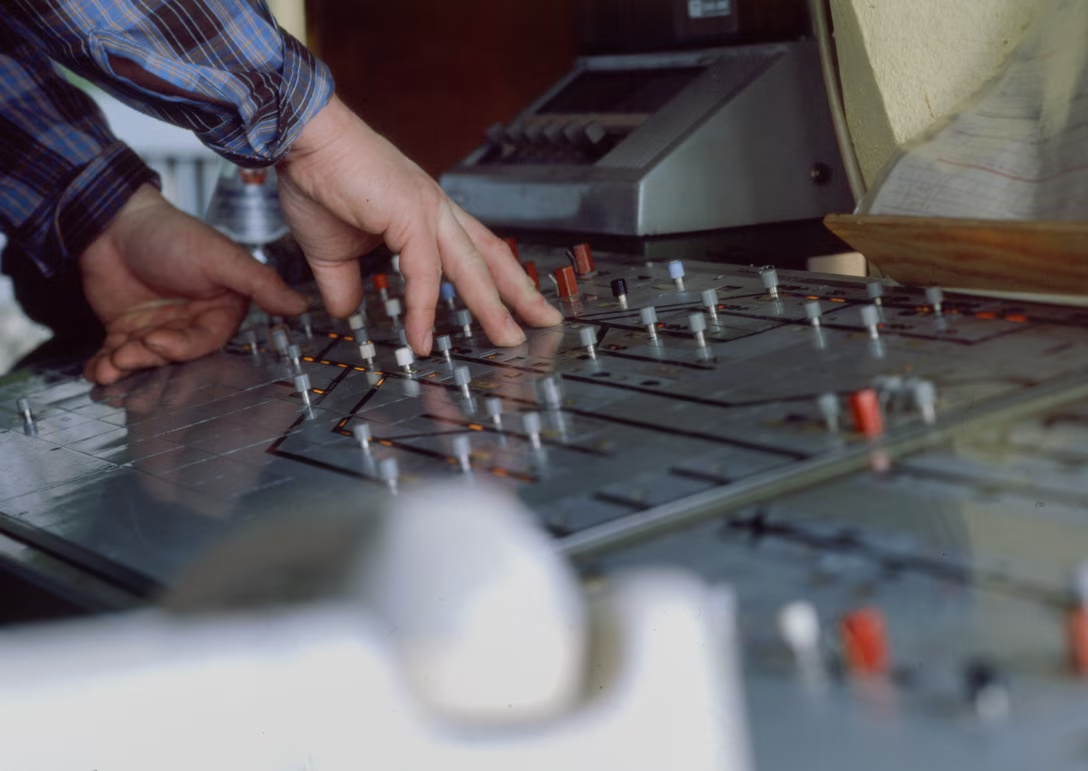
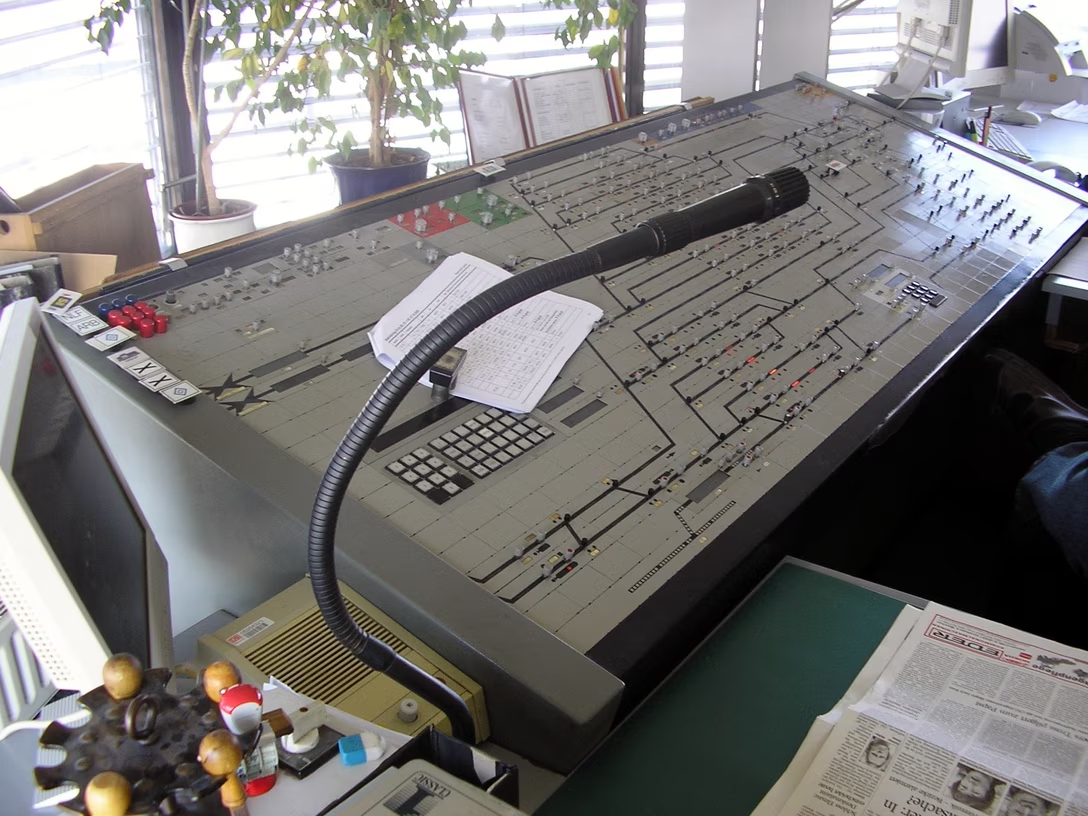
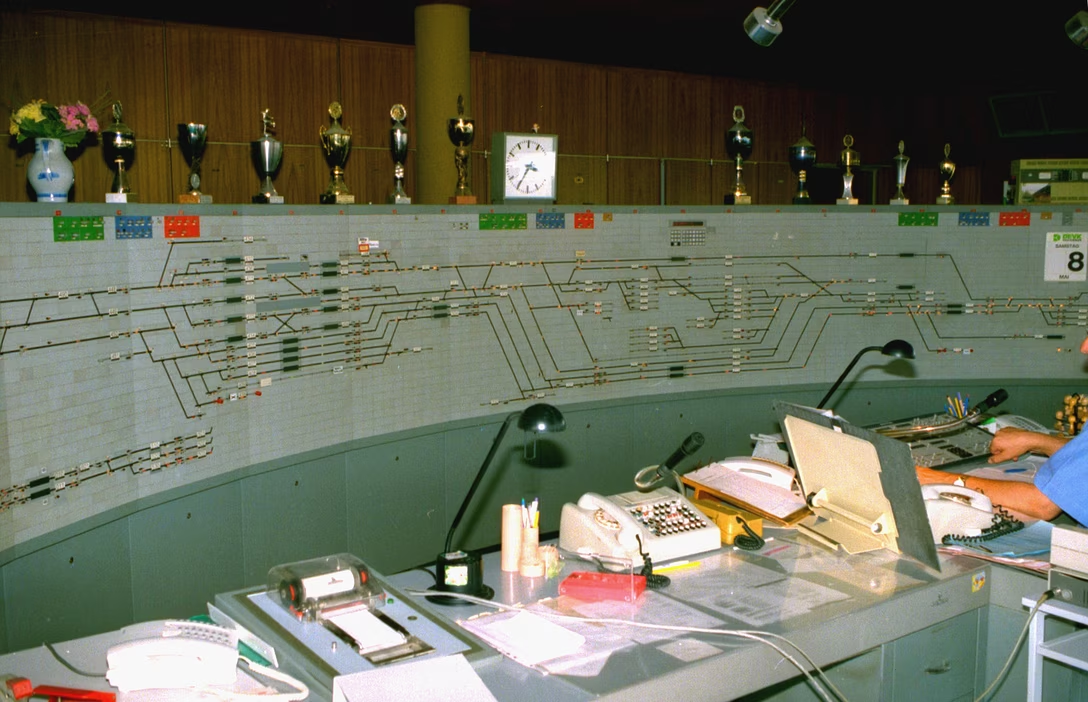
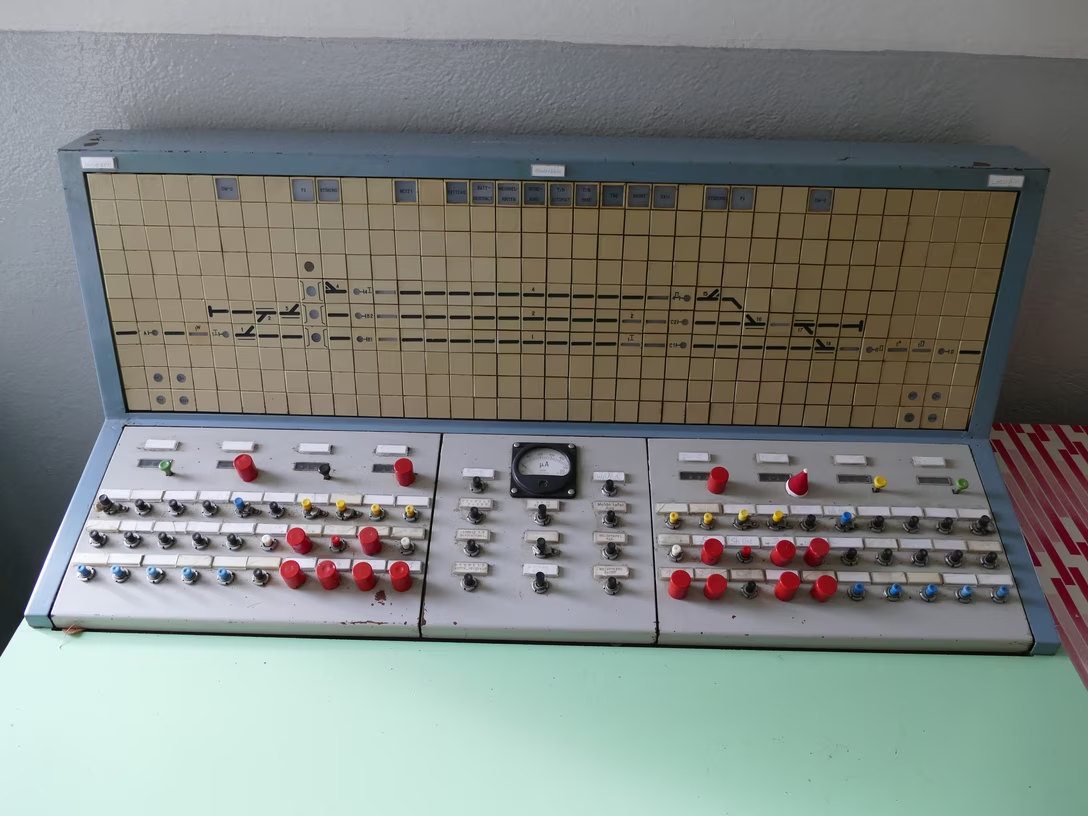
And a few others I found on my own. The key in the first photo is fascinating:
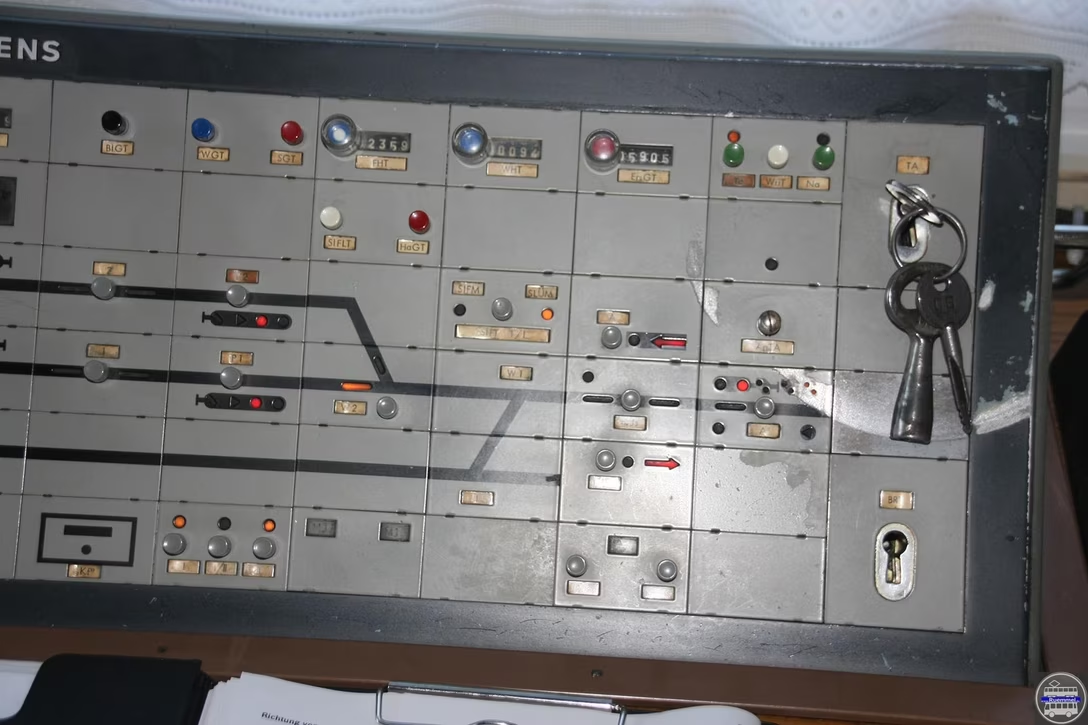
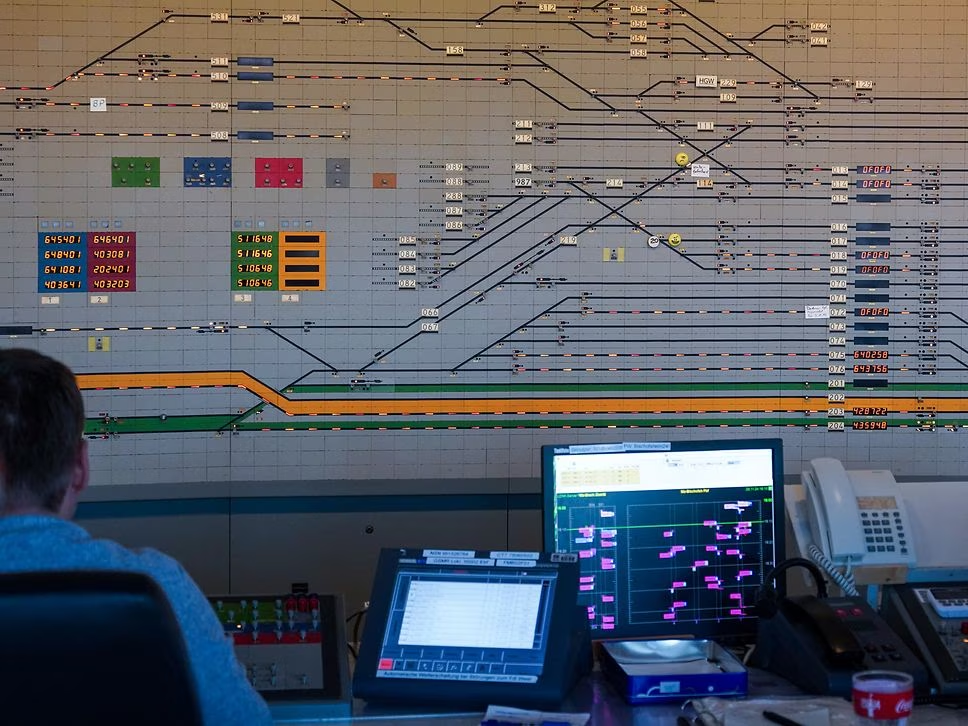
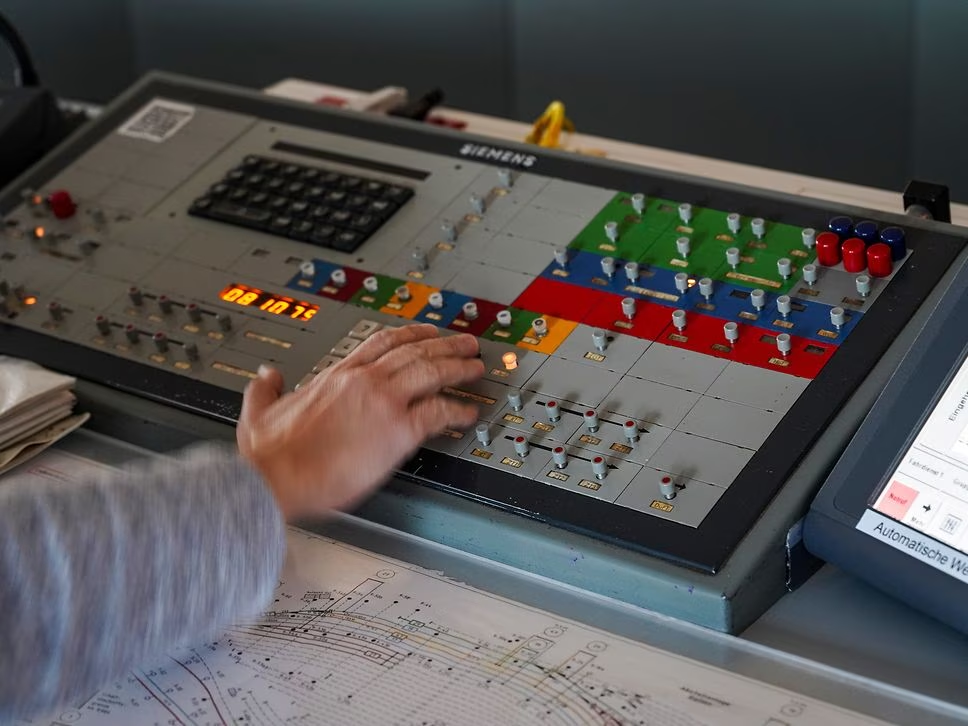
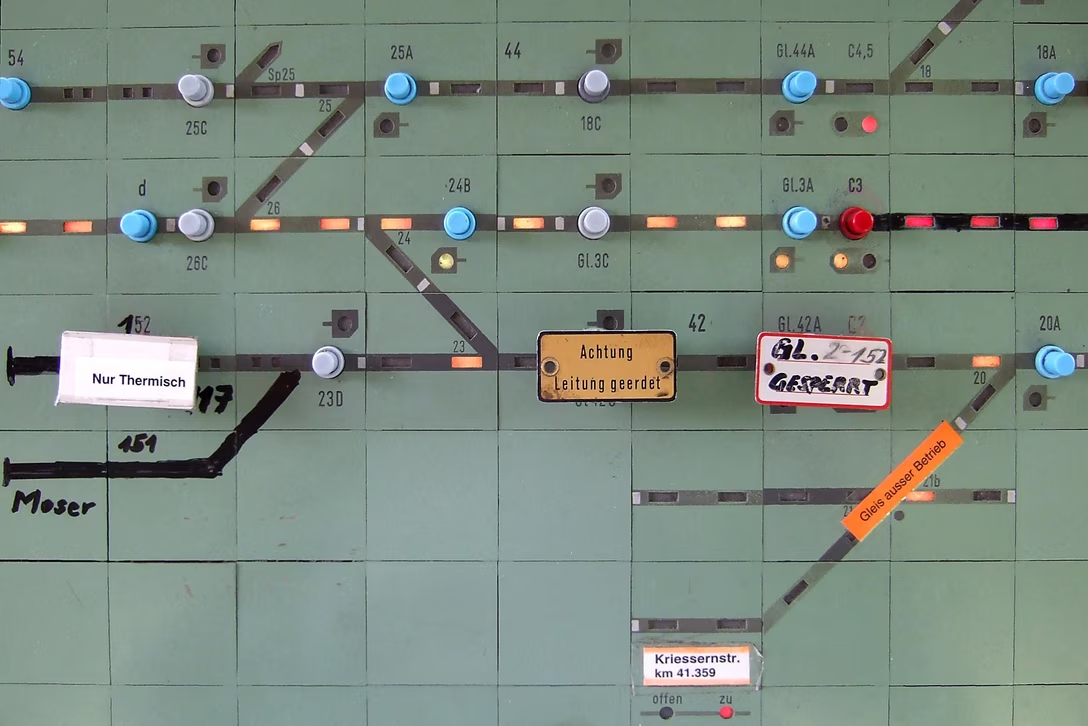
Here is a specific panel in Swindon in the U.K., decommissioned and preserved in a museum. It has a fun name:
The panels utilise square tiles called “Dominos,” patented by a Swiss company called Integra, to construct the panel diagram. Each Domino is 40mm square and has a small section of the layout on it, such as one signal, or one set of points. Many hundreds of small Dominos are then formed into a mosaic to build up the required panel diagram.”
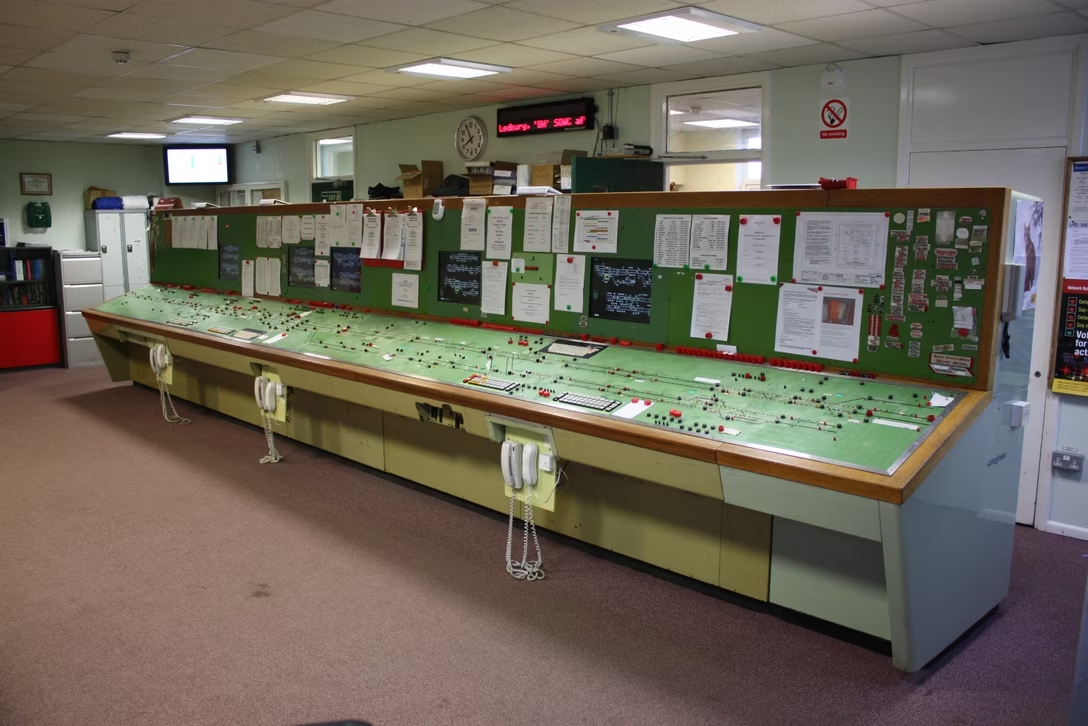
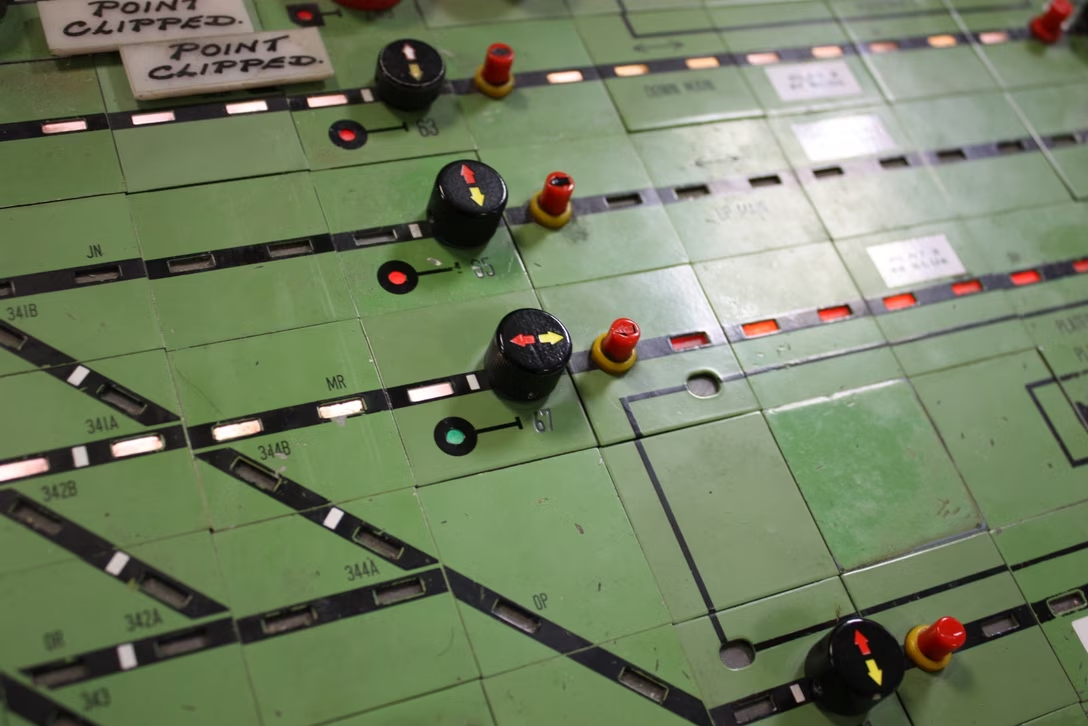
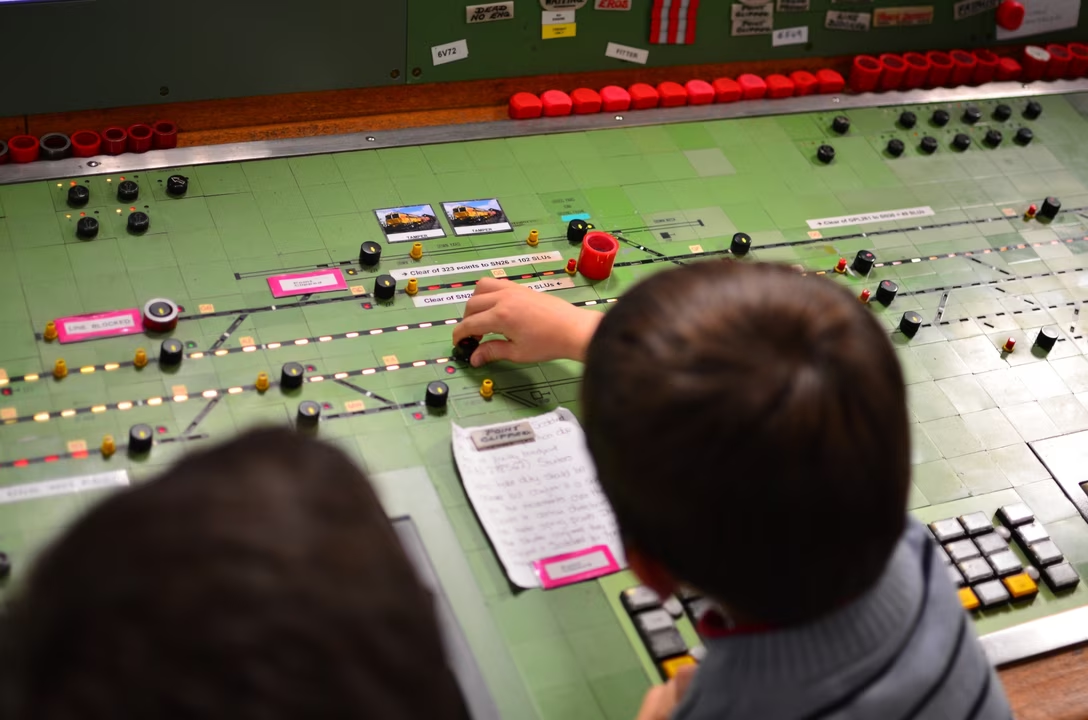
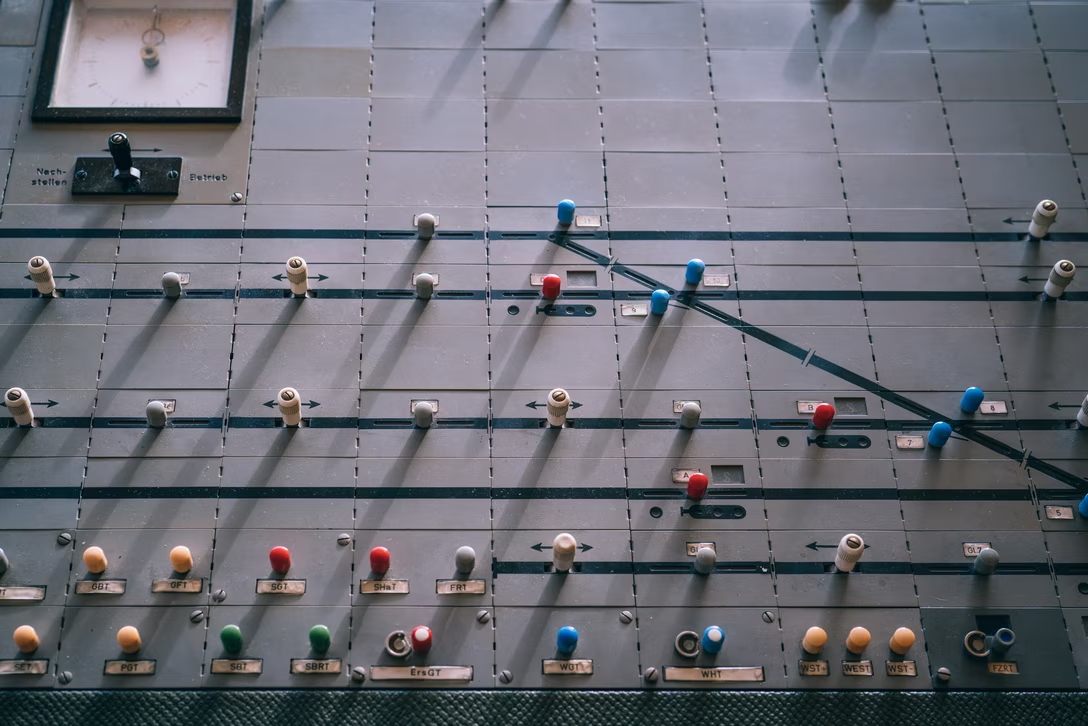
Here are some panels I forgot I’ve seen myself, in 2018 in a transit museum in Berlin – the last curved one is particularly impressive:
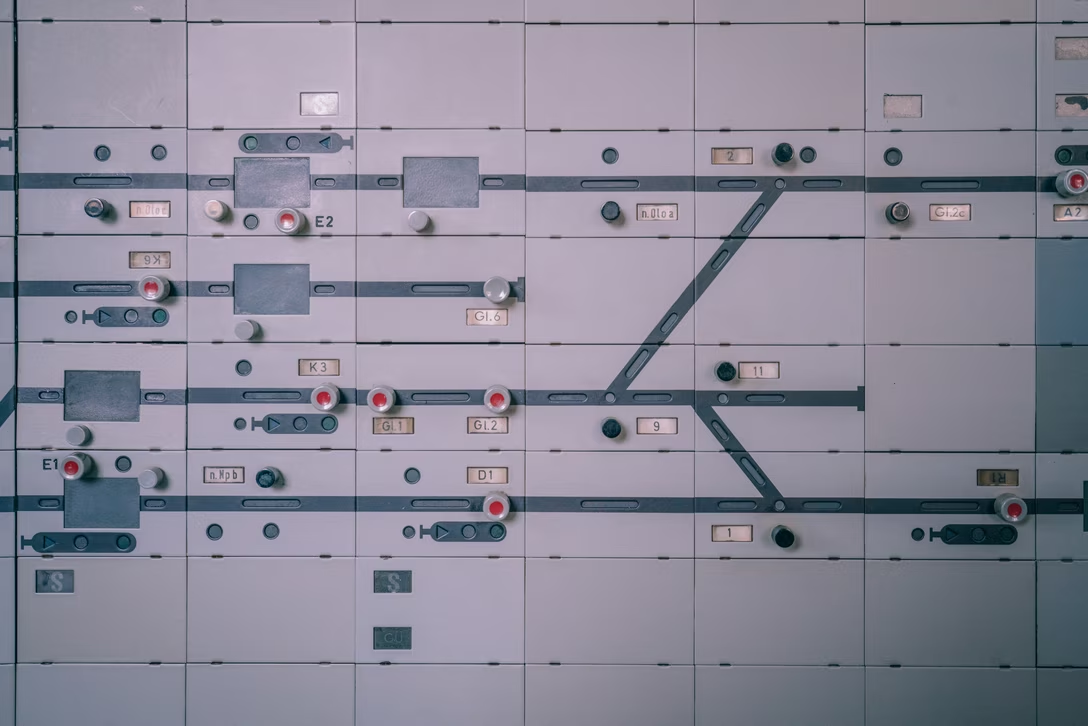
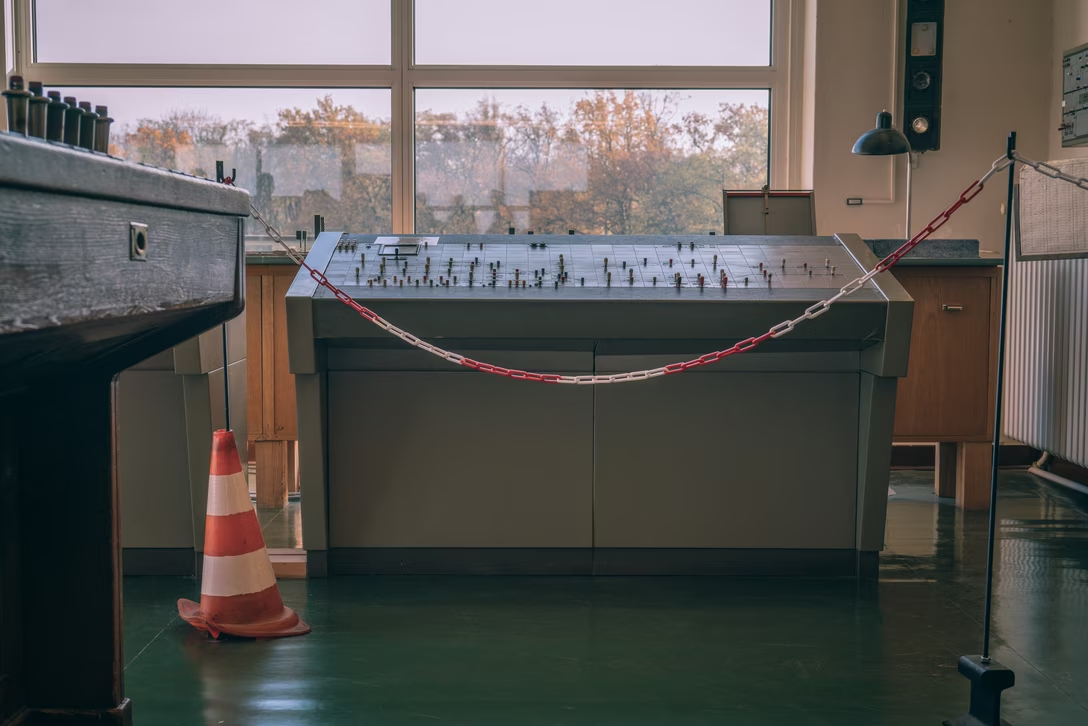
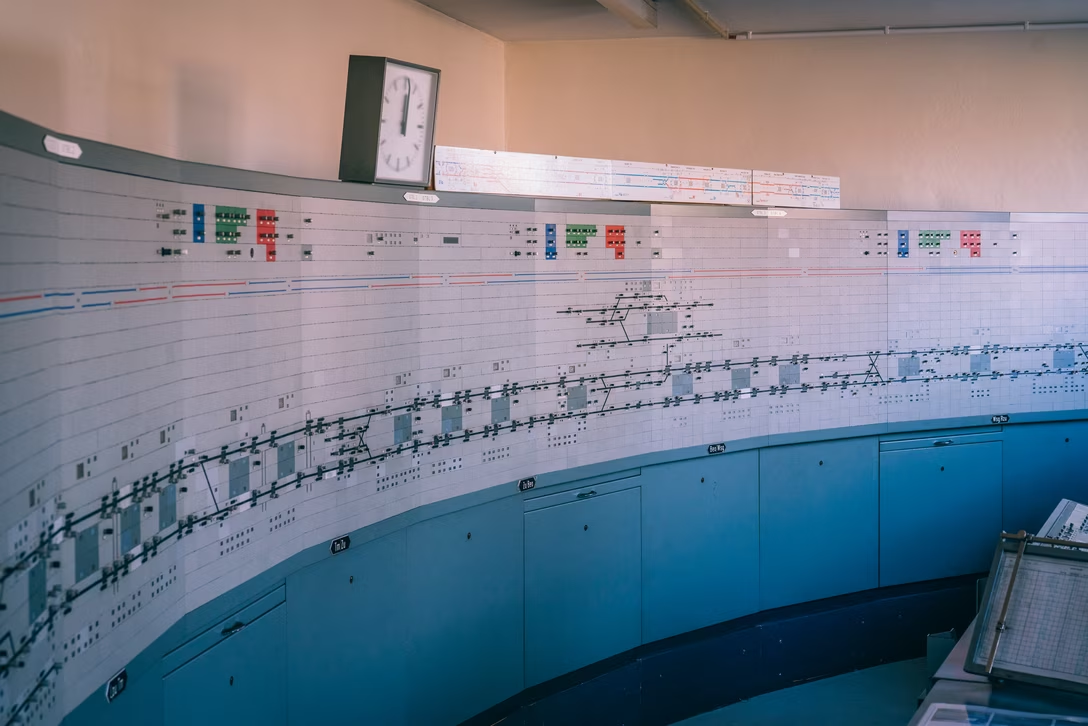
And here are some examples from a Polish manufacturer:
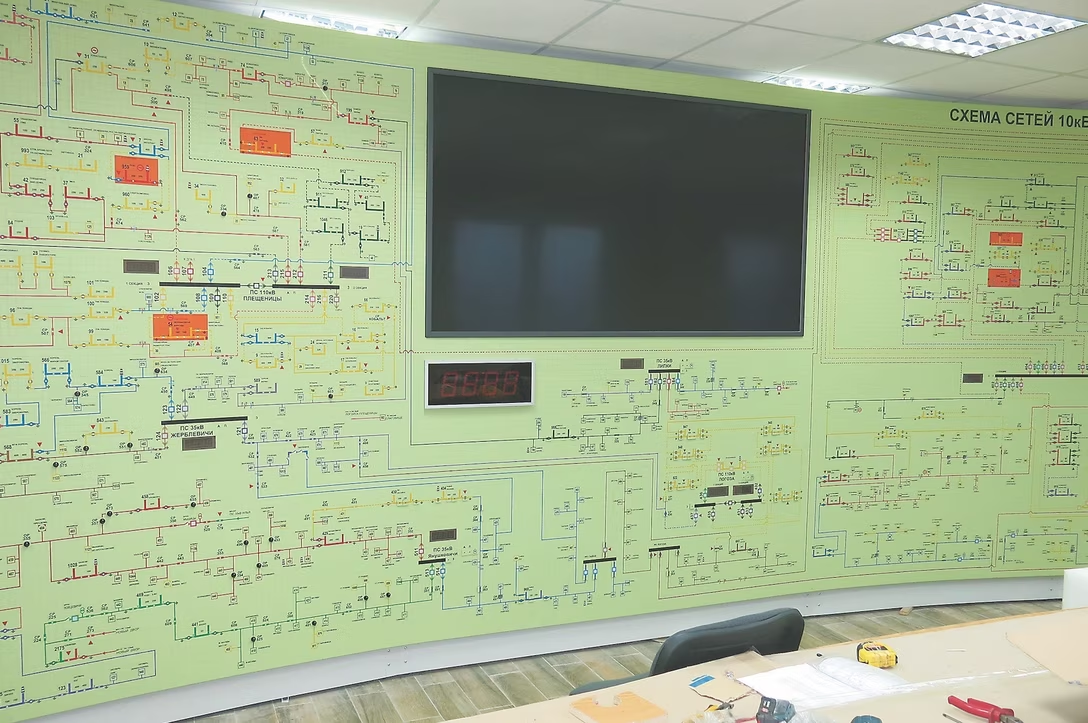
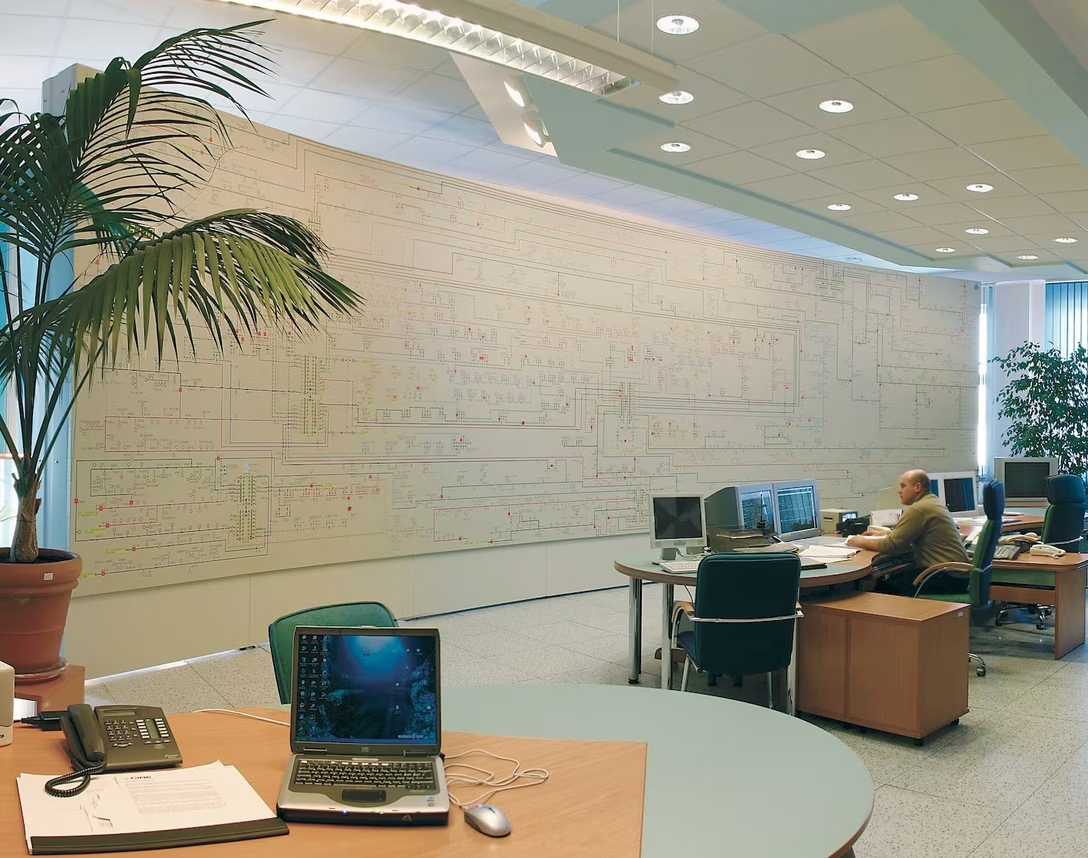
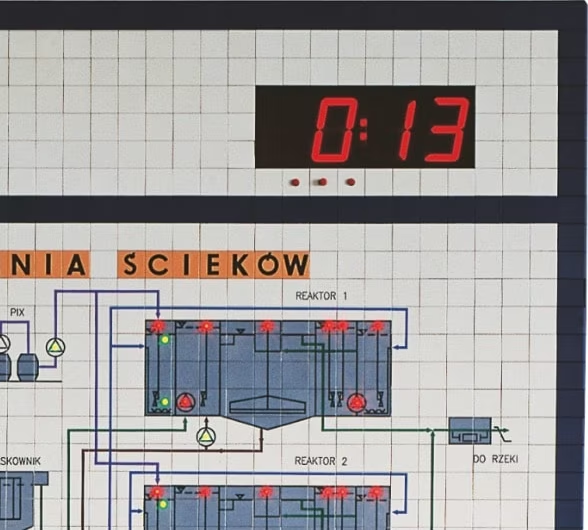
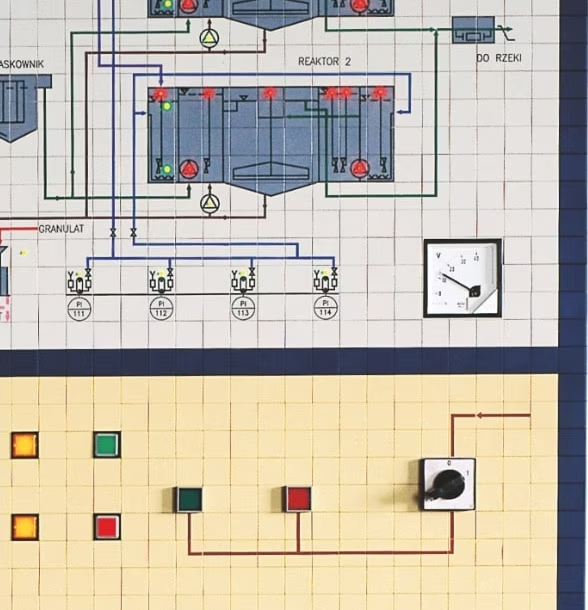
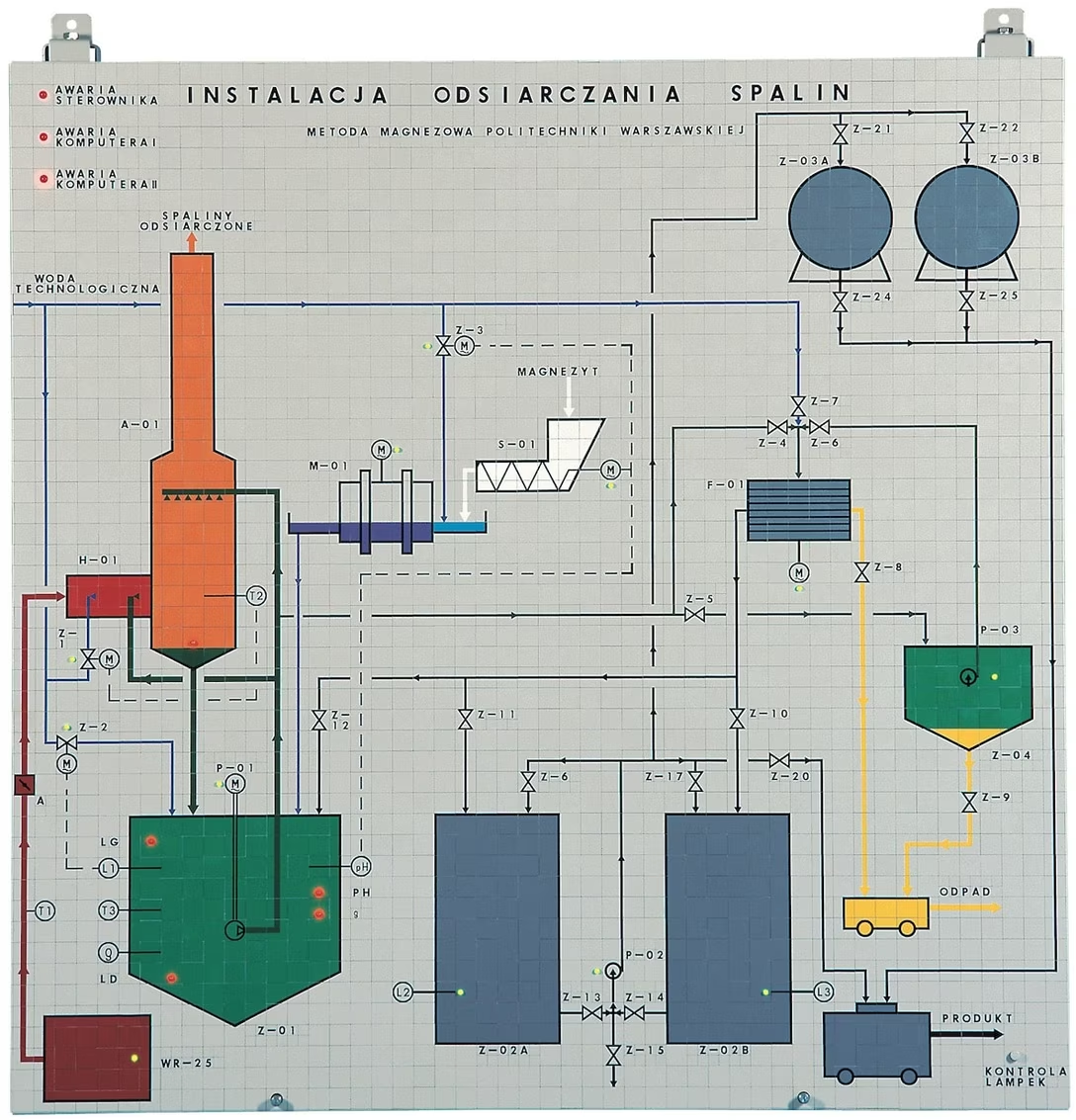
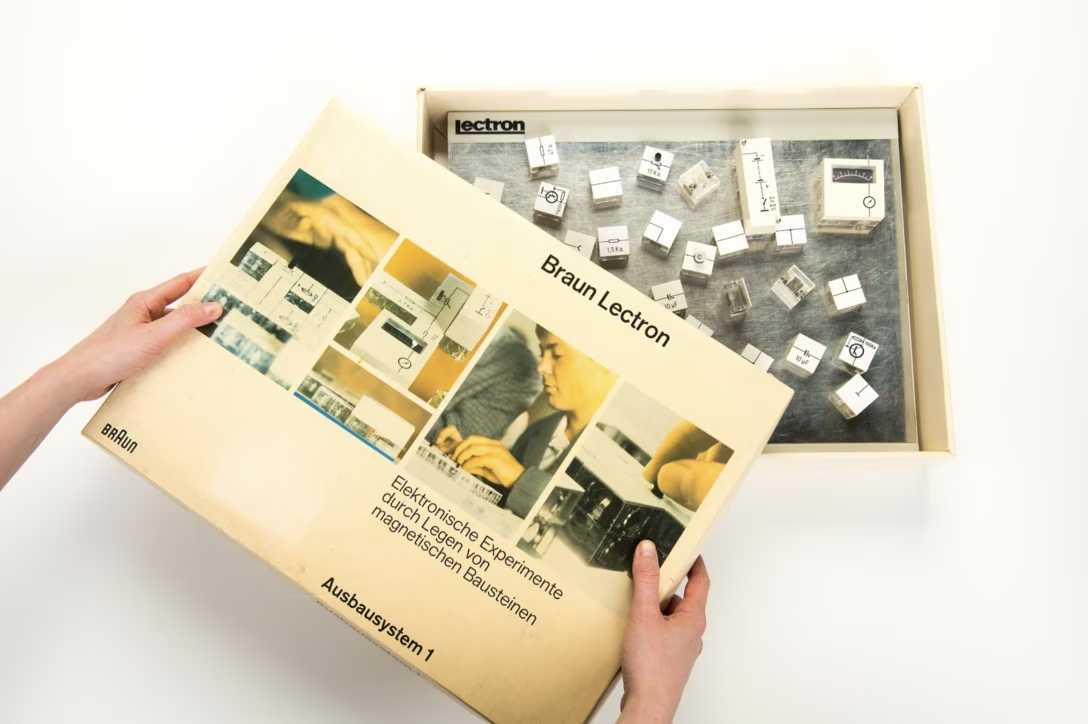
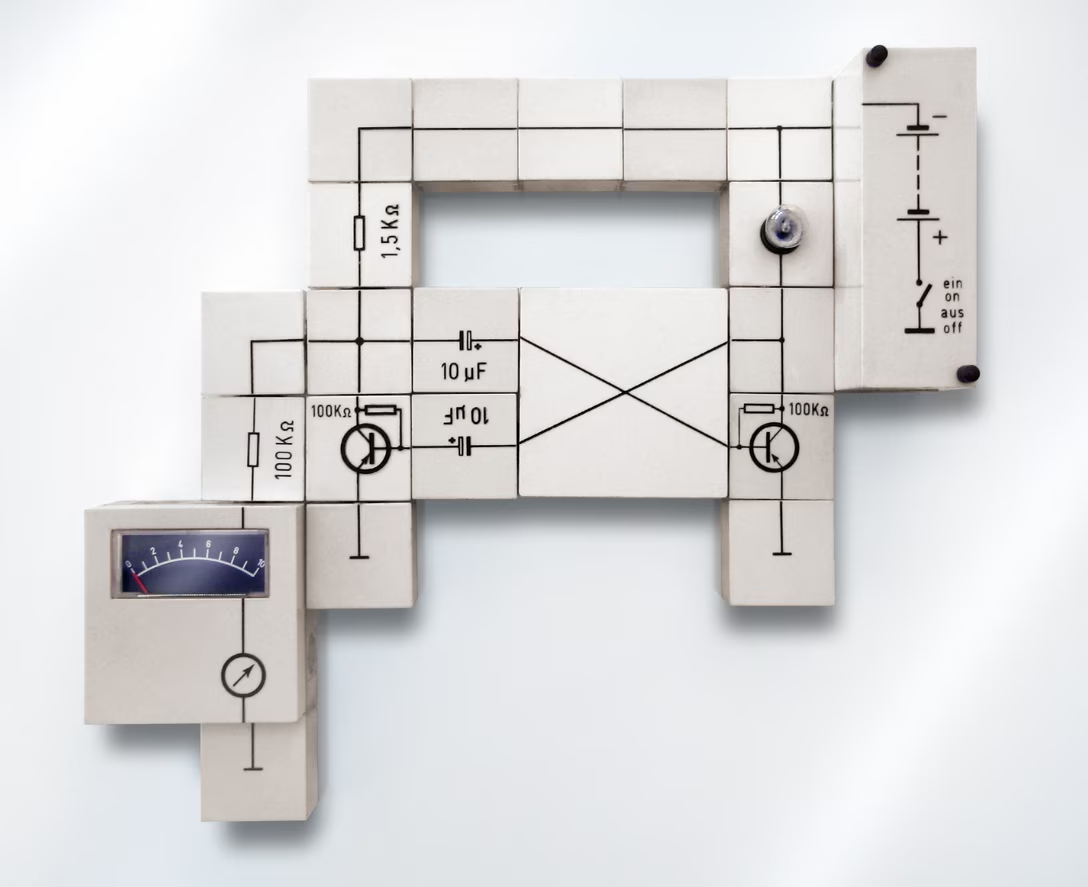
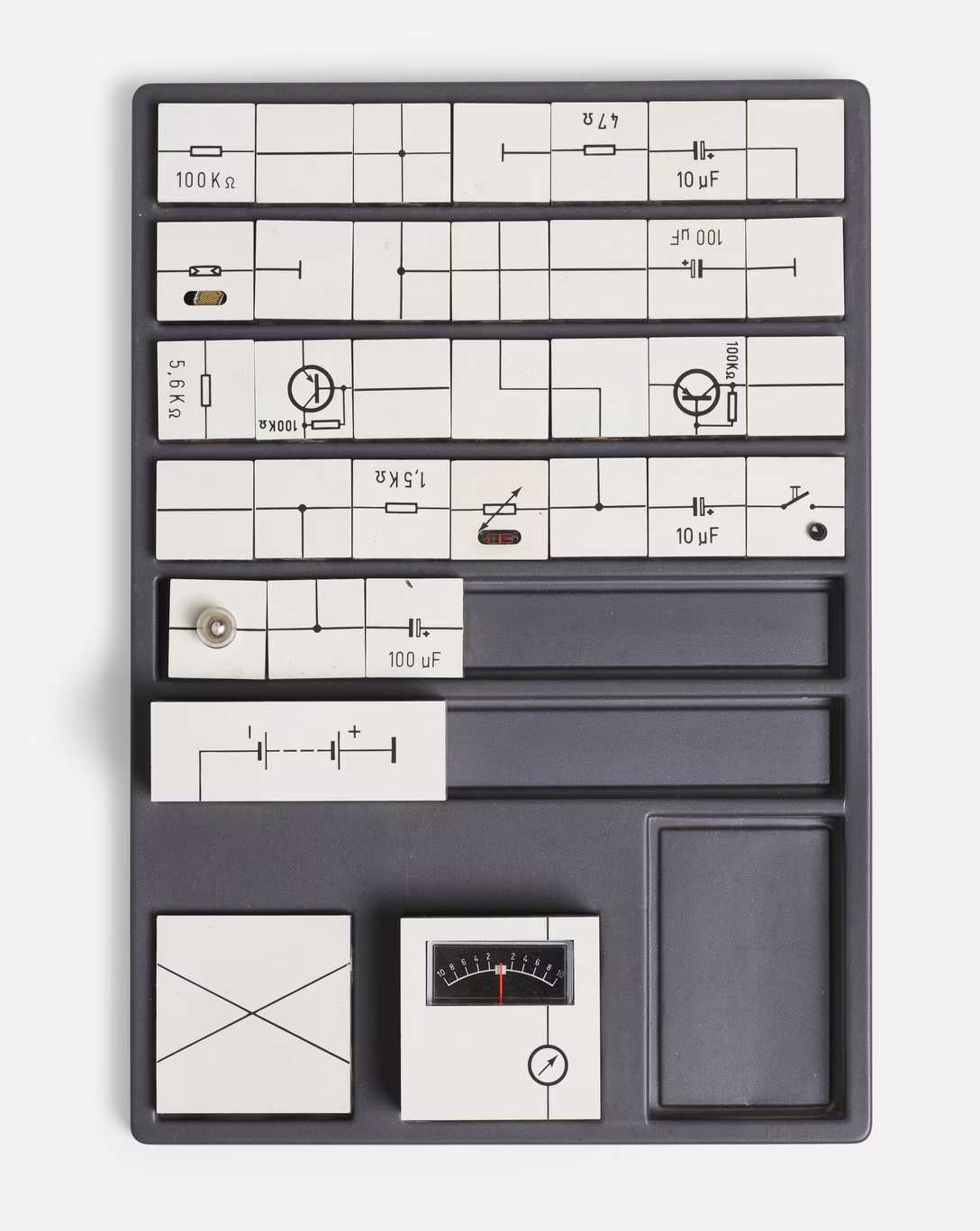
There was also an educational system called Lectron:
I also like this Lectron system by Gregor Greger from 1965. BRAUN bought the rights and then Dieter Rams worked on the design in 1967. [It was] produced until 2022 (!).
But most interest and attention I’ve received was still for railway panels. The German Wikipedia page (you can always translate) provides a lot of information about these, and even more can be found on this fan site.
If you want to play with one in person, I’ve been told there is one in a museum in Hamburg, and one in the aforementioned Swindon.
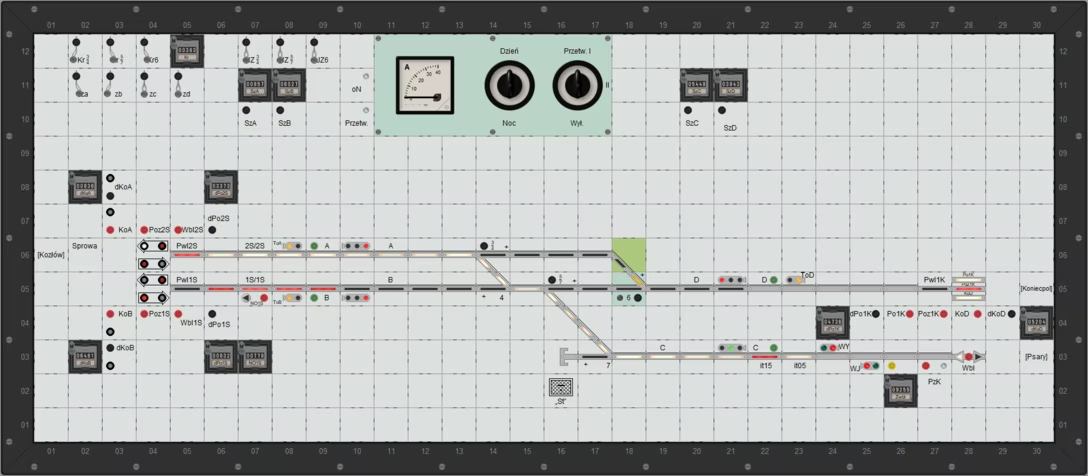
But there also seems to be a lot of software:
Just visiting the page of the last one shows you a few available stations, from a simple Starzyny to an extremely complex Cracow Central:
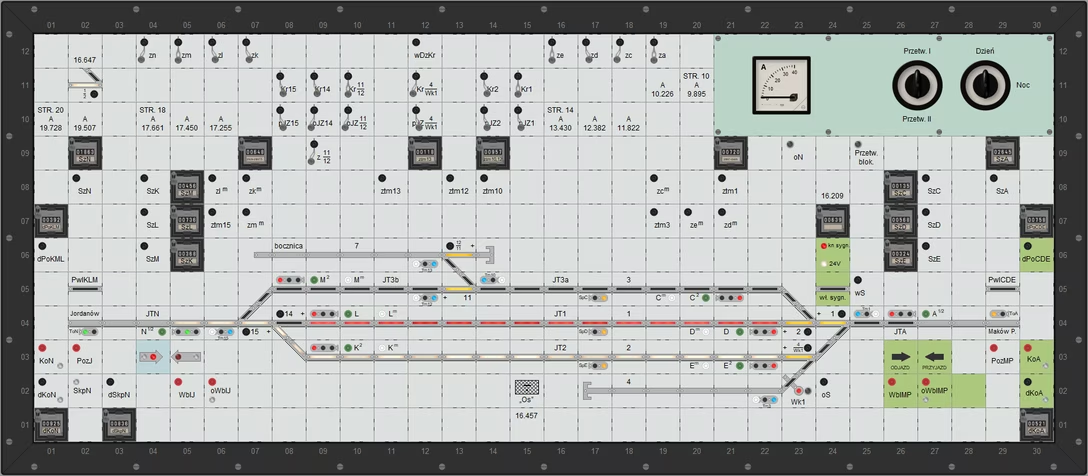
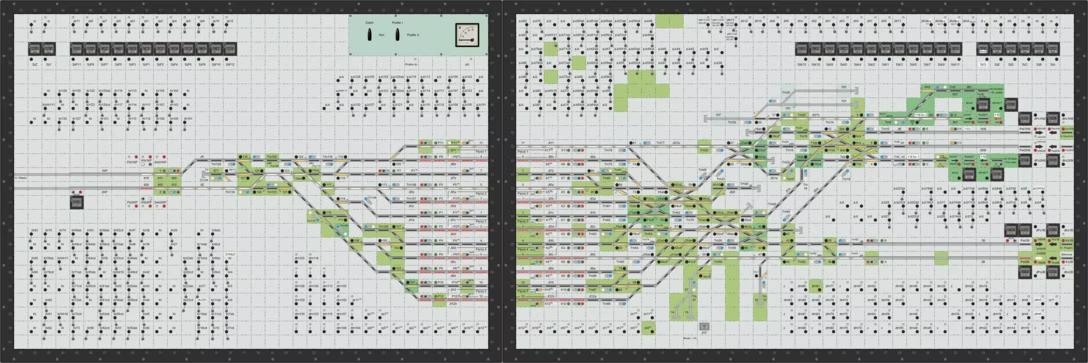
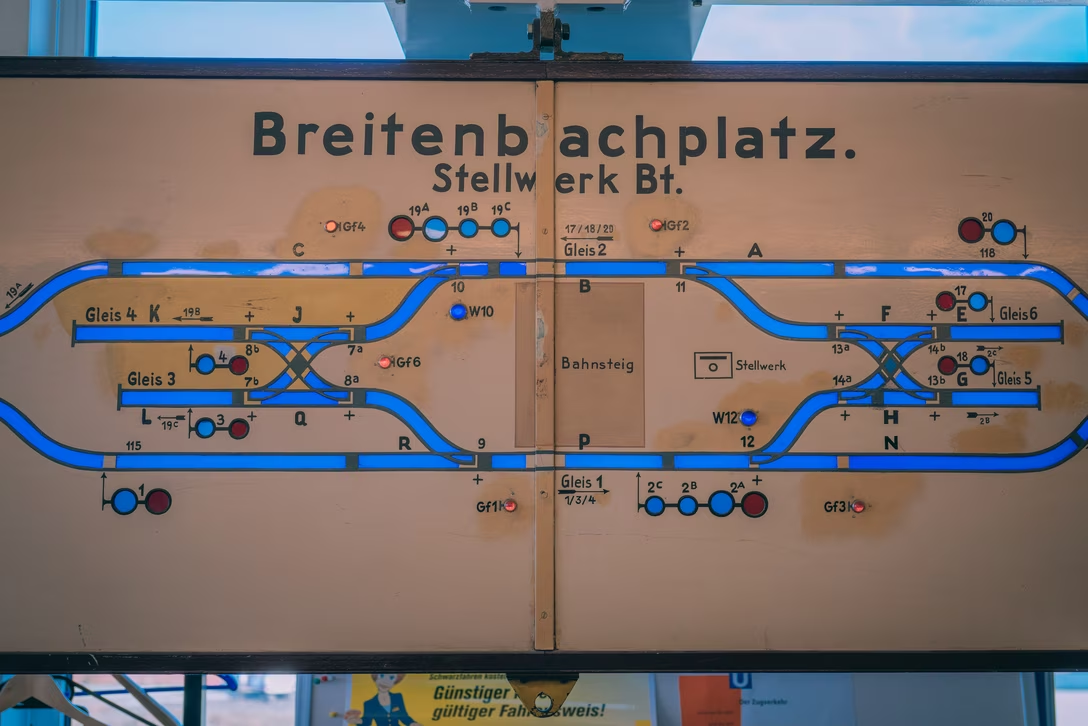
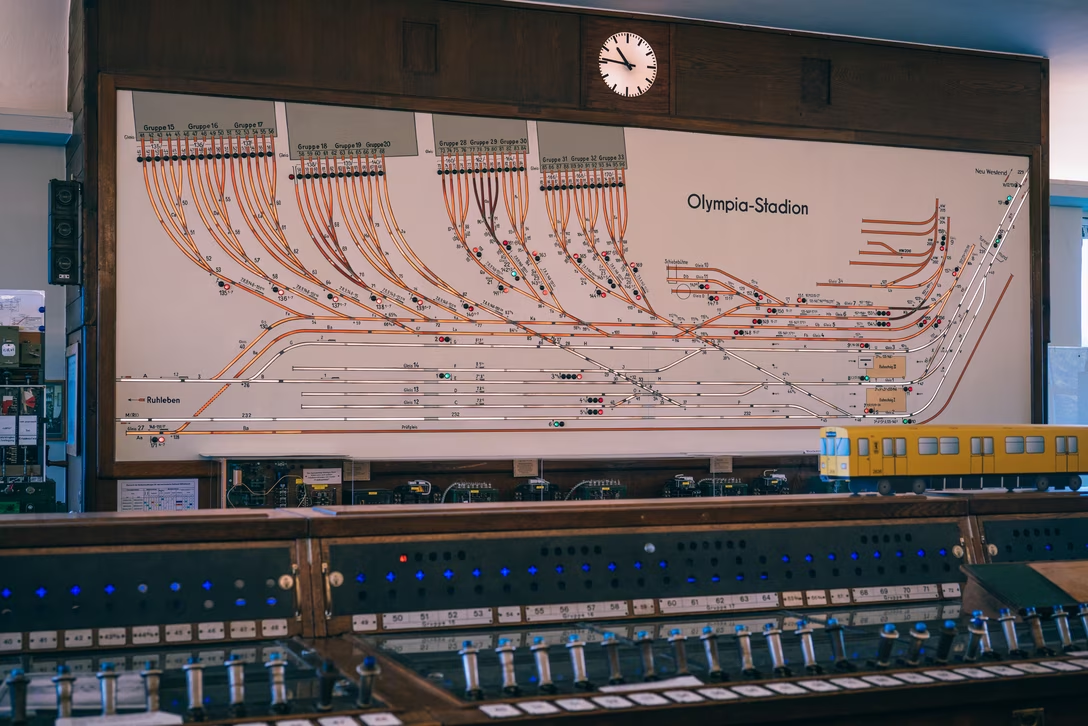
It’s also interesting to look at what predated these modular examples – here, again, is the Berlin museum, and some hand-crafted panels before they became modular:
Tom Scott made a video about these and how you actually operate them, with a lot more “before the pixels” details…
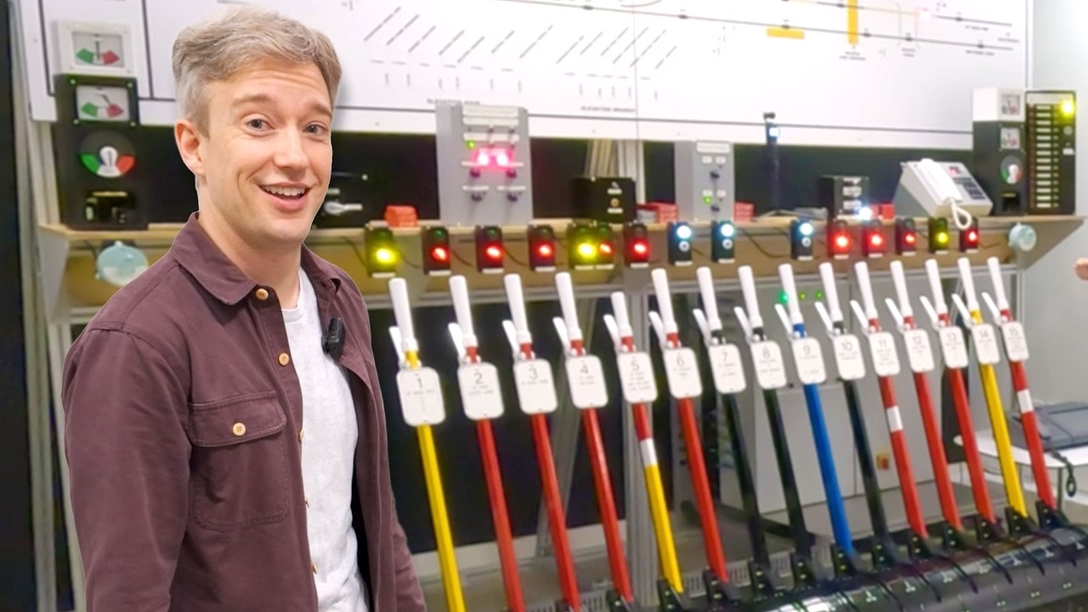
…and, bringing us to modernity, also modern screen-based equivalents:
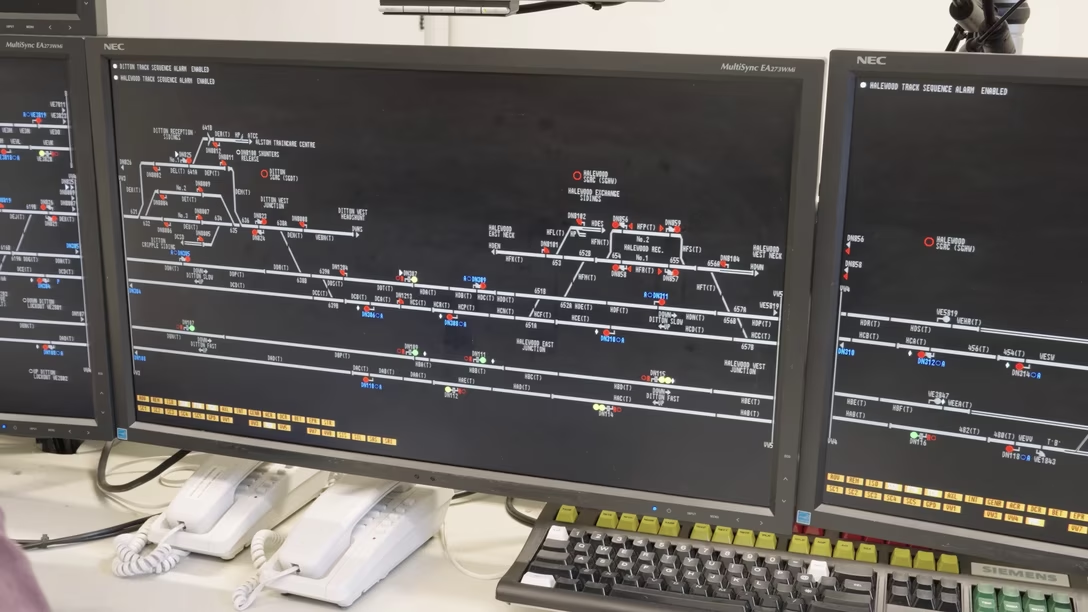
Because the future of these panels is, as always, software:
Oh, I’m quite sure there are still “pulpity kostkowe” in operation somewhere out there on the Polish or German railways, they are being replaced with software.
But resignalling work happens rather slowly. Indeed, there are British mainlines still being operated using systems and protocols dating back to the heyday of steam trains, with signallers communicating by bell codes and whatnot.
Thank you to Paweł Kupczyk, Dave Taylor, Rufus Rieder, Niki Grzyb, Hatetsu, Thilo, Ela, Nik, Mi, and others who messaged me about these.