“No results” doesn’t mean “no results,” pt. 1
This is something I see time and again in Google Maps when plotting directions:
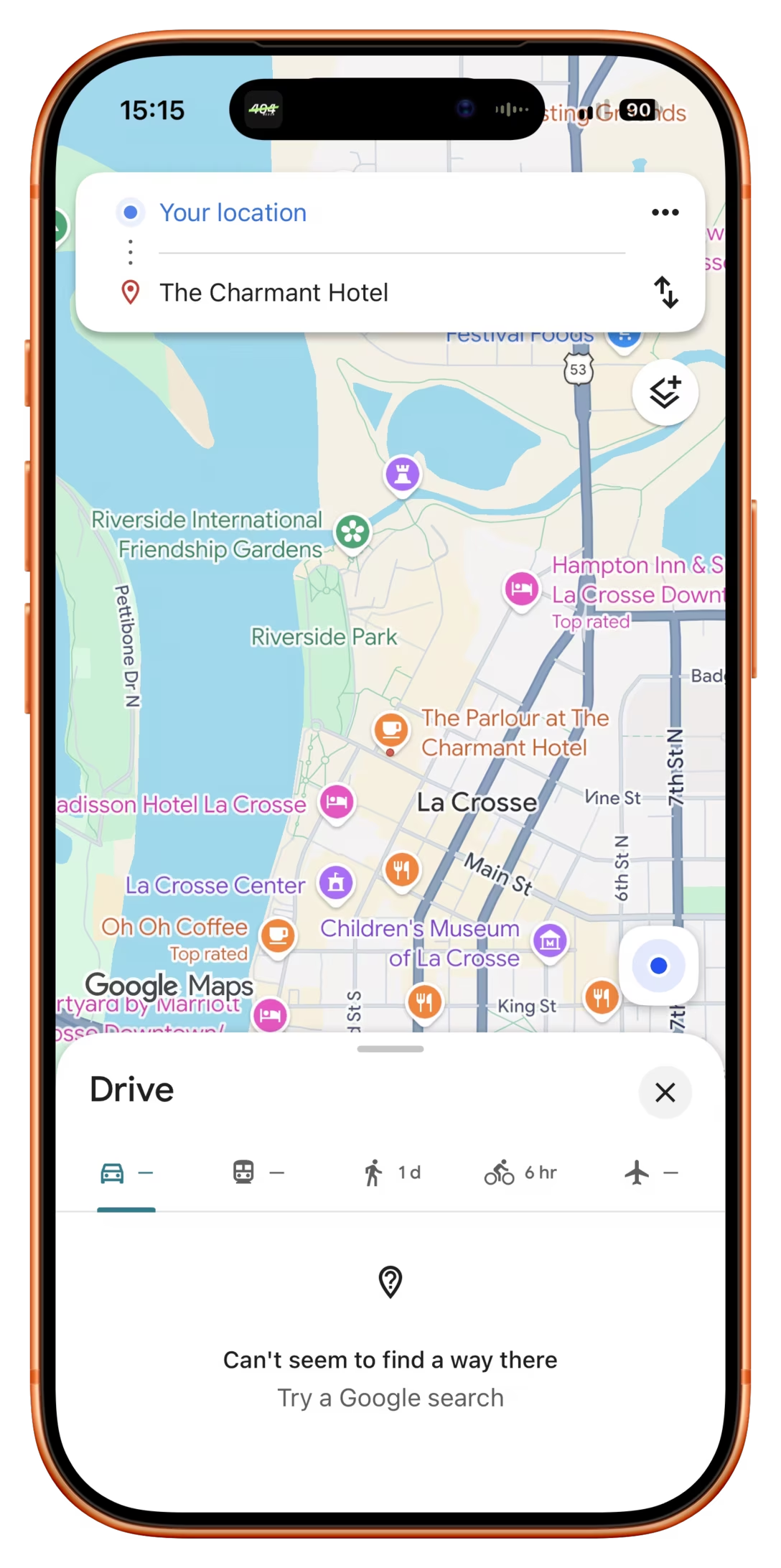
You might be thinking “this feels like a genuine error – not every two places on earth can be connected,” but that’s not it. I am in a good traffic corridor and, ten seconds later, doing the same exact thing again shows proper directions:
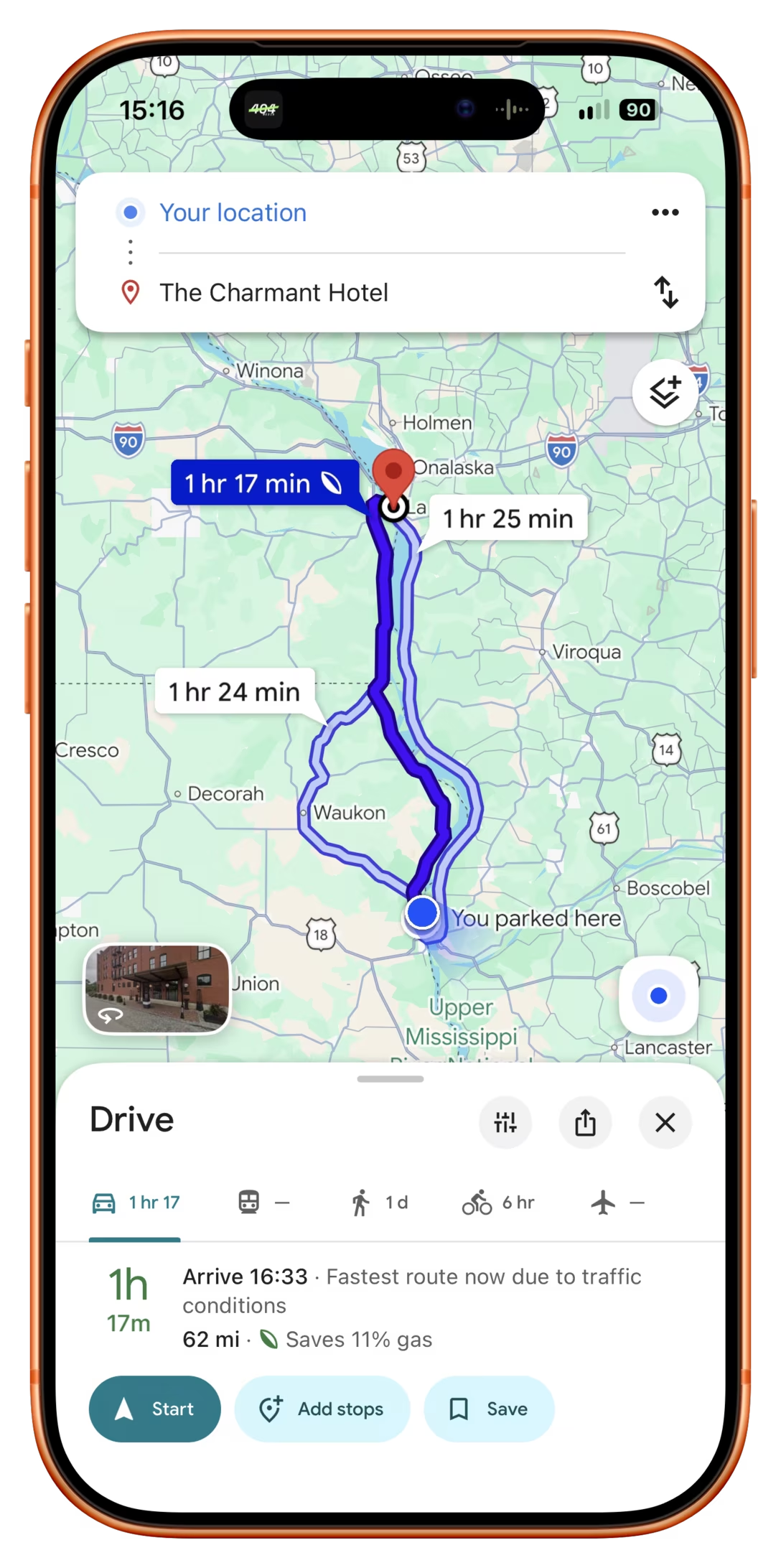
The clue as to what’s going on is elsewhere in both screenshots. My cell signal is low, and the Google Maps misrepresents no results arriving because of slow connection, with no results being there at all.
Just to get Google Maps off the hook, here’s a similar thing in a Mastodon client Ivory:

There are 123 posts to be seen here, as the page itself conveys elsewhere. But at this moment, the internet is slow, and Ivory jumps to a wrong “no posts found” conclusion, instead of saying “cannot retrieve the posts because of a bad connection.”
I believe what’s happening in these moments is that one kind of “no results” (software asked for posts, but the database results came empty) gets bundled with another (software asked for posts, but the database results didn’t come back in time, or transmission was interrupted).
This feels important to me, because the wrong kind of an error can really confuse people and make them jump to the wrong conclusions – I guess Mark Simonson isn’t active on social! I guess I can’t drive there! – or even create bad mental models. Also, while this was a temporary situation for me, for a lot of people bad connection is a constant fact of life, so they might encounter this kind of confusion on a daily basis. Software should differentiate between different ways something can be zero, and in this case, communicate that back to the user.
What’s really strange is that Google Maps has a separate “no internet connection” state that you can see in other moments – incl. an extra thoughtful and important manual try again button…
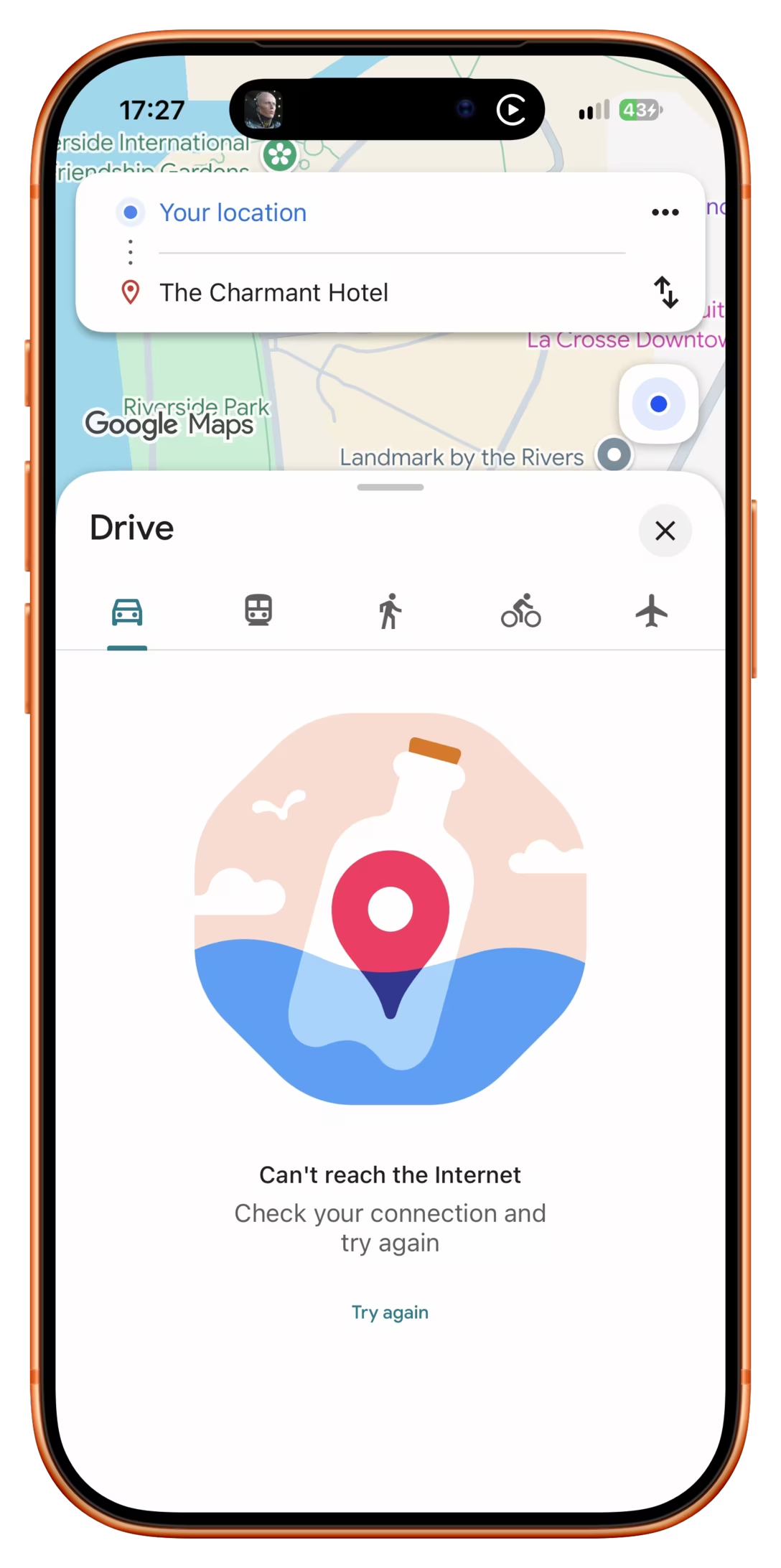
…but apparently still fails to use it in all the cases.