“This also introduces new questions.”
Designer Reimar Servas goes further than the usual Border Radius Discourse and thinks about the deeper but often ignored questions of border radii as a system, and about the consequences of such a system that go beyond visuals:
[…] These redesign efforts suggest ignorance of a fundamental problem: rounded forms have a smaller surface area than angular ones. Used as containers, they reduce usable space.
This is fine on most touch-based UIs since they typically feature simple layouts with only a few controls and plenty of white space. Such spacious designs help our fingertips, which demand larger touch areas. A mouse pointer, by contrast, can target much smaller elements.
Professional desktop software — think 3D modelling, video editing, or music production — is often packed with small controls. On these complex interfaces (and the operating systems that host them) screen estate is precious, even on large screens. Heavily rounded elements don’t work well here.
I liked this simple, but powerful visual:
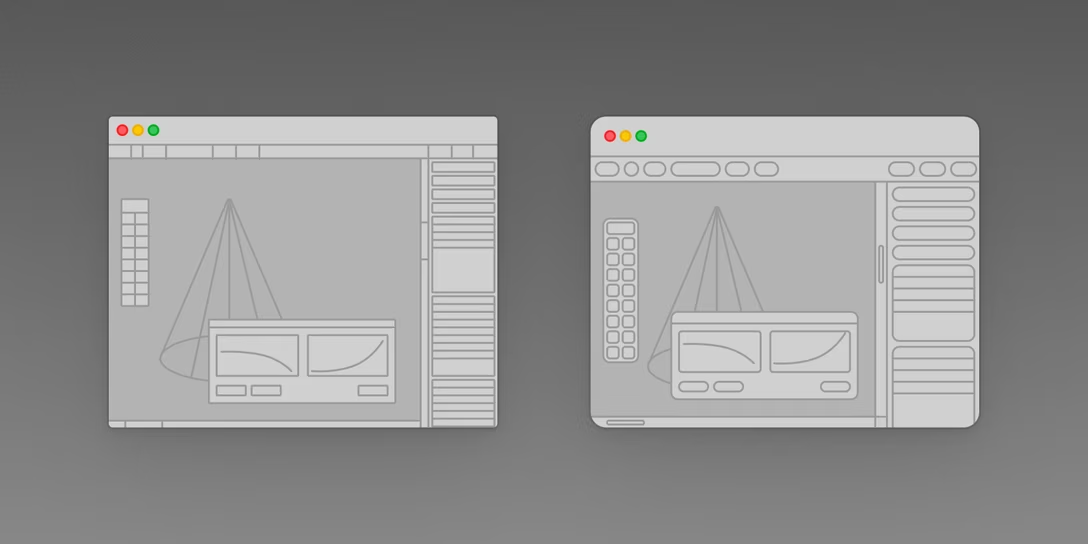
Servas adds:
Apple is well aware that principles from pointer-based UIs rarely translate well to touch interfaces. After all, they spearheaded the evolution of touch UIs and introduced multi-touch interactions like pinch-to-zoom to consumer electronics — formerly only seen in science fiction or obscure research projects . Yet they’re now rolling out single unified design language across watches, phones, desktop computers, and XR goggles.
The piece was written just before the arrival of Golden Gate, which undoes some of Tahoe’s damage. Yet, I remain worried about the rumoured touch MacBook. I consider adding touch to macOS an unsolvable challenge, unless you happen to be okay with compromising on precision and density. I’m not.